Monday, September 27, 2021

Q&A with Ann Slayton


Ann Slayton is the author of the new book Accidental Grace: Selected Poems & Prose. Her other books include Catching the Light. She is a founder of the Washington Women's Arts Center, and she lives in Takoma Park, Maryland.


Q: Over how long a period did you write the poems and other pieces in Accidental Grace?


A: A number of these poems were first published in my two chapbooks, The Music Beginning Here (1984) and Catching the Light (2001). The prose pieces and some of the narrative poems are more recent. 


In considering the poems for Accidental Grace, my first full-length book, I’ve revised some of the original versions, paying attention to such things as pacing of the lines and cadences.


I’ve also done a certain amount of decluttering, for instance, of adjectives, wordiness, and unnecessary commas, which can slow down the lines and interfere with the flow of the poem.  


Q: How did you decide on the order in which the pieces would appear in the collection?


A: While I’ve written poems in the first person “I”—particularly the early poems—many of the poems in Accidental Grace take on different voices, fictional and nonfictional; some imaginary, some that speak from my family history, some from literary and historical figures.


I wanted to find an order for the book in which all could live together harmoniously, and the book would be cohesive. The challenge arose not just with work done over many years, but was complicated by including prose pieces.


By dividing the book into sections, the reader has a place to pause, like an intermission between pieces of quite different tones. For example, the prose piece “Nothing Again is Happening,” a dialogue between the narrator’s two selves, foreshadows the different tonal elements in the poems that follow.


Q: How was the book's title chosen, and what does it signify for you?


A: Years ago in first reading William Wordsworth’s “Ode: Intimations of Immortality,” I was struck by his words “accidental grace” in a stanza that serves as epigraph to the poem.


Immediately a contemporary interpretation struck me: that while Nature in its great power of bringing forth and nurturing growth was a female force, Man, an “accidental grace/ His hour being not yet come,” can be interpreted differently today.


In my view, “Man” applies more literally to men, not to the categorically “human,” i.e. men and women, as was Wordsworth’s intended meaning, and customary in the language until very recently.


What this distinction signifies to me is that we are on the cusp of a radical, perhaps evolutionary, revisioning of values and power, one that brings the particular qualities associated with the female into the center of our social, political, and psychological worlds.


Many of the poems in Accidental Grace imply this ascendance. In choosing "accidental grace" for the book's title, I understood that the words can easily characterize acts of profound change as well as acts of imagination, essential to all human creativity. And of course for me, the poems themselves are an accidental grace.


Q: How did you choose the various people and entities that you feature in your work, including poet Anne Bradstreet and the daughter of The Scarlet Letter's Hester Prynne?


A: I have always been drawn to accounts—actual and fictional—of female courage, especially stories that have emerged from our country’s early history.


Hester Prynne of Hawthorne’s Scarlet Letter is a woman who with enormous dignity walks a fine line between the villagers’ admiration and revilement for having given birth to a daughter out-of-wedlock.


The bond between Hester and her daughter Pearl is understandably intense, and in my poem, “The Spell,” the minister’s momentary usurpation of that bond I imagined could have a lasting impact on Pearl.


I have also been drawn to accounts of “firsts,” and Anne Bradstreet was the first female poet from the American colony whose work was published, albeit in England. I first became aware of this through John Berryman’s long poem, “Homage to Mistress Bradstreet.”


A: In some of my works, I have tended to personalize these accounts of courageous women in our early history, as my own family history in America dates back almost to their times in the mid-17th century, and I have imagined how the ordinary, difficult lives of my ancestors must have taken much courage.


Q: What are you working on now?


A: I have a collection of about a dozen prose pieces called “Wandering Women” which I started writing on a solo trip out West. I encountered numerous women on their own and their stories of their lives were as disparate, heartwarming, fearsome, courageous, and troubling as any I have imagined. This is still a work in progress.


I have also taken to watercolor painting in the last 10 years—in some respects, a respite from words!—and with the particular pleasure of gathering weekly during summers in Northern Vermont with other artists to paint, draw, and discuss our work.


Q: Anything else we should know?


A: I’ll mention that you can read a few of the poems in Accidental Grace on the Dryad Press website: https://dryadpress.com/shop/accidental-grace-selected-poems-and-prose-by-ann-slayton/


--Interview with Deborah Kalb

Sept. 27


ON THIS DAY IN HISTORY
Sept. 27, 1921: Bernard Waber born.

Sunday, September 26, 2021

Q&A with Kristin Contino


Kristin Contino is the author of the new novel A House Full of Windsor. She also has written the novel The Legacy of Us, and she is chief reporter at Royal Central


Q: What first intrigued you about the British royal family, and how did that interest lead you to create your characters Debbie and her daughter Sarah?


A: My mom was really into the royal family when I was growing up (especially Princess Diana), so I always loved Diana. I enjoyed learning about royalty but definitely in a more passive way; it wasn’t until Will and Kate got engaged that I followed them much more closely. 


So many people love the British royal family and feel like they know them, so I thought it would be interesting to take that idea and how a woman’s obsession could grow out of control. 


Q: Why did you decide to focus on hoarding in this novel?


A: I was watching an episode of Hoarders where the daughter’s entire life had been extremely impacted by her mother’s hoarding, but in ways that surprised me  - her romantic relationships, choice of career, etc. It was fascinating to me and I knew right away I wanted to write a novel that explored this type of mother/child relationship. 


Q: The book alternates between Sarah's and Debbie's perspectives--did you write the book in the order in which it appears, or did you focus more on one character before turning to the other?


A: I wrote the chapters in order. All of my books have multiple POVs and I think it’s too confusing to jump around. I also don’t outline, so it would be a bit of a mess otherwise. 


Q: The Kirkus Review of the book calls it "A spectacular and addictive family tale that’s equal parts charm and depth." What did you see as the right mix of light and serious as you wrote the novel?


A: To be honest I didn’t put a ton of thought into whether it was light or serious as I wrote it;  the characters truly shaped the story as I was going and I let them take the plot in the direction it needed to go.


However, when I was coming up with the initial idea, I knew I wanted Debbie to have a collection that was fun and interesting, versus dead animals or rotting food! 


Q: What are you working on now?


A: I’m working on another novel set in the UK. It definitely has more of a focus on the romantic relationship between the two characters, and it’s the first book I’ve written that has a male POV, which has been a new challenge for me. I’m not under contract for it yet so we’ll see what happens!


Q: Anything else we should know?


A: I love reading royal-themed novels so I started a Facebook book club with some friends where we feature a different royal book each month. It’s called Royally Good Reads and we love welcoming new members! 


--Interview with Deborah Kalb

Q&A with Ryan Mizzen


Photo by Rebekka Mikkola


Ryan Mizzen is the author of the new children's picture book Nanook and the Melting Arctic, the second in his Time to Care series, which began with Hedgey-A and the Honey Bees. He is based in the UK.


Q: Why did you focus on the Arctic in this second book in your Time to Care series?


A: One of the main themes I’d like to address throughout this series is the climate crisis. The Arctic is warming at one of the fastest rates on the planet as a result of climate change. It’s a place where the climate crisis is very visible through extreme weather and melt events which are taking place on a frighteningly regular basis.


The Arctic may sound distant and irrelevant to many people. But what happens in the Arctic will affect the rest of the world.


The renowned polar scientist Peter Wadhams makes this clear in his book A Farewell to Ice. He explains that when the Arctic becomes fully ice free, “The albedo change from the loss of the last 4 million km2 of ice will have the same warming effect on the Earth as the last twenty-five years of carbon dioxide emissions.”


We’re well on track to have these ice free summers occurring before 2050. This is the magnitude of change which we’re staring down in the Arctic.


Q: Did you need to do much research to write the book, and did you learn anything that surprised you?


A: Since completing my Bachelor of Science degrees in Climate Change, I’ve tried to keep up with developments in the field of climate science. But there are some very worrying events taking place in the region.


For example, in summer 2017 there was a wildfire that lasted for around two weeks in Greenland – a region we usually associate with ice. In 2019, there were over 100 wildfires in the Arctic. This year has also seen large wildfires in Siberia, with wildfire smoke extending all the way to the North Pole and blanketing large parts of Russia.


While many countries and corporations are looking greedily towards Greenland to exploit its oil and mineral wealth as the ice melts, there’s serious concern about what that ice melt will mean for the rest of the world.


It’s estimated that if all the ice melted on Greenland, it could raise global sea levels by seven metres, thereby inundating coastlines. While this may not happen for some time, there are some disturbing things happening on Greenland.


In 2012, approximately 97 percent of Greenland’s ice sheet experienced melting – an unprecedented event. This year, the summit of Greenland’s ice sheet received rainfall for the first time. Over three days in August, seven billion tons of rain fell over Greenland’s ice sheet. There is trouble brewing in the Arctic, and this means trouble for the rest of the world.


Q: What do you hope kids take away from this new book?


A: There are a few things I hope children will take away.


The first is that the world is interconnected. When we damage one part of the climate system it has wider repercussions.


Secondly, a crucial part of the book was where the animals used beach plastic to protest at the leaders’ meeting. This is a nod to Greta Thunberg and the Fridays for Future movement.


For many years it felt like the climate movement was waning. But then along came Greta, and people of all ages including young children are now protesting in their millions for political leaders to address the climate crisis.


I also believe it’s important to show that working together can achieve results and that’s why Nanook and the animals worked together to convince the leaders to act.


History has shown countless times that humanity can work as one to address global issues such as the hole in the ozone layer. There’s no reason why we can’t do the same thing again. What we lack is the political will to implement some of the major structural and policy changes required. So by working together, we can put pressure on leaders to act.


Finally, the book is dedicated to the UN Patron of the Oceans Lewis Pugh. It also features illustrations of Greta Thunberg and Dr. James Hansen. My hope is that educators, parents and guardians research any of these names if they’re unfamiliar as they’ve all played a pivotal role in bringing the climate crisis to the world’s attention.


Q: What are you working on now?


A: I’m working on my first cli-fi (climate fiction) adventure novel. I believe that fiction plays a crucial role in communicating challenging topics to a wider audience.


Cli-fi is a fairly new literary subgenre. Many cli-fi novels are dystopian and set in the future. I believe there is a need for more cli-fi books grounded in the present, which show how we can make positive changes now while we still have time to act. That’s what I aim to show in my books including Nanook.


One of the best examples of this new wave of cli-fi is The Last Bear by Hannah Gold, which I highly recommend.


Q: Anything else we should know?


A: Nanook and the Melting Arctic is available for purchase on Amazon’s global stores, including:

Amazon US - www.amazon.com/dp/1527287831

Amazon UK - www.amazon.co.uk/dp/1527287831


I’m grateful to my illustrator Paul Winward for the amazing illustrations once again. Also to my friend and editor Eirini Dermitzaki for assistance editing the book. More information about Nanook can be found on my website: www.ryanmizzen.com


--Interview with Deborah Kalb. Here's a previous Q&A with Ryan Mizzen.

Sept. 26


ON THIS DAY IN HISTORY
Sept. 26, 1949: Jane Smiley born.

Saturday, September 25, 2021

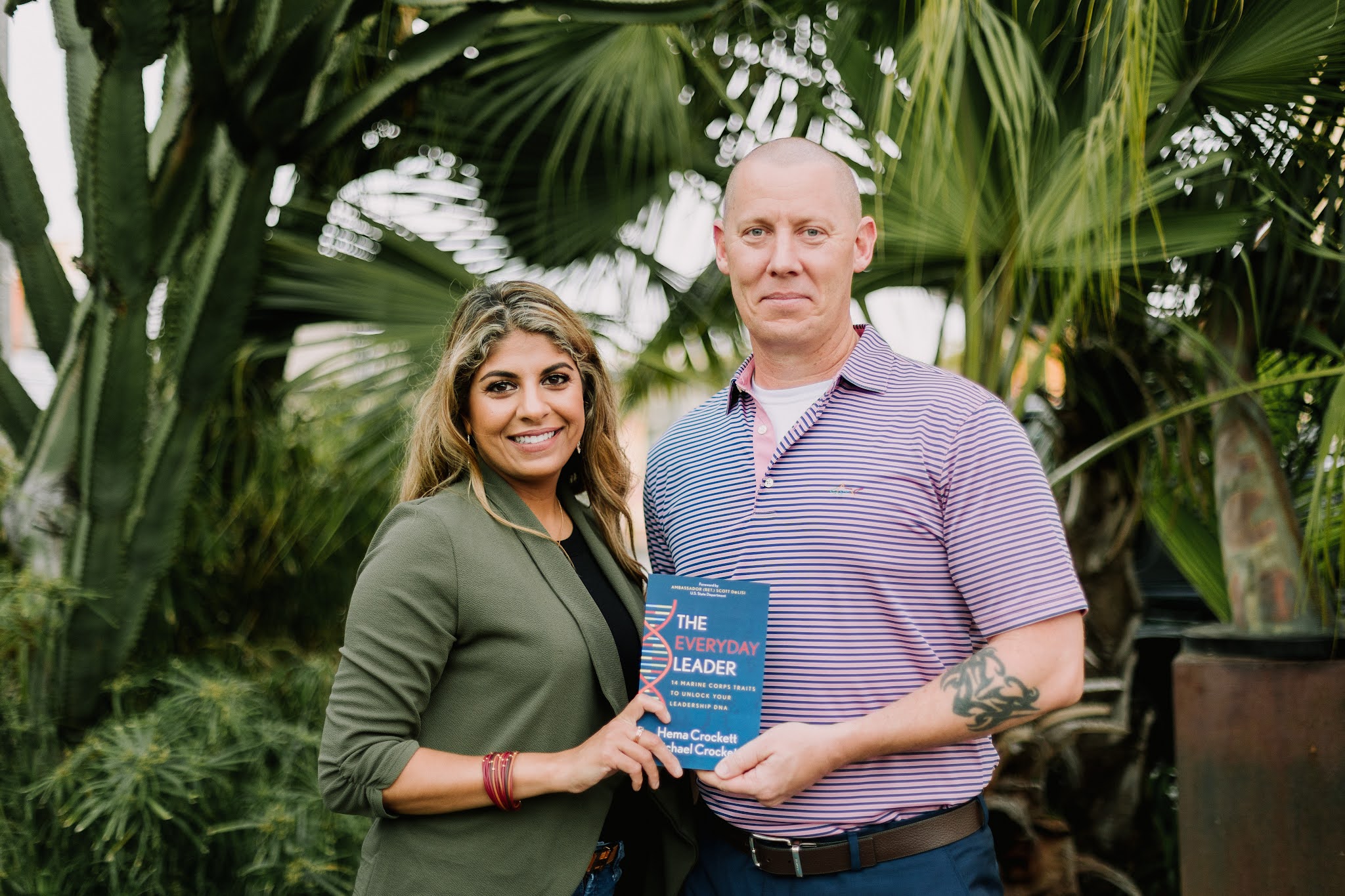
Q&A with Hema Crockett and Michael Crockett


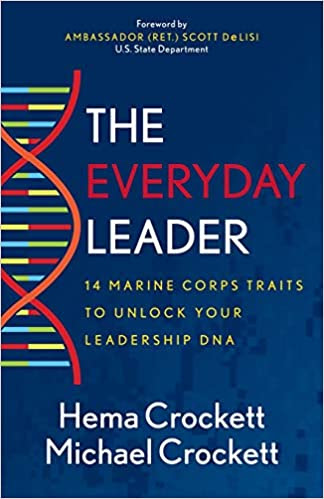
Hema Crockett and Michael Crockett are the authors of the new book The Everyday Leader: 14 Marine Corps Traits to Unlock Your Leadership DNA. Hema Crockett is an entrepreneur and former HR executive, and Michael Crockett served in the military for 23 years.  She is the co-founder and he is the head of business operations of Gig Talent. They live in San Diego.


Q: What inspired you to write The Everyday Leader?


A: Early in the pandemic we were noticing that our clients were reaching out asking about coaching and training for their managers; that their leaders didn’t really know how to lead in a remote environment.


What we uncovered through various conversations with the clients was that some of the leaders struggled to lead pre-pandemic as well through no fault of their own. Simply put, they weren’t provided with a foundation of leadership to build upon.


So, we started talking about the differences in leadership between the military and business worlds and realized that in the Marine Corps, every individual is taught the same leadership principles from day one.


What we realized is that these underlying principles aren’t that different between the military and business and that anyone can be a leader regardless of their level, title or role.


Q: How were the 14 traits you write about in the book chosen?


A: The Marine Corps actually chose these traits for us! These 14 Leadership Traits are the traits the Marine Corps teaches to every single new recruit and the traits that are further instilled into every leader the higher up they go in their military career.


The last chapter of the book is called Putting It into Practice.


Q: What do you hope readers take away from the book?


A: We have a Putting it into Practice section at the end of each chapter culminating with this final chapter because for us it’s important that readers personalize these traits.


We want them to take a look at their own leadership style, consider the 14 Marine Corps traits we discuss, but also think about others that are meaningful to them and to start practicing these traits and incorporating them into their everyday lives.


We wanted to create a guidebook to leadership versus just telling people that these particular 14 traits will make you a leader overnight. 


Q: How did the two of you work together on the book?


A: Funny enough, we didn’t think about what it would be like to write a book with each other until after we were finished writing.


Mike would take the beginning and middle of each chapter as these were the stories from his experience as well as those of other colleagues that brought the traits to life. Hema would take the business part of each chapter and tie each trait back to business.


We worked to have deadlines to hold each other accountable and being together for the past 17 years helped us know how the other responds to stress, so we knew when to give each other some space. Overall, it was a fun process, and would we write another book together? Who knows, maybe!  


Q: What are you working on now?


A: Right now we are working on getting the book out there into the hands of as many people as possible because the world could really use strong leadership as we redefine what our work and personal lives look like in this (semi) post-Covid world.


We are also focused on growing and expanding our company Gig Talent, which Hema co-founded with Jamie Jacobs.


Q: Anything else we should know?


A: We wanted to write a book that was relatable to most people and we wanted to people to expand their view and definition of leadership – one that may have been based on a level, role, or title to one that is broader where anyone can be a leader.


Plus, we wanted to bring out the day-to-day leadership that exists in the military world, which can be a bit more relatable (and funny).


--Interview with Deborah Kalb

Q&A with Tim Harris


Tim Harris is the author of the new children's picture book The Book of Hugs. He is a motivational speaker, disability advocate, and restaurateur.


Q: What inspired you to write The Book of Hugs?


A: I am famous for my hugs and I am excited to teach people, especially children around the world, how I hug. I want to inspire everyone to enjoy hugs as much as I do.


Q: What do you think Charlie Astrella's illustrations add to the book?


A: Charlie’s pictures add a lot of fun. They represent parts of my life that mean a lot to me and they make people laugh and make reading my book more enjoyable.


Q: What do you hope kids take away from the story?


A: I want kids to know that hugs make the world a better place and I want them to feel safe and loved. 


Q: What are you working on now?


A: I am helping an organization called Hearts of Joy raise money to help babies with Down Syndrome around the world who need heart surgery. 


We are preparing for a huge Hug-a-thon that will reach millions of people. We are planning a hug celebration in January for my birthday which is actually National Hugging Day!


Q: Anything else we should know?


A: I believe that hugs are the medicine to heal the world. Oh Yeah!


--Interview with Deborah Kalb