Tuesday, May 31, 2022

Q&A with Margarita Engle


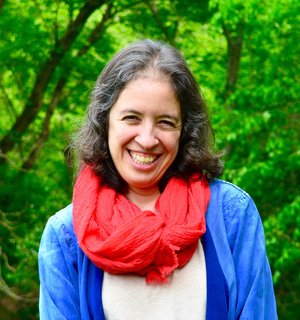
Photo by Shevaun Williams


Margarita Engle is the author of the new middle grade novel in verse Singing with Elephants. Her many other books include Your Heart, My Sky.


Q: What inspired you to write Singing With Elephants, and how did you create your character Oriol?


A: I wanted to write about a grieving child who finds a refuge in the musical language of poetry, and also discovers that her voice is powerful when she becomes part of a community of activists defending animals.


Q: Why did you include a figure based on the poet Gabriela Mistral in the novel?


A: I was inspired when I learned that Gabriela Mistral lived in Santa Barbara, California, after World War II, shortly before my mother immigrated to the U.S. from Cuba. I wondered how a child might be influenced by a neighbor who happened to be the first Latin American recipient of a Nobel Prize for Literature.


To this day, Gabriela Mistral is still the only Latin American woman who has received that honor. She is an amazing role model for young people, because she was also an educator, peacemaker, diplomat, and defender of animals, children, and nature.


Q: The Publishers Weekly review of the book says, “Employing immersive free verse that conveys themes of compassion, friendship, justice, and vulnerability, Engle captures how inexplicable Oriol’s grief feels, encasing it in a powerful, charitable, and brave young voice.” What do you think of that description?


A: I’m grateful to see that the reviewer understood my intentions. It’s a lot to tackle in one story, but apparently I succeeded in blending all those varied themes!


Q: What do you think the book says about the connections between humans and elephants?


A: We can learn so much from the love and loyalty that elephants demonstrate within their own families. Humans need to expand our ideas about heroism to include the unique sensitivity and intelligence of other species.


Q: What are you working on now?


A: I have several picture books pending, and my next two young adult verse novels are companions to Your Heart, My Sky. Like that book, they are love stories combined with environmental themes.


Q: Anything else we should know?


A: I would like readers to know that poetry makes me happy, and I hope they will also find joy and solace in the musical language of verse.


--Interview with Deborah Kalb. Here's a previous Q&A with Margarita Engle.

May 31


ON THIS DAY IN HISTORY 

May 31, 1819: Walt Whitman born.

Monday, May 30, 2022

Q&A with Danna Smith


Danna Smith is the author of the new young adult novel The Complete Book of Aspen. Her many other books include The Hawk of the Castle. She lives in Northern California.


Q: You write that The Complete Book of Aspen was based on your own experiences. At what point did you decide to write the novel, and how did you create your character Aspen? 


A: I was crushed after taking a DNA test and learning that the man who raised me was not my biological father. The news rocked the foundation my life was built upon.


As I always do, I turned to poetry for therapy. By the time I had written 10 poems, I knew I had to write a novel-in-verse and include my original poetry. I usually write for young readers, so it was a natural choice for me to write from the point of view of a 16-year-old.


I wish I could have learned the truth when I was younger like Aspen did when she took her DNA test. How would my life have been different? Would I have enjoyed a relationship and life with my biological father, or would he have turned me away?


This story is Aspen's, but the rollercoaster of emotions, the heartache, betrayal, despair, and the marathon to forgiveness are my own.


Q: How would you describe the relationship between Aspen and her mother?  


A: Aspen and her mother were close. Her mother helped her through the storms of life with her calm, guiding light. When the man raising Aspen passed away, Aspen's mother struggles with depression, leaving Aspen and her brother, Cooper, to cope with their new normal.


Aspen cares for her mother, putting her life (and grief) on hold. With love and medication, Aspen's mom begins to heal. But when Aspen takes a DNA test with her best friend, her mother is the one to cause the storm Aspen suddenly finds herself in. The bond they had is broken, and the trust is gone.


Aspen, like her mother, is now the keeper of a dark family secret and she fears telling her family the news. Aspen's mom distances herself from the situation. So, Aspen turns to her friends and her boyfriend, Charlie, who help her through her devastating discovery and the search for her biological father. Aspen isn't sure she and her mother will ever be the same again.


Q: What impact did it have on you to write the book?


A: Writing the book gave me a much-needed outlet. I poured my heart into the book for three years, and when I came up for air, I was better for it. In writing the book, I was forced to look at all angles of the situation through Aspen's eyes, the eyes of other characters, and those of the reader.


Sometimes when one is grieving, one doesn't think rationally or can only see things from one perspective—theirs. I was the same person I was before learning the truth, but suddenly, I didn't know who I was.


Looking at the situation from other points of view made a big impact on my life and recovery. There is only so much you can discuss with friends and close family without the issue also consuming their lives. Writing Aspen's story kept me sane (and the people around me) through a dark, difficult journey.


Q: What do you think the novel says about DNA testing and definitions of family?


A: People take DNA tests for many reasons. In my case, the test kit was a gift. I thought it would be "fun" to learn more about my family tree.


The number of people affected similarly by DNA testing is staggering! Like me, millions of people have lived their entire lives in the dark. Some learn the truth after those involved have passed away. They can't ask questions and have no answers.


I have learned that finding out the truth isn't always the most significant issue. Instead, it's the people/family members involved and how they often react to the news that is the most heartbreaking.


Through my DNA journey, I've learned the definition of family firsthand. I was faced with the question, what makes a dad a dad? And does bloodline equal family, or is it something else? My sisters were suddenly "half-sisters," and I gained relatives I never knew existed.


I've tackled the definition of family throughout Aspen's journey. Her boyfriend, Charlie, is adopted. He doesn't share blood with any of his family members, yet he knows exactly who he is. With Charlie's help, Aspen examines what "family" means.


Q: What are you working on now?


A: Besides promoting my new releases this year, I've been busy writing new board book and picture book proposals and full manuscripts for my agent to submit to editors. Hopefully, some of them will become future books! We writers learn very quickly to type with our fingers crossed. 😊  


Q: Anything else we should know?


A: The Complete Book of Aspen is heartbreaking, but it is also hopeful (and humorous at times). It was important for me to allow Aspen a bit of light-heartedness through her difficult journey.


While I wrote the book in narrative verse, I have also sprinkled creative verse throughout. Backmatter includes a list of poetic forms used in the book and will be helpful for teachers, poetry classes, and poetry lovers. In addition, I will be featuring and discussing some of the poetry on my blog www.poetrypop.com after the book's release on May 30, 2022. 


You'll also find an author's note at the back of the book where I touch upon my real-life DNA story and how the events that inspired the story played out.


You can find me online at www.dannasmithbooks.com. More links, including social links and my "Writer's Block Artwork," are at https://linktr.ee/dannasmithbooks.


Thank you, Deborah, for the opportunity to join you and your readers on your blog.


Live your truth!


--Interview with Deborah Kalb

May 30


ON THIS DAY IN HISTORY
May 30, 1938: Billie Letts born.

Sunday, May 29, 2022

Q&A with Pamela Ehrenberg and Tracy López


Pamela Ehrenberg, photo by Alexandra Taylor


Pamela Ehrenberg and Tracy López are the authors of the new middle grade novel Detour Ahead. Ehrenberg's other books include Queen of the Hanukkah Dosas. Ehrenberg lives in Washington, D.C., and López lives in West Virginia.


Q: How was your new novel's title chosen, and what does it signify for you?


Pamela: Someone at PJ Library came up with it—do you remember, Tracy? Our working title had been Riding the H4, but after it was pointed out that people outside D.C. might think it was more of a space alien/sci-fi-sounding kind of thing—I was very open to other ideas!


And of course, Detour Ahead works on so many levels—because so many of life’s best journeys happen on the detours.


Tracy: I had to search my email archives to find the answer because there were so many moving parts that I couldn't remember exactly how the new title came to be. It looks like the publisher emailed us in January 2021 and let us know they were considering a title change.

Tracy López

I appreciated working with PJ Publishing because of their willingness to take our ideas into account when making decisions, and the title change was one of those times.


One of the titles I suggested was Gilah & Guillermo Take a Detour, and we also had an interesting discussion Pamela started about the word "transit" and what it means to be "in transit," like for public transportation and in life.


So then we played with some Metro-related titles like Expect Delays or Alternate Routes. In February we received an email from the publisher saying they had their team of kid reviewers look over some suggestions and they had chosen Detour Ahead. 


As for what the title signifies to me—after the title was chosen we had a discussion about whether a detour is a positive or negative thing. Does it have any sort of connotation for most people?


At that time I said detours are neither negative or positive to me. One takes a detour when their original travel plan isn't working out, I guess ultimately that could cause some delays and seem like a negative thing, but it could also bring about opportunities like discovering a bakery or park you didn't know existed because you never take that route (or making a new friend!).


Q: Did you enjoy collaborating on the book?


Pamela: Totally. I have to say I’d given surprisingly little thought to the collaboration process before starting the outreach that eventually led to Tracy: the collaboration was just something needed to tell this particular story that was bigger than one human.


I had really given about zero thought to whether collaborating would be enjoyable—so it was a total surprise to realize what a difference it made, having someone else care as much about the book as I do—while we were writing it but also through all of the many detours of the publishing process and also now that it’s out in the world!


Tracy: I loved it, and was surprised by that. Back when the internet was Prodigy bulletin boards I sometimes participated in silly round-robin story-telling, which is the only collaborative writing I had done before this project.


Even though that was a positive experience I really hadn't anticipated how rewarding and enjoyable working with Pamela would be. I feel lucky that we had the opportunity to tell this story together and become friends in the process.


Q: Do you have any other favorite books for kids set in Washington, D.C.?


Pamela: Two recent ones come to mind from fellow members of the Children’s Book Guild: The Passover Guest, a picture book by Susan Kusel (illustrated by Sean Rubin), and Jayla Jumps In, a middle grade by Joy Jones.


I’d love to see even more—I think a lot of people are surprised to learn there are 700,000 actual people living here in D.C. The humanity of fictional characters can sometimes bring to life the abstract conversations that take place around statehood, rights, and representation for the human beings and families living here.


Tracy: A fun middle-grade book that takes place at the most famous residence in D.C. is Shaking Up the House by Yamile Saied Méndez. Like Pamela, I'd love to see more contemporary children's fiction that takes place in D.C. It makes a book extra special to the kids who know that story's setting as home. 


Q: Did you know how the novel would end before you started writing it, or did you make many changes along the way?


Pamela: Well, we knew they had to end up as friends—I think their meeting kind of set the stage for that, and we knew Gilah was getting ready for her bat mitzvah, so that had to happen eventually.


We realized Guillermo would need some kind of event in his life to parallel that, but I think Tracy was a bit into writing his story before the poetry reading emerged.


So I guess we sort of knew some of the ending points—but as with detours—lots of changes along the way in how everyone got there.


And I think up ‘til the end, especially with the help of our incredible sensitivity readers, there were lots of changes in not so much what happened but in who the characters were in different moments—which parts of them got emphasized or de-emphasized to let them come more sharply into focus.


Tracy: I believe Pamela remembered that correctly because I never used to outline much before writing. I've reformed now because there's often a lot of wasted time and back-tracking when you write like that, but I think it served this particular project well not to have anything rigid in place.


Writing Detour Ahead was like an actual bus ride —we had a route of scheduled stops we knew we wanted to make, but there were unknown variables like everything we might see out the windows or who would join us on the bus, and I think we were both comfortable just enjoying the ride and seeing where it took us.  


Q: Will you collaborate again on future books?


Pamela: No immediate plans…but if there’s one thing Guillermo and Gilah taught me, it’s to be open to unplanned/unexpected opportunities!


Q: Anything else we should know?


Pamela: I think a lot of readers might not know how much authors depend on the kindness of others at every stage of creating a book and then seeing it find its place in the world—other writers, advance readers with all sorts of perspectives, about a million different roles at the publisher, bloggers like Deborah, and of course readers like everyone reading this—it’s a bigger team effort than the number of names who can fit on the cover or even get squeezed into the acknowledgments. We’re so thankful for each of you!


I can be reached through my website at www.pamelaehrenberg.com , on Twitter at @PamelaEhrenberg, and on Facebook at @PamelaEhrenbergAuthor.


Tracy: I second all of that and would like to add that we're always happy to connect with our readers! I'm @tracydelopez on both Twitter and Instagram... Also, I had a lot of fun making things to go with the book, like a playlist, free printables including a scavenger hunt, and an educator's guide, so please feel free to check those out! And as always, thank you for reading!


--Interview with Deborah Kalb. Here's a previous Q&A with Pamela Ehrenberg.

Q&A with Mari Lowe


Mari Lowe is the author of the new middle grade novel Aviva vs. the Dybbuk. She is a middle school teacher, and she lives in New York.


Q: What inspired you to write Aviva vs. the Dybbuk, and how did you create your character Aviva?


A: I’d been dissatisfied with many of portrayals of Orthodox Jews in the media, and I had wanted to write a piece in which my community was the backdrop instead of the story. And I’ve always been fascinated by dybbuks and fantastical Jewish mythology, so I wanted to write something with that!


The mikvah was the perfect setting because of its own place in mysticism and how it is such a private, almost secret spot even within the community. 


Aviva herself is a bit of amalgam of every middle schooler I grew up with and know today, paired with her own situation. She has been deeply affected by her father’s loss and by years living with a parent with depression, and I tried to create the character with that in mind. Will she want to reach out to the people around her? Will she have the skills for it?


I also tried to find that defensive-protective combination that comes with growing up with a mother who isn’t the norm, where there is a lot of love in the house but not the degree of care that an 11-year-old girl might need.


My strategy is usually to write a couple of chapters with a character until I’ve gotten a feel of who she is, and then to step back and analyze the characteristics I’ve given her for accuracy and consistency. I wanted Aviva to be, at her core, an ordinary girl coping with several tremendous burdens.


Q: The Publishers Weekly review of the book says, in part, “Lowe portrays Aviva and Ema’s mourning with a gentle touch, gradually building to an ending that points toward spiritual and emotional healing, thanks to the steadfast support of their Jewish community, especially its women.” What do you think of that description, and did you know how the novel would end before you started writing it?


A: I love it! It’s very much what I intended with the story, and it’s so gratifying to see that the text is portraying it. In particular, the role of women within the story was something that I considered while I was writing.


Of course, the story primarily takes place above a women’s mikvah, so women were always going to be the story, but something that has always struck me about the Orthodox community is how easily a girl can grow up entirely with women.


We go to all-girls’ schools where male teachers are rare, if present at all, and the major influential figures within our lives are usually women. And women here organize and create our own community where those who are struggling are quietly taken care of in subtle ways, like the women who visit Aviva’s mikvah just to keep it running and leave generous tips. 


I think I knew how the novel would end fairly early on. Well, not entirely– there were about 20 pages of machanayim that I cut out of the final chapter! But the overall themes and reveals were something that became clear to me as I wrote the early chapters.


I don’t think I was even aware that Aviva had lost her father until the end of the first chapter, though. Before writing, I had envisioned the story as a lighter portrayal of a girl, a dybbuk, and its antics. But as soon as I had written the last paragraph of Chapter One, I knew that this was going to be a more serious story. The rest came together soon after that.


Q: What do you see as the role of the dybbuk in the novel?


A: Dybbuks are an interesting concept. Early stories of dybbuks usually involve a possession and something similar to an exorcism. Most likely, the “dybbuk” was actually schizophrenia or dementia that people in the Middle Ages didn’t understand, and that wasn’t the kind of dybbuk that I thought would be appropriate today.


Instead, I wanted to explore the idea that the dybbuk is a spirit that won’t rest, that exists in the liminal spaces between life and death. Aviva and her mother are both trapped in that same space, lost in a grief that has them standing still, and a dybbuk felt like the perfect manifestation of their situation.


Without spoilers, the dybbuk plays multiple roles within the story, but I think that this is really where the core of its story is– existing as a companion to this family as it remains immobilized, and unnecessary outside of their house of mourning. It’s why it never leaves the mikvah, and why, eventually, the end of its story signifies the start of their healing.


Q: What do you hope readers take away from the story?


A: I certainly hope that they’ll come out of it with a greater understanding of the Orthodox Jewish community! There are some absurd caricatures out there that are much more widespread than the truth, and I hope to dispel them or at least provide a counterpoint.


Middle grade is a great age to write for because it’s when kids are starting to think in shades of grey, finding nuance in what they read, and early assumptions can be challenged and reconsidered. Aviva lives in a community that might be unusual to some readers, but I do think that many readers will find more commonality with her than they’d expect. 


And that goes for more than just the setting! Aviva is someone who has lost a parent, who has a parent struggling with mental health, and who herself has those struggles, too. She’s a character who has lost a friend and is learning how to reclaim her with grace, and she’s a girl who has trouble sitting still in class but is a pro with a ball.


I hope that there is plenty to relate to with her, and I hope that readers enduring similar situations will feel a connection that might provide them with comfort or encouragement.


Q: What are you working on now?


A: I’ve got another book in the works, this one a middle grade thriller set in a similar community which will tackle concepts like toxic friendships, belonging, and forgiveness. I’m also working on a short story for a Passover-themed anthology, and I’ve been contemplating a third book which will be set in a modern-day ir miklat. But that’s a possible project for this summer!


--Interview with Deborah Kalb

Q&A with Fiona Snyckers


Fiona Snyckers is the author of the new novel Lacuna. The book takes on some of the issues raised in J.M. Coetzee's novel Disgrace. Snyckers' other books include Now Following You, and her work has appeared in publications including The Times and The Sunday Times. She lives in Johannesburg, South Africa.


Q: In your author's note, you write, “This book is not a retelling of J.M. Coetzee's Disgrace. It is also not a sequel to Disgrace. It establishes an intertextual conversation with Disgrace.” Why did you decide to write Lacuna?


A: I decided to write Lacuna because there were aspects of J.M. Coetzee's Disgrace that bothered me. I eventually settled on the medium of fiction as the best way to respond.


Q: The Kirkus Review of the book calls it “A novel that questions the right of an author to appropriate stories as it defends the right of the character to live them.” What do you think of that description?


A: I think it is accurate inasmuch as my book raises questions that it doesn't answer in any definitive way. The question of how far an author can go in telling someone else's story remains unanswered.


The book suggests that any author may tell any story, provided they are prepared for the consequences of what they write. Anyone who objects to what someone has written is free to create their own story in response.


Q: What role do you see the character John Coetzee playing in your novel?


A: The character of John Coetzee is a kind of “white whale” antagonist for my main character, Lucy. Most of her conflict with him exists in her own mind. She projects her fears, disappointments, and trauma onto him.


Q: Did you know from the beginning how your story would end, or did you make many changes along the way?


A: It took me several years to write Lacuna. I didn’t have a clear idea of the ending when I started out. Various plot twists revealed themselves to me as I went along.


Q: What are you working on now?


A: I am currently working on two projects - a thriller/domestic noir novel, and a literary novel.


Q: Anything else we should know?


A: Lacuna evokes strong reactions in readers - particularly in admirers of J.M. Coetzee. I knew I was “poking the bear” when I wrote it, but I had no idea how intense some of those reactions would be. I have had to take my own advice and accept the consequences of what I write.


--Interview with Deborah Kalb