Tuesday, January 3, 2023

Q&A with Deirdre Sullivan


Deirdre Sullivan is the author of the new children's picture book Gussie & Max: A Sweet Story of First Friendships. Her other books include Ming Goes to School. She lives in Boston.


Q: What inspired you to write Gussie and Max?


A: Funny you should ask that question! This book was inspired by two of my girls.


My youngest daughter Cece would often reminisce about what she could and couldn’t do as a young child. It would always make me laugh because she sounded like an old lady thinking about something that happened in her youth.


Also, my other daughter Lila who is turning 16 still has her lovie and will most likely take it to college. So a little bit of hanging onto something dear to her as a child, but still tackling life as it comes her way.


Q: How would you describe the friendship between Gussie and Max?


A: I love their relationship, and how they support and encourage each other through the challenges they face, but also embrace their accomplishments.


Q: What do you think Lisa M. Griffin's illustrations add to the story?


A: I am in love with her illustrations. When I wrote the story I always envisioned children, but when Lisa suggested animals there was no looking back!


Q: What do you hope kids take away from the book?


A: I hope they take a moment to appreciate all the little accomplishments they have every day, and also are excited about what they are about to embark on.


Q: What are you working on now?


A: I have four girls from the ages of 10-18, and they are always more source of inspiration. So right now I am working on a book about befriending a ghost, which my kids are convinced there is one living in our house! Which has been entertaining until they wake me up at 2am, because they think they have heard a noise.


Q: Anything else we should know?


A: I grew up in Buffalo, N.Y., and I am a diehard Bills fan. For the last 25 years I have made my husband get Direct TV so we could see all of the games. Up until recently, he would always ask me if we still needed it, because they have been so bad. My answer would always be the same… “Yes! Because this could be their year!” Well, I can finally say this and believe it… This could be their year!


--Interview with Deborah Kalb

Jan. 3


ON THIS DAY IN HISTORY
Jan. 3, 1898: Carolyn Haywood born.

Monday, January 2, 2023

Q&A with Priyanka Taslim


Photo by Prithi Taslim


Priyanka Taslim is the author of the new young adult novel The Love Match. Also a teacher, she lives in New Jersey.


Q: What inspired you to write The Love Match, and how did you create your character Zahra?


A: The very first nugget of inspiration for The Love Match was my visit to a local Pakistani tea shop. It unfortunately shut down during the pandemic, but the aesthetics and food made me want to write a book involving one.


Additionally, I really wanted to write something set in my hometown that celebrated its Bangladeshi diaspora and the liminal way that I grew up in this little pocket of Bangladesh in New Jersey. Other elements that I wanted to incorporate, such as meddling aunties and matchmaking shenanigans, all sort of fit together once those original concepts combined.


After everything came together and I knew I wanted to write a young adult romance novel, the next thing I asked myself was who I wanted to be centered in it, and that’s how Zahra came into being.


She embodies a lot of feelings that many oldest daughters of immigrant families often have, especially when they’re working class. There’s this great sense of responsibility, and normally, books with characters like that can feel heavy, especially when they’re characters of color.


I wanted to show that she can be the heroine of an epic, swoony, funny, and tropey romance novel that still feels grounded in her reality.


I often felt excluded from romances and the escapism that they offered, so I want readers who also don’t typically see themselves in main characters, or only see working class brown girls painted in a certain light, to be able to read The Love Match, resonate with it, and feel worthy of being the focus of books like it too.


Q: What do you see as the connection between your novel and Pride and Prejudice?


A: The Love Match is not a retelling of Pride and Prejudice, but I feel that it embodies much of the heart of Austen’s most popular work. Zahra is a whip-sharp heroine who is very observant about the people and social politics at play in the diaspora Bangladeshi community around her, just like Elizabeth Bennet is in Regency society.


Like the Bennets, the Khans are struggling financially. Zahra’s amma, who is as much of a busybody as Austen’s Mrs. Bennet, thinks a suitable match will solve all of their problems. Harun, the broody young man Zahra gets set up with, is what I feel a modern day, teenage Mr. Darcy might be like.
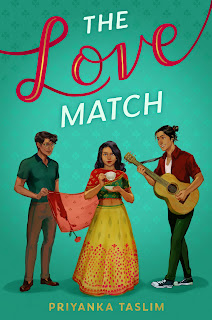
 

I think there are actually quite a few similarities between the social politics of the Regency era and what modern day South Asians still experience, especially during courtship, and that’s why there’s always been something Austenian about the book.


But because The Love Match is not a reimagining, there are plenty of twists and turns and wrenches thrown into the plot—for one, Harun has a rival for Zahra’s heart who is much more charming than manipulative Mr. Wickham or dull Mr. Collins—that I feel will be fresh and new for someone who enjoys Jane but still wants something surprising!


Q: Did you know how the novel would end before you started writing it, or did you make many changes along the way?


A: That is the fun—and daunting—part about writing a love triangle! I ended up re-plotting and even rewriting the book several times because I couldn’t settle on the ending—or which boy Zahra would ultimately choose, if either. This also required me to fine-tune pieces of the plot that skewed toward one boy too much or not enough so that the ending felt emotionally resonant.


Something else that I love about the book, however, and another element that’s a little similar to Pride and Prejudice, is that The Love Match is very much a family story. There is a relatively big cast for a YA romance novel.


You have Zahra’s entire meddling but loving family: her mother, her grandmother, her two younger siblings, this lingering love and grief felt toward her late father. Then you also have other characters like her three best friends, two of whom are the twin daughters of the gruff man who owns the tea shop where Zahra and eventually Nayim work.


There are also many minor characters from their local community, some of whom you see in interstitials where “The Auntie Network,” a collective of aunties in Paterson, are gossiping about the events of the story.


I had a blast writing all of these characters, but when you have a big cast, you have to make sure they all feel fleshed out and necessary. That took fine-tuning too, so the reviews that always bring me the most joy are the ones that comment positively on not just the romantic elements but the platonic threads in Zahra’s life!


Oh, and I had to make sure it was actually funny too, and that required rewriting lines, haha.


Q: What do you hope readers take away from the story?


A: I mentioned it above a bit, but I hope books like The Love Match make more readers feel welcome in romance. If they ever, like me, thought there was no place for them in romance but they yearned for there to be, I hope this book can be one for them to escape into. Romance is growing more and more diverse and I want everyone to find belonging in the genre, if they want.


Q: What are you working on now?


A: I have a few projects I’m working on. I have another young adult project coming after this one from Simon & Schuster, as well as an adult contemporary project.


Most of the things I work on tend to have Bengali protagonists, big quirky casts, complicated families, some romance and all the fun tropes therein, as well as some discussion of social issues, so I hope readers who enjoy The Love Match will like those as well!


Q: Anything else we should know?


A: I think it’s very important to share that the book features a bearded dragon named Rabeardranath Tagore whom I’m very excited for readers to meet! If you want Jenny Han’s fake dating shenanigans and Jane Austen’s smart social politics, this book will be your cup of tea!


--Interview with Deborah Kalb

Jan. 2


ON THIS DAY IN HISTORY
Jan. 2, 1920: Isaac Asimov born.

Sunday, January 1, 2023

Q&A with Rebecca Kelley


Rebecca Kelley is the author of the new novel No One Knows Us Here. She also has written the novel Broken Homes and Gardens, and her work has appeared in a variety of publications, including Bustle and The Rumpus. She lives in Portland, Oregon.


Q: How did Dostoevsky’s classic Crime and Punishment inspire you to write No One Knows Us Here, and how did you create your character Rosemary?


A: In 2014 I wrote a little list for Bustle called 11 Classic Novels that Should’ve Had Female Main Characters. One of them was Crime and Punishment. The idea stuck in my head, and I ended up re-reading it shortly after that, trying to figure out how I might pull off a modern-day retelling of the story with a female Raskolnikov.


I came up with Rosemary, who, like Raskolnikov, wonders if sometimes killing a person—a very bad person—could be a moral act. I then created Sam as a stand-in for Sonia, the faithful girlfriend. My book ended up veering off in a few different directions, so I don’t consider it a contemporary retelling of Crime and Punishment, but that was how it all began.


Q: How would you describe the dynamic between Rosemary and her sister Wendy?


A: In one word, I’d describe it as fraught. Rosemary is 23 and Wendy 14 when the story begins, and Rosemary is experiencing a lot of guilt for having left Wendy in an abusive household.


When their mother and Wendy’s father die in a car crash, Rosemary hesitates to take her in, almost feeling like she might do her little sister more harm than good. After everything Rosemary’s been through, she has trouble connecting with Wendy at first, but their bond deepens as the story goes on, and she goes to desperate measures to preserve it.


Q: Did you know how the novel would end before you started writing it, or did you make many changes along the way?


A: I knew how I wanted the novel to end, but I wasn’t sure how I was going to get there. I did a lot of writing and rewriting before the book was finished. My first full draft was 135,000 words, and I cut at least 40,000 of those (about 140 pages!) before submitting it to my agent. It was a very messy process.


Q: What do you hope readers take away from the story?


A: My favorite novels are the ones that leave me with a distinctive mood—like I’ve been transported to a very specific time and place, a whole world with its own sights and sounds and smells. That’s what I hope readers get from No One Knows Us Here—not so much a moral or a message but an immersive experience.


Q: What are you working on now?


A: Once again I looked for inspiration from the classics. This time I’m riffing off of Theodore Dreiser’s An American Tragedy, one of my favorite books. He got the story from a real-life crime that was committed in 1906. The movie A Place in the Sun with Elizabeth Taylor told the same story.


I’ll see what happens with a female protagonist and a contemporary setting—in this case, an old National Parks lodge up in the Rocky Mountains.


Q: Anything else we should know?


A: The high-end kitchen shop where Rosemary works in No One Knows Us Here was based on a local store here in Portland where I worked in the 1990s and early 2000s. That’s how I know so much about knives….


--Interview with Deborah Kalb

Q&A with Jerry McGill


Jerry McGill is the author of the new novel The Color of Family. His other books include the novel Bed Stuy. Also an artist and educator, he lives in Portland, Oregon.


Q: What inspired you to write The Color of Family, and how did you create the Payne family? 

A: I actually wrote a first draft of TCOF a year or so before I ever began my first published novel, Bed Stuy. It was originally a series of short stories, nine to be exact. I had always admired and respected J.D. Salinger’s Nine Stories since high school and told myself that one day I would write a similar work but with black culture at the forefront. 

Q: How would you describe the dynamic between your characters Devon and James? 

A: Fraught. Fiercely competitive to the point of unhealthy. Not necessarily Cain and Abel, but there is an animosity there which later becomes deep resentment. 

Q: How was the book's title chosen, and what does it signify for you? 

A: This is kind of a humorous story. The original title was “The Negro Paynes,” a reference that a colleague made to the family patriarch back in the late ‘60s. I really liked it but it was decided that in 2022 that title was a little inappropriate and I was asked to change it. I didn’t fully agree with the request, but I kind of got it.


After brief meditation I came up with “The Color of Family,” another reference from a dialogue in the novel. 


Q: In our previous interview, which focused on your novel Bed Stuy, you said that with that novel, “I knew how the novel would end, but honestly it ended four different ways before I settled on what is now before you.” Was that the case with this book as well? 

A: That was definitely the case with this book. As previously mentioned, this was a series of nine short stories, each focused on a different family member. A few of the stories were completely independent of the others and there was no overlap in them.


Once I made the decision to structure the work in a more linear form I had to go back and realign everything. Interestingly enough, the last chapter held up as the last chapter, albeit with a few changes. 

Q: What are you working on now? 

A: I am working on my next novel, the story of a lifelong friendship between a young black boy and a young white girl who grow up in small-town Maine during the rise of drug use in their community. I am also working on a screenplay set in the black section of Chicago during the 1950s, a coming of age tale involving a young man with ties to the black mob. 

Q: Anything else we should know? 

A: This year I pledged to myself that I would read around five of the novels we consider “classics.” I’m happy to report I read four, but still find myself unable to complete Moby-Dick.


--Interview with Deborah Kalb. Here's a previous Q&A with Jerry McGill.

Jan. 1


ON THIS DAY IN HISTORY
Jan. 1, 1919: J.D. Salinger born.