Showing posts sorted by relevance for query marsha forchuk skrypuch. Sort by date Show all posts

Friday, October 26, 2018

Q&A with Marsha Forchuk Skrypuch


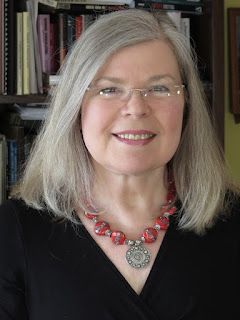
Marsha Forchuk Skrypuch, photo by Jack Paccione Jr.
Marsha Forchuk Skrypuch is the author, with Van Ho, of the new children's book Too Young to Escape: A Vietnamese Girl Waits to be Reunited with Her Family. It connects to her book Adrift at Sea, which focuses on the same family; Van Ho, the youngest child in the family, was left behind when other relatives departed from Vietnam. Skrypuch lives in Brantford, Ontario, Canada.

Q: You note that the idea for Too Young to Escape emerged from your book Adrift at Sea. At what point did you decide to collaborate with Van Ho on her story?

A: My very first audience for Adrift at Sea were the primary students at the American International School of Bucharest. Here's a link with pics of that trip, including me reading to the Primaries.

The librarian, Stacey, had introduced the story just days before my arrival and let me know that her young students loved Tuan's [Van's brother's] story but were very concerned about Van and how she was doing now. So just before I left for the airport, Vanessa kindly sent me a smiling photo of herself with her husband and children. I shared it with the students and they were relieved!

During presentations in Canada over the next months, this response was repeated, especially when I presented Adrift at Sea to Primaries. Older students were not as worried, but young kids could see themselves in Van.

I asked Van if she would agree to do a book about her childhood with me. It took her a bit of time to get used to the idea and to agree -- and I'm so glad that she did.

Q: Adrift at Sea is a picture book while Too Young to Escape is not. How did you choose the format for this book?

A: Too Young To Escape is an introspective journey, about the feelings of a young girl who is without her family, with her emotional response being as important as the actions themselves. A picture book couldn't convey that introspection in the same way as a chapter book can.

My biggest challenge was to write it as simply as possible, yet to convey the complex feelings that Van experiences.

With Adrift at Sea, Brian Deines' oil paintings beautifully captured the physical nature of that journey -- the vastness of the ocean and just how small and vulnerable their boat was. While Tuan's journey was also an emotional one, it wasn't introspective in the way that Van's was.

Q: How did you and Van Ho work together on the book?

A: We initially spoke on the phone, and then we met for one giant-long interview face-to-face. After that, as I wrote each chapter, I would email it to Van and she would read it and give me feedback for tweaking. She also would send it to her siblings and parents so they could comment too.

Once, Tuan was so caught up in reading it that he totally missed his subway stop so his wife had to pile their daughters into the car and go get him!

There were also many late-night phone calls when I had written myself into a corner!

Q: Did you need to do additional research to write Too Young to Escape?

A: Yes. For basic things like the interior of her house, the interior of the Buddhist Temple, the route she took to get to school, the school yard and interior of the classroom. These are visuals that I needed for the story, but a 4-year-old tends not to observe specific details like that.

So I would find various historical images and street views and show them to her and that would tweak her memory and she was able to show me what was the same or different from what I was showing her so I could visualize and then write the scene.

Q: What are you working on now?

A: I'm in the midst of writing books 2 and 3 of my second WWII trilogy.

Scholastic US is releasing Stolen Girl (Stolen Child in Canada), the third novel in my first WWII trilogy, in Feb 2019. And is releasing Don't Tell the Nazis (Don't Tell the Enemy in Canada) in the fall of 2019.

Q: Anything else we should know?

A: Van's story is of course a very personal one for her and her family and I am so grateful that she allowed me and readers in. She has given us all the opportunity to feel what it's like for a very young child to be separated from parents because of political turmoil.

--Interview with Deborah Kalb. Here's a previous Q&A with Marsha Forchuk Skrypuch.

Saturday, September 4, 2021

Q&A with Marsha Forchuk Skrypuch


Photo by Orest Skrypuch


Marsha Forchuk Skrypuch is the author of the new middle grade historical novel Traitors Among Us. It follows the same characters she's written about in Don't Tell the Nazis and Trapped in Hitler's Web. She lives in Brantford, Ontario.


Q: Why did you decide to return to the story of Krystia and Maria in your new World War II-era novel?


A: From my research, I realized that refugees like Krystia and Maria were far from safe at the end of the war, even though they had been given asylum in an American refugee camp.


Thousands of survivors just like them ended up being kidnapped right out of Allied refugee camps and taken into the Soviet Zone, where they were interrogated and tortured into signing false confessions, and then held in secret compounds called “silence camps.”


I wanted to know how Maria and Krystia would cope if this happened to them. I especially wanted to know how they would (or if they could) escape. There were 10,000 young people who had the experience that they did after the war and I wanted to shed light on it.


Q: How do you think the sisters have each been affected by the horrific events they've lived through?


A: Both of the sisters have a resilience based on trust and a resourcefulness based on generosity. They have lost so much, but in doing so, have an appreciation of what they still have.


As an example, their mother’s execution has a profound effect on both of them, but while the Nazis could kill their mother, they couldn’t take away the lessons and the love and generosity of spirit that she instilled in both of her daughters.


Q: The novels are based on historical facts--how did you research this particular book?


A: This is the seventh novel I’ve written that deals with the Ukrainian experience in WWII, so I’ve known about the Soviets raiding Allied refugee camps for quite some time.


It’s something pretty much every survivor talks about – they’ve either witnessed it, escaped from it, or knew someone who was kidnapped – so doing the initial research was relatively easy.


Finding detailed first person accounts of people incarcerated in Silence Camps was harder because it was exceedingly rare for people to escape. The toughest was finding an actual successful escape plan. I do consider myself a librarian-detective and so I kept on digging.


Q: What do you hope readers take away from the story?


A: History as we know it only scratches the surface of all that has happened in the past. There’s so much that we don’t know and what we don’t remember and learn from, we’re bound to repeat.


I would love it if readers talked to their own parents and grandparents and asked about what their life was like when they were young. After that, ask an older person from a different culture or community the same questions. We need to learn from each other so we can all grow in compassion, generosity, and experience.


Q: What are you working on now?


A: A story set in the 1930s that I’m having trouble containing in a single novel. At this rate it will be three.


Q: Anything else we should know?


A: The companion novels to Traitors Among Us, in order are:


Don’t Tell the Nazis, Trapped in Hitler’s Web, and then Traitors Among Us. That said, the novels don’t have to be read in order. I try to write each story so they’re self-contained, but linked.


--Interview with Deborah Kalb. Here's a previous Q&A with Marsha Forchuk Skrypuch.

Tuesday, December 28, 2021

Top 10 Most-Viewed Posts of 2021: #4


Counting down the top 10 most-viewed posts of 2021, here's #4, a Q&A with Marsha Forchuk Skrypuch first posted Sept. 4, 2021.


Photo by Orest Skrypuch

Marsha Forchuk Skrypuch is the author of the new middle grade historical novel Traitors Among Us. It follows the same characters she's written about in Don't Tell the Nazis and Trapped in Hitler's Web. She lives in Brantford, Ontario.


Q: Why did you decide to return to the story of Krystia and Maria in your new World War II-era novel?


A: From my research, I realized that refugees like Krystia and Maria were far from safe at the end of the war, even though they had been given asylum in an American refugee camp.


Thousands of survivors just like them ended up being kidnapped right out of Allied refugee camps and taken into the Soviet Zone, where they were interrogated and tortured into signing false confessions, and then held in secret compounds called “silence camps.”


I wanted to know how Maria and Krystia would cope if this happened to them. I especially wanted to know how they would (or if they could) escape. There were 10,000 young people who had the experience that they did after the war and I wanted to shed light on it.


Q: How do you think the sisters have each been affected by the horrific events they've lived through?


A: Both of the sisters have a resilience based on trust and a resourcefulness based on generosity. They have lost so much, but in doing so, have an appreciation of what they still have.


As an example, their mother’s execution has a profound effect on both of them, but while the Nazis could kill their mother, they couldn’t take away the lessons and the love and generosity of spirit that she instilled in both of her daughters.


Q: The novels are based on historical facts--how did you research this particular book?


A: This is the seventh novel I’ve written that deals with the Ukrainian experience in WWII, so I’ve known about the Soviets raiding Allied refugee camps for quite some time.


It’s something pretty much every survivor talks about – they’ve either witnessed it, escaped from it, or knew someone who was kidnapped – so doing the initial research was relatively easy.


Finding detailed first person accounts of people incarcerated in Silence Camps was harder because it was exceedingly rare for people to escape. The toughest was finding an actual successful escape plan. I do consider myself a librarian-detective and so I kept on digging.


Q: What do you hope readers take away from the story?


A: History as we know it only scratches the surface of all that has happened in the past. There’s so much that we don’t know and what we don’t remember and learn from, we’re bound to repeat.


I would love it if readers talked to their own parents and grandparents and asked about what their life was like when they were young. After that, ask an older person from a different culture or community the same questions. We need to learn from each other so we can all grow in compassion, generosity, and experience.


Q: What are you working on now?


A: A story set in the 1930s that I’m having trouble containing in a single novel. At this rate it will be three.


Q: Anything else we should know?


A: The companion novels to Traitors Among Us, in order are:


Don’t Tell the Nazis, Trapped in Hitler’s Web, and then Traitors Among Us. That said, the novels don’t have to be read in order. I try to write each story so they’re self-contained, but linked.


--Interview with Deborah Kalb. Here's a previous Q&A with Marsha Forchuk Skrypuch.

Wednesday, January 29, 2025

Q&A with Marsha Forchuk Skrypuch


Marsha Forchuk Skrypuch is the author of the new middle grade novel Kidnapped from Ukraine: Under Attack. Her other books include Winterkill. She lives in Brantford, Ontario.


Q: What inspired you to write Kidnapped from Ukraine: Under Attack, and how did you create your characters Rada and Dariia?


A: Everything that Rada and Dariia experience is based on documented accounts of civilians who lived in Mariupol when the Russians attacked. The girls’ characters are inspired by real people that I have met, as well as myself and my own older sister, who is only 18 months older than me.


Q: In the book’s Author’s Note, you write, “I never thought I would write a book about a war as it was happening.” Can you say more about that?


A: I initially felt that it was too soon to write about it because the war isn’t over. But then I realized it was my moral responsibility to shed light. The people who are living through this war are surviving hour by hour. They can’t stop what they’re doing and write a book.


But this is a David and Goliath situation. Russia is 28 times the size of Ukraine and Putin’s goal is to erase a nation, and if he’s successful, he’ll erase another, and another. My book gives the perspective of a family living through this.


Q: How did you research the novel, and what did you learn that especially surprised you?


A: While people have shared their stories with me, the details of their experiences are not mine to share in a novel. However, those conversations inspired the personalities of my characters.


For day-to-day events, I relied on a wide variety of first-person narratives, testimony, and day to day newspaper accounts, including The New York Times, the Kyiv Independent, the Kyiv Post, the Moscow Times, Reuters, and Meduza.


What surprised me? The sheer inventiveness and audacity of individual Ukrainians who decided to fight the Goliath in any way that they could didn’t surprise me, but it really stood out.


Q: What do you hope readers take away from the book, and what do you see looking ahead for Ukraine?


A: Empathy. Also, the knowledge that ignoring the war will just make it grow.


As to what’s ahead for Ukraine: they will win, because the alternative for the free world is unimaginable.


Q: What are you working on now?


A: I’m writing a medieval novel that may or may not be a trilogy.


Q: Anything else we should know?


A: My website is calla.com and I update it frequently.


--Interview with Deborah Kalb. Here's a previous Q&A with Marsha Forchuk Skrypuch.
Saturday, December 7, 2019

Q&A with Marsha Forchuk Skrypuch


Marsha Forchuk Skrypuch is the author of Don't Tell the Nazis, a new middle grade novel for children. Her many other books for young people include Making Bombs for Hitler and The War Below. She lives in Brantford, Ontario.

Q: You note that Don't Tell the Nazis was based on the actual story of a woman named Krystia. How did you learn about her, and at what point did you decide to write this book?

A: Don’t Tell the Nazis was inspired by the true story of Kateryna Sikorska and her daughter Krystia, who hid three Jewish friends under their kitchen floor during the Holocaust.

Krystia's daughter, journalist and filmmaker Iryna Korpan, approached me in 2012 at a public event. She handed me a copy of her excellent documentary called She Paid the Ultimate Price, then explained that it was about her own mother’s and grandmother’s heroic actions in World War II Ukraine. 

She asked if I would consider writing a book about it. After reviewing the documentary and doing some preliminary research, I agreed.

Q: How did you research the book?

A: I interviewed Krystia at length and she answered my questions as they came up. Krystia herself was only 8 years old when these events unfolded, and while her experiences were seared into her brain, it's never a good idea to rely on just one person's memory.

I accessed other first-person accounts of the same era: Jewish, Polish, Ukrainian, Ethnic German and German. Before the dissolution of the Soviet Union it was nearly impossible to access accurate accounts like Krystia's but in the last decades, scholars have been filling in the gaps. Recent academic dissertations and other studies were very helpful.

Q: What did you see as the right blend between the historical Krystia and your own creation?

A: I had originally planned to write this book as non-fiction, but as I got into the interviews and research, I realized that writing it that way would not do the story justice. Many of the people who lived through those times had been killed. How could I interview them? How could I quote them?

But the other problem was that as I delved into the complicated events of the time, I realized that the story extended far beyond Krystia and her family. I ditched my original manuscript and started from scratch.

The real-life Krystia was only 8 years old in 1941, though her courageous actions were that of a mature individual. Today’s readers might have difficulty understanding that someone so young could accomplish all that Krystia did. I felt that making her older would make her actions more relatable.

Maria was only 7. Dolik and Leon were older teens. For the sake of the story I made them closer in age to Krystia so they could be classmates and friends. Krystia also had an older sister named Iryna who was 10, but it was Krystia who sneaked food and documents into the ghetto to help the Jews.

Krystia’s actual town was Pidhaytsi, which means under the wood. I’ve named it Viteretz, which means breezy, and I’ve made the town much smaller. I populated my novel with composite secondary characters based on my research.

Q: What do you hope readers take away from the book?

A: Krystia's bravery takes my breath away. I hope that she inspires readers to step outside of themselves when they witness grave injustice.

Q: What are you working on now?

A: I've just finished writing a companion novel to Don't Tell the Nazis.

Q: Anything else we should know?

A: Krystia died last spring, but she was the guest of honor at the Canadian launch of this novel, published there as Don't Tell the Enemy in 2018. Attached is a photo of her with me and her extended family. At the launch, the audience gave her a standing ovation.

--Interview with Deborah Kalb. Here's a previous Q&A with Marsha Forchuk Skrypuch.

Thursday, October 8, 2020

Q&A with Marsha Forchuk Skrypuch


Marsha Forchuk Skrypuch is the author of Trapped in Hitler's Web, a new middle grade novel for children. Her many other books include Don't Tell the Nazis and Making Bombs for Hitler. She lives in Canada.


Q: Why did you decide to focus on your character Maria, who also appeared in Don't Tell the Nazis, in your new novel?


A: I initially thought that Don't Tell the Nazis would be a stand-alone novel, but many readers wanted to know more about Maria and Nathan, and what their lives would have been like, running into the Reich in the hopes of hiding and surviving the war. I was also curious myself because I had friends and family whose ancestors had survived by doing exactly this.


Q: You note that your father-in-law's experiences informed this novel--can you say more about that?


A: My father-in-law, John, was a 19-year-old medical student in 1941 when the Nazis invaded Ukraine. Soviet soldiers fled the oncoming Nazis, but as part of their scorched earth evacuation plan, the Soviets tortured and executed tens of thousands of Ukrainians, targeting those who were young and had an education -- just like John.


The Soviet Secret Police (NKVD) came to John's home to arrest him but he evaded them. Having survived one military occupation by a hair, John didn't want to stick around for the next, so he escaped the war zone by hopping onto a train going into the Reich, planning on hiding in plain sight in the less populated rural areas, far from the fighting.


John hid out in German farm country throughout the war, doing heavy labor on remote farms, and while he was treated like a slave and feared for his life almost daily, he was more fortunate than people living in the killing zone. When he finally got to a refugee camp at the end of the war, he was emaciated and sick, and he nearly died of typhus.


Like many people of his generation, the way he coped with his war survival was to try and put it out of his mind, but a few years before he died, he let me interview him about his experiences.


Q: What do you hope readers take away from the story?


A: That there are many unknown facets to stories you may think you already know. We must read widely and keep an open mind. Empathy is key.


Q: What kind of research did you do for this novel, and did you learn anything especially surprising?


A: I had never written a novel set in 1942, and had never written a novel set in rural Austria, so this was a huge learning curve for me. I read a variety of first person accounts of the time and place from as many different perspectives as I could to supplement face to face interviews. I also delved into archival material for day to day accounts from the area, farming practices and so on.


The thing that surprised me the most was how effectively kids were manipulated by the Nazis. They knew to get kids when they were young by having both boys and girls who met the Nazi physical and genetic ideal enrolled in Hitler Youth programs where they were taught that they were special and were given better trips and treats than most anyone else, including their own families.


They were groomed to be racists and bullies, and taught to spy on people, especially their own families, and to accept casual brutality as the norm. Parents and grandparents were essentially being policed by their own children. Sometimes their own children got them killed.


Parents weren't even allowed to hug their children once they were in the Hitler Youth. They could shake their hands and that was it. And children weren't to think of their parents as mother and father anymore because Hitler was their father. It was so chilling. I have nightmares about this.


Q: What are you working on now?


A: I'm in the midst of edits for book 3, which is as yet untitled, but is about Maria and Krystia in the weeks following the end of the war. I've also begun research on a new novel (or is it three?!) that takes place in the years leading up to World War II.


--Interview with Deborah Kalb. Here's a previous Q&A with Marsha Forchuk Skrypuch.

Thursday, April 6, 2017

Q&A with Marsha Forchuk Skrypuch


Marsha Forchuk Skrypuch is the author of the children's novel Making Bombs for Hitler, now available in the United States. It focuses on Ukrainian children who were slave laborers for the Nazis. Her other books include Adrift At Sea, Dance of the Banished, and Last Airlift. She lives in Brantford, Ontario, Canada.

Q: How did you come up with the idea for Making Bombs for Hitler?

A: It’s been in my mind for a long, long time. Both of my in-laws survived World War II in Ukraine and [a friend’s] parents survived under similar circumstances. I was hearing stories, but never seeing it in books—it made me curious.

I didn’t start on this topic until many years later [after my first book]—I couldn’t get people to talk to me. If they were found out, they could be sent to the Soviet Union, and later they were still afraid. Under Putin’s regime, too, it was not much better. People who escaped from there are under the same fear of being discovered.

How do you get people to talk? In 2001, Hope’s War came out. There was a mention of slave labor…[but] I still didn’t have enough information to write a book.

Afterward, I was touring with that book, and people would come up to me and say, my mother, or my father, was an Ostarbeiter [slave laborer]. I got [information] in the mail. There was an accumulation of first-person accounts.

I’d had enough books written by that time that people trusted me with their stories. A university professor in Toronto said, I know a person who was a slave laborer; she will talk to you. She died two years ago. She was the one who was able to tell me what it was like then…

Q: How did you research the book, and what particularly surprised you in the course of your research?

A: It took me to a really dark place to write this book. I was weeping as I was writing it. I found it difficult to believe people could be so awful.

It was uplifting that the people who survived had an attitude like Lida, trying to find beauty in the most horrible things. In many ways, this enabled them to survive.

Also, it was sheer luck—taking one step one way or the other was the difference between life and death. There are a lot of reasons these people were able to tolerate it—they had hope for something. Lida had a desperate need to find her sister.

Q: What reaction have you had to the book so far?

A: In Canada it won the Silver Birch Award, a readers’ choice award…It has been ongoing. It’s my most popular book by far. Even though it was out in 2012 in Canada, everybody knows that book. It’s had a profound effect.

What humbled me was when the book was being read by kids through the Silver Birch Award—they’re really passionate about the books they choose. I’d get all these letters from kids. It was phenomenal. One 9-year-old said after reading about Lida he was so appreciative of his parents; he has nothing to complain about. It gives context.

The book was just out in the States at the end of February, and I’ve had an outpouring of emails from kids, adults, teachers, parents—I’m overwhelmed. It’s a transformational experience for them.

I’m blown away by how articulate the responses are. One woman said, This is like my own great-grandmother; I had to put it down after reading the first few pages--she was never able to describe what she went through, and you’ve given me back my great-grandmother. Another man said, We know people go through this, but people have forgotten.

What kids do—they’re doing YouTube videos. A couple of kids are reading the entire book on YouTube. There are others who have done trailers. There are all these conversations.

I try to respond to the kids. Parents will send me pictures on Twitter of their kids holding the book. People have told me their kids are really passionate about the book. That’s what makes me feel positive about humanity—I want people to step on the shoes of Lida to see what it feels like to be her.

It’s a scary world now—in many ways, the scariness is from a lack of empathy. People are feeling it’s us and them. If you have a vehicle where people can think like someone else, it can change the way their mind works.

Reading a historical novel plunges you into that time…If reading a book makes a child think, I’ve done my job.

Q: What are you working on now?

A: I just finished another World War II novel. Making Bombs is one of  a trilogy that’s already out in Canada. I’ve just started what I hope will be a [new] trilogy. I’m waiting for edits. In the meantime, I’ve wanted to clear my mind of sadness [and am working on] an adult thriller set in 1970…

--Interview with Deborah Kalb. For a previous Q&A with Marsha Forchuk Skrypuch, please click here.

Monday, December 19, 2022

Q&A with Marsha Forchuk Skrypuch


Marsha Forchuk Skrypuch is the author of the new middle grade historical novel Winterkill, which is set in Ukraine in the 1930s. Her many other books include Traitors Among Us. She lives in Brantford, Ontario.


Q: What inspired you to write Winterkill, and how did you create your character Nyl?


A: The Holodomor, Stalin's genocide by starvation of Ukrainians in the 1930s, is a topic that's so huge and unknown that in some ways it defies being written as a novel. How do you write about millions of deaths that have been propagandized out of existence? Stalin is believed to have said, "One death is a tragedy; a million deaths is a statistic."


I knew I needed one person in my novel that kids in North America could identify with. Would they identify with Nyl, a boy living on a small farm in a country they likely had never heard of? It wasn't until I learned about a Canadian journalist named Rhea Clyman that I found my way into this story.


Rhea was the rarest of gems at the time. She was a Western journalist writing from the Soviet Union who refused to take Stalin's bribes in return for writing propaganda. Instead, she reported what she really saw and because of that she was one of the first journalists in the world to get news out on the Holodomor.


In one of her articles, she wrote about meeting a Canadian girl named Alice who was starving in Kharkiv. Alice became my window into Winterkill. Her conflict and interaction with Nyl made the story possible.


Nyl is a composite of many young people of the time. I based his personality and his actions on first-person accounts.


Q: How did you research the novel, and did you learn anything that especially surprised you?


A: I was able to speak to some Holodomor survivors decades ago, but I primarily relied on first-person accounts in the form of memoirs, diaries, testimonies.


One extremely useful document was the Commission on the Ukraine Famine: Report to Congress, which is 554 pages of eyewitness, survivor, and diplomat accounts of the Holodomor. It's available online and is searchable by word. This document and others can be found at Holodomor.ca


I also found Anne Applebaum's Red Famine to be a devastatingly useful resource, as was Timothy Snyder's Bloodlands.


I wanted to understand how the perpetrators justified what they did so I also read personal memoirs written by Soviets who did the actual rounding up of food, the destruction of evidence, and so on. I also read memoirs of the high-ranking officials who were benefitting from the atrocities they were committing. 


The one memoir that dismayed me more than it shocked me was written by an aristocratic British woman who had married an elite Soviet scientist and lived in Kharkiv during the worst of the Holodomor.


This was at the time when dead bodies littered the streets and emaciated children clustered under doorsteps together for warmth. She wrote about the inconvenience of having these people litter the market when she went out to buy ice cream. She wrote about how outrageously expensive food was, and it was all the fault of the "kulaks" -- a pejorative name for Ukrainians.


Q: The Publishers Weekly review of the book says, "Juxtaposing concepts of industrialization with the rhythms of farm life, the story and its grim events, together with an elucidative author’s note, provide important historical context around history that has resonance for current events." What do you think of that description, and how would you compare the period you write about in the novel to Russia's invasion of Ukraine today?


A: I agree with the Publishers Weekly review. This history does provide context for Russia's current actions in Ukraine.


Stalin committed the Holodomor in the 1930s because he wanted Ukrainian land and Ukrainian wheat but didn't want Ukrainian people. Putin bombs maternity hospitals and schools. He bombs civilian infrastructure. He intentionally kills civilians.


The Holodomor, like Russia's current war, has the goal of erasing Ukrainians as a people. Neither Stalin nor Putin believe Ukraine or Ukrainians have the right to exist. 


For those who think the current war can be stopped through negotiation, they need to understand history. Russia's end goal is to erase Ukrainians and to repopulate the land with Russians. This is not war, not invasion. This is genocide.


I was doing the final edits for Winterkill on Feb. 24 [when Russia invaded Ukraine]. I feel absolutely sick to my stomach how accurately Winterkill predicts and depicts the current war, even down to its title, as Russia uses the cold of winter as another weapon from his genocidal toolbox.


Q: How would you describe the dynamic between Nyl and Alice?


A: Both young people are idealistic but they see the world from opposite ends of the spectrum, based on their perceived truths. In that way they're not much different from the people around us. But even though their views of the world are opposite, they're able to build a wary friendship out of mutual respect. Each lifts up the other.


Q: What are you working on now?


A: I had begun a companion novel to Winterkill but I cannot continue on that until Ukraine wins this current genocidal war. So now I'm working on a novel that I had started a long time ago and it seems right and allegorical in the current circumstances. It's set during medieval times in what is now Ukraine, about a real girl who was captured as a slave and becomes an empress.


Q: Anything else we should know?


A: There are links on my website to learn more about the Holodomor: www.calla.com.


--Interview with Deborah Kalb. Here's a previous Q&A with Marsha Forchuk Skrypuch.

Saturday, December 10, 2016

Q&A with Marsha Forchuk Skrypuch


Marsha Forchuk Skrypuch is the author of the new children's picture book Adrift At Sea: A Vietnamese Boy's Story of Survival, written with Tuan Ho. Her many other books for children and young adults include Dance of the Banished and Last Airlift. She lives in Brantford, Ontario, Canada.

Q: How did you end up working with Tuan Ho on his story, and why did you decide to do a picture book?

A: I’ve been writing about Vietnamese boat people since the late 1980s—I was a freelance writer, and was in university when the boat people arrived in Canada and the United States, and I always wanted to write a story [about them].

I wrote two books—one was about Vietnamese orphans in the Canadian version of Operation Babylift, and I’ve written a number of stories about boat people who were children…the stories were too horrific for a child audience.

My publisher knew I was wanting to write a story from a child’s point of view. She met Tuan and realized what a good story he had, and she introduced me to him.

It was great—she was right. The problem is, a lot of stories people have are true but they’re too grim for children. When you’re doing a true story, you have to choose wisely when you’re doing it for children.

Parents may also [learn from the book]—you reach so many more people. I like to make people feel they’re the one –[in the story] with the main character; that develops empathy.

I wrote the first draft within 10 days of our first interview.

Q: So why a picture book?

A: He was 6 years old at the time [of the events in the book]. I tried to stay as close to his own voice—if it wasn’t a picture book, there would have to be more explanation. The visuals give a lot of explanation.

I’m just back from Europe--I did 24 sessions over five days. [The kids] were captivated and understood—because it’s a picture book they can understand [the characters] coming home from school and being confronted with their mother’s packing up [and saying they need to leave their home].

Q: How did the two of you work together to create the book?

A: I interviewed him one time and then wrote the first draft. We kept swapping back and forth—I sent drafts, he would correct them…I wanted it from his point of view…but other family members could correct him. He did an interview with his mother and wrote it all out for me.

He didn’t do any writing [in the book’s text], but it is his voice. I’m pleased the publisher allowed me to have his name on the cover.

Q: What do you see as the right age group for this book?

A: I’ve just started presenting it to schools. Even kids in Grade 2 are good with it. There’s one scene of people drowning, but because of the nature of the story, a simple narrative from a child’s point of view, even kids that young can understand.

One of the things the kids in Bucharest all wanted to know is what happened to Van [Tuan Ho’s younger sister, who was left behind in Vietnam but later joined the rest of the family in Canada].

I emailed her and asked, Can you send a picture of yourself with your family, so they can see you’re OK? You see the family at the end [of the book in photographs] but you still want to know.

Q: You’ve written about the impact of war in many of your books. What draws you to this subject?

A: I think kids today have it tougher than kids when we were young. I’m in my 60s. It wasn’t easy for me either. When kids read stories during difficult times, it gives them tools to deal with everyday life and put things in context.

If they realize what their parents and grandparents were going through, it doesn’t normalize it, but it gives a context to the suffering. Reading about an event…you would rather have a child learn about war by reading about it than experiencing it.

I could write a story about Tuan who wasn’t a boat person, but it wouldn’t give me the opportunity to find out what he’s made of. Having children plunged into a war and having to resolve their own problems—I find that fascinating. Kids are resilient. Children are the biggest victims of war.

Q: What are you working on now?

A: I just finished a World War II novel, Don’t Tell the Commandant. It’s probably coming out in 2018 in Canada. My World War II novels get picked up internationally.

Q: Anything else we should know?

A: One thing—I’m thrilled that I was able to work with [illustrator] Brian Deines. He was shortlisted for the Governor General’s Awards. His work is breathtaking—it transcends the photographic. I love the fact that pre-reading children can go through the book and get the story because the images are so real.

Brian did his own research as well. The people in the book look like Tuan’s family. A lot of people don’t realize that when a picture book is created, the author and the illustrator don’t collaborate. I was so excited [that he was doing the illustrations]. I didn’t get to see them until [soon] before the book came out.

It was not an easy book to do—in the boat, there were 60 people, and a massive amount of work went into [depicting them]. My story is 1,000 words—it was hard to get down to that. That’s why it’s a 40-page picture book; most are 32.

Some people might say there should have been more, but I wanted to have that one arc. You can read about when happened to one million people and you won’t remember it, but you can read about Tuan [and you will].

It’s mind-boggling to me that there has not been a picture book done on that topic ever before. I was so happy I got to do the story I’ve wanted to do since I started writing.

Right around now, last year, since the death of Aylan Kurdi, the little Syrian boy—people [earlier] were not interested in refugee stories. I’ve had books out for 20 years, and only two are not about refugees. I’m glad the readership has caught up to that.

The U.S. and Canada are nations of immigrants. If you don’t have immigrants, you don’t have a nation.

--Interview with Deborah Kalb. This Q&A also appears on hauntinglegacy.com.