POSTING Q&As WITH AUTHORS AND ILLUSTRATORS SINCE 2012! Check back often for new Q&As, and for daily historical factoids about books. On Facebook at www.facebook.com/deborahkalbbooks. Follow me on Instagram @deborahskalb.
Sunday, April 7, 2019
Q&A with Stephen Savage
Stephen Savage is the author of the new picture books The Babysitter from Another Planet and Sign Off. His other books include Little Plane Learns to Write. He lives in Brooklyn.
Q: How did you come up with the idea for The Babysitter from Another Planet?
A: I’m always racking my brain for new ideas. As a picture book person you have to come up with something that will interest not only my editor, but me. Often when you come up with ideas, it’s a difficult process. You come up with a bunch of stinker ideas, but you don’t know if it’s good or a stinker at the time.
This book started as a title. I came up with the title first. That has never worked for me before, but with this one, I wrote a draft, and another draft, and showed it to my agent, and she thought there was something there. Babysitting is a pretty universal theme for kids.
And there was the film The Brother from Another Planet years ago, by John Sayles. I loved the title. I don’t think it’s good advice for anybody to start out by writing titles, but it worked!
The character [of the babysitter], I stumbled upon in the second draft. She’s a Mary Poppins figure, a perfect figure. In literature, the babysitter is always way better than the parents.
Q: We talked the last time about whether the text or the illustrations come first for you, and you mentioned that in this case the text came first, and you also talked about the mid-century, Mad Men feel to the illustrations. How did the text and the illustrations work for you with this book?
A: The text is always the starting point. I’m working on a new book. I have the text written, and I go back and read the words as I’m making the illustrations….
The pictures can show you how to supplement the idea. The mid-century setting is not in the text, but it ends up being a nice part of the story. Kids don’t know what mid-century is, but they might like the setting… The Incredibles has a mid-century setting. There’s something that’s visually [appealing] for kids.
Something will be introduced in the text and finished in the illustrations. The nightlight is broken, and the babysitter smiled—and she’s a glowing nightlight. I thought she could use her finger, like E.T., but it didn’t work. My editor, Neal Porter, suggested making her the nightlight.
None of that is in the text—the picture is like the punchline to a joke. Without the framework of the idea, that she’s the perfect babysitter, it wouldn’t make sense.
Q: You have another new book coming out, Sign Off, a wordless picture book. What was the inspiration behind it?
A: It was a completely different process, nothing remotely similar to the approaches I’d used. If you use the same approach over and over, you get the same book.
I was walking down 5th Avenue in Park Slope, where I live, and I saw a construction man sign. Everything in New York is so old, they’re always fixing it. The character was dutifully digging. What if he was tired, and wanted to take a break? Go and have some fun?
The idea [was] that characters jump off their signs and have fun. It had to be at night—there’s the idea in literature that when you’re sleeping your toys have fun.
Creating a complete story took a long, long time. It took maybe 30 drafts to try to flesh it out into a bigger story. It had to have characters and a climax. People would say, I don’t see this as a full story. Where do you go with it?
I met Allyn Johnston, who publishes Beach Lane Books, at a wordless book panel. She said she’d be happy to look at [the book]. At the time it had some words in it…She said it had to be wordless—it’s the language of the signs. They have to exist in a wordless world.
It was a lot of trial and error. The idea of the characters making the sun rise just happened accidentally. The book is 56 pages, twice as long as a normal picture book. That was another story to negotiate, to make it be a story.
Q: Can you say more about what you’re working on now?
A: I’m doing a sequel to The Babysitter from Another Planet. We’re not sure exactly what’s going to happen and what would make sense. It’s The Return of the Babysitter from Another Planet. The language of these books is like ‘50s monster movies, even though it doesn’t end up being a scary story.
--Interview with Deborah Kalb. Here's a previous Q&A with Stephen Savage.
Q&A with Marilyn Stablein
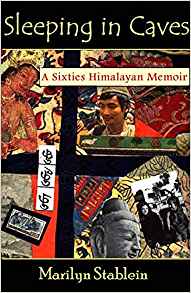
Marilyn Stablein is the author of the new books Houseboat on the Ganges & A Room in Kathmandu: Letters from India and Nepal 1966-1972 and Vermin: A Traveler's Bestiary. Her other books include The Census Taker and Sleeping in Caves. She lives in Portland, Oregon.
Q: Why did you decide to turn your letters from India and Nepal into a book?
A: First of all I’m so amazed, inspired, and grateful that my mother saved the letters. They were not written with any thought of publication. When I left Berkeley at 18 for a summer abroad I hadn’t the vaguest notion that I wouldn’t return for seven years!
I wanted my parents to share in my discoveries to distract them from worrying about me so far from home. I detailed my evolving interests in art, literature, music, Tibetan and Indian culture, and sacred places so they might see the value of my eclectic, self-initiated studies.
The letters were spaced about a month apart so they show how my interests developed over the years…including my marriage to a Columbia University scholar in a Tibetan wedding ritual in the Queen’s forest in Kathmandu and giving birth in a Nepalese hospital.
When my mother gave me bundles of blue aerograms years later they evoked my hobby of collecting exotic stamps as a kid. The intriguing postage stamps, cancellation dates on folded blue flimsy aerogram paper and exotic addresses are historical novelties. In this era of digital overload even handwriting is a rarity.
Recently I worked on a chronology of travels with a friend. We were still in our teens when we hitchiked across Turkey, Iran, Pakistan and traveled throughout North India. After 50 years our accounts had lapses, differences. “I’ll check my letters,” I said.
The letters were dated, the city noted, and when I started reading them again I was surprised at the details, the small things that get lost over time like cooking on various kerosene stoves or cowdung and charcoal burners.
Waking to the sound of the Maharaja’s (our neighbor in Varanasi) elephant chomping bodhi tree branches a few feet from our open window. A futile chase after a monkey that stole my sandal during the largest gathering on the planet, the Kumbha Mela.
The letters reveal layers of experience not present in Sleeping in Caves, an earlier memoir; The Census Taker stories; and the surreal dream journals in Night Travels to Tibet.
Q: Looking back at the letters, which go back half a century, how do you view your younger self?
A: Growing up in a home that hosted foreign exchange students I learned to respect people who had customs, traditions, languages, and practices I wasn’t familiar with.
At 16 I joined a youth work camp in Mexico. Those two weeks really opened my eyes to life in another culture: Orozco, Kahlo, Ballet Folklorico, huaraches, guacamole, shopping in the marketplace in Oaxaca. Travel was fun, exciting. In Europe I wanted to keep going across North Africa and eventually overland through the Middle East to India. I’m surprised at my confidence, bravery and endurance. Amazed by people I met and what I learned.
Q: What do you hope readers take away from your experiences?
A: Before smart phones, the internet, skype, online reservations, maps, menus, and ticket sales every day was an adventure full of surprises and challenges: where to stay, where to eat, where to catch a rickshaw or shikara.
Hard now to imagine living by choice for months or years without a fridge, oven, hot water, telephone, car, insurance, social media, or credit cards.
The book offers an opportunity to glimpse a way of life where a slower pace allows time for reflection, serenity. The rewards of reading and translating; finding time for creativity, the necessity of innovation when there was a lack of conveniences we take for granted today.
The terrain was full of historical wonders to explore: sculptures at Khajuraho and Konarak, Buddhist cave monasteries, Ajanta frescos, the Ganges, the Himalayas. The ‘60s were an energized time. I met countercultural travelers, yoga and meditation students, anthropologists, artists, Indian saints and gurus, Tibetan lamas available to teach for the first time outside of Tibet.
Q: You also have another new book out, Vermin. What inspired that book?
A: Travel introduced me to new environments. I didn’t go looking for critters. They found me! No one likes a flea, mosquito or tick bite. It was challenging figuring out how to deal with invasive pests without poisons, bombs, and repellents. Some critters like ants and cockroaches do not bite but their presence in the kitchen or bathroom is annoying.
I learned that if I watched their habits I could figure out ways to outsmart them.
Some of the tales are set in India. The etched bronze rat on the cover is from a door at the rat temple in Rajastan. In the “Leech Hall of Fame” you can read a story about the largest leech ever seen and be glad it didn’t find you!
Egyptians worshipped the scarab, a type of dung beetle, whose habits are actually mannerly, promethian, and ecologically useful—they cart off waste to bury. Vermin is a traveler’s bestiary that combines dozens of encounters, historical tales, remedies, oddities, and superstitions.
Q: What are you working on now?
A: A memoir about books and book fetishes: reading books, writing books, making artist books, collecting books, book dreams, amazing discoveries, adventurous book hunts. Between my antiquarian bookseller husband’s library of books and my own collections which range from Tibetan manuscripts, Asian literature, post-modernist classics (Donald Barthelme was my thesis advisor), and unique oddities there are many amusing stories to write about.
Q: Anything else we should know?
A: I love to add visual elements to literary readings, talks, and salons. Handmade artist books with travel artifacts or personal ephemera can illuminate written and spoken works. More information is available on my website.
--Interview with Deborah Kalb
Saturday, April 6, 2019
Q&A with Karen Ordahl Kupperman
Karen Ordahl Kupperman is the author of the new book Pocahontas and the English Boys: Caught between Cultures in Early Virginia. Her other books include The Atlantic in World History and The Jamestown Project. She is the Silver Professor of History Emerita at New York University.
Q: Why did you decide to focus on Pocahontas and three young English boys in your new book?
A: We need new narratives of early Virginia, England's first permanent colony. Now the narrative centers on conflict and death: the ignorant English with their "shoot first and ask questions later" stance and the Powhatans who faced the colonists' constant demands for food while the region was enduring the worst drought in 770 years.
Also, in the years around 2007, marking the 400th anniversary of Jamestown's founding, I spoke to many groups of high school history teachers, and it seemed especially important that they have this story whose actors played key roles and were the ages of the kids they teach.
Q: What are some of the most common perceptions and misperceptions about Pocahontas today?
A: Pocahontas's story is curtailed in modern memory so that it focuses on Jamestown's founding period when she visited the fort as her father's emissary, and it emphasizes her sexuality. Given that she was a child of 10 at that time, this kind of presentation is odd.
Q: How did you research the book, and did you learn anything that especially intrigued or surprised you?
A: The main sources for early colonial history are official reports and a few personal reports and letters that were published in England or survive in archives. Captain John Smith and William Strachey collected other's reports and published them in coherent narratives.
Pocahontas and the boys appear in the records only when they are doing something for the colony or are threatening it. The one exception is the memoir that Henry Spelman, one of the boys in the book, wrote about his life with the Powhatans and Patawomecks.
I went into these sources with preconceptions about the boys and found, as I thought about the way they were talked about, that all my preconceptions were wrong. I came to understand how they coped with a huge variety of situations, and how they continuously reinvented themselves as their circumstances changed.
Q: What do you see as the legacy of Pocahontas and the English boys?
A: Virginia's beginning as an English colony has been seen as inferior, especially after New Englanders began to push the Pilgrims as the superior founders in the 19th century.
Pocahontas and the English Boys works toward getting beyond the dominant narrative and finding the varied stories of people on all sides in these colonial situations, and how they coped with all kinds of challenges.
Their story has modern echoes in that the more the boys knew, the less the colonial leaders trusted them. They thought they had "turned heathen."
Q: What are you working on now?
A: My next project looks at music as a mode of communication. In encounter situations where the new arrivals and the Native people did not have knowledge of the other's language, participants on both sides sang and played musical instruments.
This happened around the world. Music indicated peaceful intentions, but it could also be used as a ruse to cover hostile plans.
Some intellectuals, such as Thomas Harriot, who had been in Roanoke as a young man, began to think that music might be a way to create a universal language that could be understood by all. Harriot created a syllabary for coastal Carolina Algonquian and argued that recording languages by sound rather than meaning would facilitate universal communication.
Q: Anything else we should know?
A: Henry Spelman's Relation is in the Harlan Crown library in Dallas and I was able to do a new transcription from the original pages.
This is the first edition from the original manuscript since 1872, and it presents the memoir as it was actually written, correcting errors in the version we have all been using. Henry Spelman, Relation of Virginia, is out as a separate book from NYU Press.
--Interview with Deborah Kalb
Q&A with Laura Gehl
Laura Gehl is the author of the new children's books Baby Astronaut, Baby Oceanographer, Except When They Don't, and Dibs!. She is based in the Washington, D.C., area.
Q:
You have four new children's books coming out this spring. How many books do
you work on at once, and how do you stay so prolific?
A:
I work on a minimum of two new books at once, often three or four.
As
far as staying prolific, I think it helps that “start something new” is my
go-to plan in almost every situation. Waiting to hear from an editor? Start
something new. Get a rejection? Start something new. Make a sale? Start
something new.
Not
all of those first drafts even make it as far as my critique partners, let
alone to my agent. But by starting many projects, the chances are good that
at least a few of them will eventually grow into beautiful books.
Q:
Two of the books are part of a board book series, "Baby Scientist."
How was that series developed, and will you be focusing on other types of
scientists?
A:
The series started with the goal of highlighting different scientific careers,
and making them accessible to very young kids, who are natural scientists
themselves.
I
wanted kids to read these books and grow up thinking, “What kind of scientist
would I like to be?” rather than wondering if they could become scientists
or—worse—assuming they couldn’t.
The
next two books in the series will be Baby Botanist and Baby Paleontologist.
Q:
You also have a new picture book, Except When They Don't, that focuses on gender
issues. What do you hope kids take away from that story?
A:
I hope kids leave the book inspired to follow their hearts, and pursue their
passions, without worrying about—or even thinking about—gender as part of the
equation.
Q:
Dibs! looks at a sibling relationship. What was the inspiration for that book?
A:
I’ve written a lot of books that feature sibling relationships. I think it’s
because I have four kids, which means I am constantly observing a bunch of
different interactions between siblings of different ages.
In
the case of Dibs, the book was inspired by my son Nathan, who called dibs on
everything for a few years. He didn’t call dibs on NASA, like Clancy does in
the book…but he might have, if he had thought of it (Nathan went to Space Camp
last year, and is headed to astronomy camp this summer).
Q:
What are you working on now?
A:
I am working on all kinds of projects—rhyming picture books, prose picture
books, board books, and even a graphic novel. Fiction and nonfiction. Funny and
serious. I don’t know which of these books will end up being published, but I
am enjoying working on each and every one.
Q:
Anything else we should know?
A:
Yes! I have two more books releasing in the fall, both starring smart, strong
female characters.
Juniper Kai: Super Spy is about a little girl who has a mystery to solve in her own
house.
Always Looking Up: Nancy Grace Roman, Astronomer is my first-ever nonfiction picture
book biography, about a little girl who grew up to be the first chief of
astronomy at NASA and the “mother” of the Hubble Space Telescope.
--Interview with Deborah Kalb. Here's a previous Q&A with Laura Gehl.
Friday, April 5, 2019
Q&A with Ann Weisgarber
Ann Weisgarber is the author of the new historical novel The Glovemaker, which takes place in Utah in the 1880s. She also has written The Promise and The Personal History of Rachel Dupree. She lives in Galveston, Texas. Q: How did you come up with the idea for The Glovemaker, and for your character Deborah?
A: It started with a vacation in Utah’s Capitol Reef National Park and an apple. The park service maintains the orchards that were originally planted in the 1880s by white settlers, and allows visitors to pick fruit during harvest season. The apples were ripe when I was there a few years ago, and as I climbed a ladder to pick one, I thought about the people who planted the trees.
Who were they? What drove them to live is such an isolated and harsh landscape?
Haunted by these questions, I bought a few books at the Visitor Center. One of the settlers was a married woman who owned 20 acres in her own name. Doing more research, I discovered that she didn’t have children and her husband had disappeared from public records. This woman became the inspiration for the Deborah character.
Q: What kind of research did you do to write the novel, and did you learn anything especially surprising?
A: The research ranged from reading a graduate thesis about Utah Territory’s marshals, to reading The Book of Mormon, to a hike in the snow in search of Floral Ranch, the hideout for men who attempted to evade arrest for having plural wives.
What most surprised and shocked me was the persecution of members of The Church of Jesus Christ of Latter-day Saints (LDS or Mormons) during the 19th century. Before settling in Utah, they were driven from New York to Ohio, to Missouri, to Illinois, and to Nebraska. Church members know this history but it’s probably fair to say that most non-church members don’t.
Q: The novel is set in Utah in the 1880s. How important is setting to you in your writing?
A: Setting is everything for me. It’s what I begin with. I’m drawn to the landscape and then I begin to think about the people who lived there and how the terrain and weather shaped their lives. The historical events that impact The Glovemaker could only have happened in Utah’s canyon country.
Q: What do you hope readers take away from the book?
A: My hope is The Glovemaker makes readers aware that America’s history is messy and complicated.
Q: What are you working on now?
A: The next novel takes place during World War II in a rural Texas town where 4,000 German POWs were housed in a prison camp. That’s all I’m going to say since it’s early days and it’s subject to change!
Q: Anything else we should know?
A: I live on an island off the coast of Texas, and I’m a fan of the Astros baseball team. My novel The Promise takes place on the island but as tempting as it is, I don’t see a baseball novel in my future. But now that I think about it, the German POWs did play baseball in the camp.
Deborah, many thanks for including me on your blog. It’s an honor and a delight to be one of “your” authors.
--Interview with Deborah Kalb
Subscribe to:
Posts (Atom)