ON THIS DAY IN HISTORY
March 28, 1868: Maxim Gorky born.
POSTING Q&As WITH AUTHORS AND ILLUSTRATORS SINCE 2012! Check back often for new Q&As, and for daily historical factoids about books. On Facebook at www.facebook.com/deborahkalbbooks. Follow me on Instagram @deborahskalb.
Thursday, March 28, 2019
Wednesday, March 27, 2019
Q&A with Anne Renaud
![]() |
| Anne Renaud, photo by Magenta Photo Studio |
Anne Renaud is the author of the new children's picture book Emma's Gems. Her other books include The True Tale of a Giantess and Mr. Crum's Potato Predicament. Her work has appeared in a variety of publications, including Highlights and Faces, and she lives in Montreal.
Q:
How did you come up with the idea for Emma's Gems?
A:
Many years ago I attended a fundraising luncheon and at each place setting there
was a tiny nylon bag with three colored stones in it.
The
keynote speaker told the story of how, when she visited her grandfather's
office as a child, he had three small stones on his desk.
When
she asked him what they were for, he explained they were to remind him every day
that he needed to a) learn something new b) perform an act of kindness and c)
tell someone he loved them.
That
keynote speaker's story planted the seed to Emma's Gems. Some time later,
I tracked down the keynote speaker to tell her how her talk had inspired
me. I even dedicated the book to her grandfather.
Q:
What do you hope kids take away from the story?
A:
That we all have the capacity to bring comfort to others, no matter how small
the gesture. Caring and kindness to others is never wasted. Even when we think
we have not made a difference, we have.
Q:
What do you think Leanne Fronson's illustrations add to the book?
A:
They give life to this story in such a whimsical, colorful way. I love the
almost messy, painting outside the lines approach that Leanne took to
illustrate the book. Painting outside the lines can be just as beautiful as
painting inside the lines.
Q:
You have another book coming out later this year--what can you tell us about
that?
A:
My next book will be coming out in September 2019. It is a picture book
biography for 5-to-8-year-olds on Frank Epperson, the inventor of the Popsicle.
The book will also include four science experiments that kids can do.
Q:
What are you working on now?
A:
I am still scouting for ideas and reworking rejected manuscripts in the hopes
they will finally make the cut.
Q:
Anything else we should know?
A:
It took almost a decade for this edition to be born. Sometimes the
process takes that long. I first wrote Emma's Gems in English, shopped it
around, and when there were no takers I then translated it into French. It was
published in French in 2012. Then in Korean a few years later. The English
rights were finally purchased by Peanut Butter Press and it is now available in
English. YAY!!
--Interview with Deborah Kalb. Here's a previous Q&A with Anne Renaud.
Tuesday, March 26, 2019
Q&A with Julie Langsdorf
![]() |
| Julie Langsdorf, photo by Robin B. Langsdorf |
Julie Langsdorf is the author of the new novel White Elephant. She lives in Washington, D.C.
Q:
How did you come up with the idea for White Elephant, and for your cast of
characters?
A:
I was inspired to write White Elephant in 2005, when a series of articles
appeared in the local papers about a crisis in the older, more established
Washington, D.C.-area neighborhoods.
Home
owners were tearing down or adding large additions onto the older houses, which
were often a large part of the reason people had moved to the communities in
the first place. Suddenly these neighborly towns were not so neighborly; people
were egging one another’s houses, yelling at each other in the street, and
dragging each other to court.
It
was such juicy material! I couldn’t help but wonder how these people had gone
from welcoming one another with cookies to wanting to sue each other—and so I
decided to invent a community and find out for myself…
Allison,
who opens the book, just appeared to me one day lying in bed, listening to the
hammering on the house next door and thinking about sex. And there was her
husband Ted beside her, fit to be tied. Then there was Nick Cox next door,
hammering away, putting a bee in everyone’s bonnet.
Q:
The novel takes place in a Washington, D.C., suburb. How important is setting
to you in your work?
A:
Setting is very important to me. In my mind I need to be able to see the
houses—a lot of Sears kit houses in the town in the story—and to walk down the
sidewalk to the café, the post office and all of the other landmarks that play
their role in the novel.
The
town, Willard Park, is an amalgamation of a few Maryland towns; I just stole my
favorite elements. It happens to take place on the outskirts of Washington, but
it really could be anywhere in the country. The problems the residents are
facing are country-wide problems.
Q:
You tell the story from various characters' perspectives. Did you write the
novel in the order in which it appears, or did you focus more on one character
at a time?
A:
I wrote the story in order, dipping into the heads of the various characters as
the events progress. Together, they tell the story of what happens in the town.
Toward the later stages of the process I worked on each character’s chapters
together, to make sure their arc was resolved by the end of the story.
Q:
What do you hope readers take away from the story?
A:
While I hope readers finish the book wiping tears of laughter from their eyes,
I also hope I’ve gotten them to think about some of the difficult issues we all
face in our lives—loneliness, shame, desire and fear among them. We all long
for connection, to be seen and to be loved, but we don’t always express those
longings very well.
I
hope people will think about the idea that people—even those we don’t agree
with—are not so different from us. I wrote White Elephant between 2005 and
2008, during a time when the country was less divided than it is now. In the
meantime it has become more timely; it seems like a microcosm of what’s going
on in our country. I hope the book will contribute to a larger conversation
about learning to get along.
Q:
What are you working on now?
A:
My new novel is also set in the D.C. suburbs, in a town with a different vibe.
It, too, has its comedic and not-so-comedic elements. I can’t say much more
than that right now, but I think if you like White Elephant, you’ll like that
one too.
--Interview with Deborah Kalb
Q&A with Samantha Downing
![]() |
| Samantha Downing, photo by Jacqueline Dallimore |
Samantha Downing is the author of the new thriller My Lovely Wife. She lives in New Orleans.
Q:
How did you come up with the idea for My Lovely Wife, and for your character Millicent and her
husband?
A:
It began with a documentary about a couple who kidnapped a woman and held her
captive. The idea grew from there, as I tried to imagine what kind of woman
would do this, and why? How would they do it and get away with it? How could
they have jobs, raise children, all while hiding this dark secret?
As
I started to write the book, the suburban life of this family became a real
part of the story. There are a lot of elements people will recognize…and others
they definitely won’t!
Q:
Did you know how the novel would end before you started writing it, or did you
change things around as you wrote?
A:
I had some ideas of how it might end, but I don’t outline or plot when I write.
Everything is open, really. I find that whenever I try to plan in advance, for
me it takes away a lot of the creativity.
Q:
Why did you tell the story from the husband's perspective?
A:
The book Rebecca really inspired me. I loved the idea of writing a book about
someone we never heard from, someone who we only saw through other people’s
eyes.
That’s
how we all are, right? No one can know what’s it like to be you, we can only
know our perceptions of people. As a writer, that concept is fascinating.
Millicent can be a lot of things and any of them could be right.
Q:
Who are some of your favorite writers?
A:
The list is so long. I’ll start with Daphne du Maurier, since I’ve already
talked about Rebecca. I love so many of the authors writing thrillers today –
Gillian Flynn, Mary Kubica, Jessica Knoll, Laura Lippman, C.J. Tudor, Kimberly
Belle, Megan Abbott, Amy Gentry.
And
there’s a slew of fantastic debut authors right now as well, including
Christina McDonald, Andrea Bartz, and Layne Fargo. We are living in a fantastic
time of female-driven and written thrillers. I’m glad to be here now and
reading them all.
Q:
What are you working on now?
A:
I am working on another thriller, hopefully a very, very disturbing one…but
that’s all I can say.
Q:
Anything else we should know?
A:
Let’s see…some random things about me: I’m a black belt in karate, I’m afraid
of the dark, I really am a dork, and if I see someone mistreating an animal I
will stop and say something. Okay, actually I will yell. And fight if I have
to.
--Interview with Deborah Kalb
Monday, March 25, 2019
Q&A with Karen Zilberstein
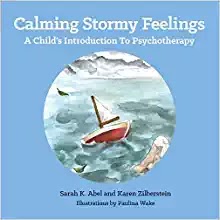
Karen Zilberstein is the author of the new book Parents Under Pressure: Struggling to Raise Children in an Unequal America. She also is the co-author of the children's book Calming Stormy Feelings: A Child's Introduction to Psychotherapy. A psychotherapist, she is the clinical director of the Northampton, Mass., chapter of the nonprofit group A Home Within.
Q:
How did you meet the families you write about in the book?
A:
I leaned on my professional and personal community, who came through for me. I
spoke with colleagues, friends, and social service agencies, giving them
written materials about the project and asking if they knew of families who had
struggled with trauma, disability, mental illness, racism, or poverty who might
be interested in speaking to me.
They
sent a number of parents my way and invited me to present at various parent
support groups, where I met others. Each family I interviewed received a $25
gift card for participating. That attracted a few of the volunteers, but I
didn’t use those families in the book. The six I chose to profile all had a
genuine interest in sharing their stories so that others in similar
circumstances could benefit.
Q:
Each chapter of the book highlights a different issue, but what common threads
do you see running through the various issues you raise?
A:
The families experienced different types of hardships and challenges, but each
found that the social service system was not sufficiently up to the task of
helping. Sometimes the services they needed didn’t exist, sometimes they
existed but were hard to access, and at other times the professionals lacked
adequate knowledge and expertise.
The
end result was that families struggled not just with their initial problems,
but also with navigating services, which added to their stresses. Families also
tended to feel judged for their problems rather than helped.
I
also found that income and race makes a difference. Those with privilege and
means do not need to depend on public supports or, when they do, can manage
them better because they have the ability to push and challenge them. It is
another aspect of inequality in America. Even the helping systems favor some
parents while disadvantages others.
Underlying
our difficulties understanding families’ struggles and providing them with
adequate supports is an American narrative of individualism and idealized
parenting norms that are not well suited to the current realities. The problems
are widespread because they spring from cultural beliefs.
Q:
How did you research the book, and did you find anything that particularly
surprised you?
A:
Since I had worked in the field for years, and written a number of articles on
poverty, parenting, mental health, and trauma, I had some background before I
started. But I shaped the book around the stories of the families I included,
delving more deeply into the issues they discussed. I looked at the literature
and also interviewed professionals in the field who could speak to a different
side of the issue.
What
surprised me most is that none of the professionals contradicted the
impressions of the families. They each agreed that the systems are infused with
problems and noted that they constrain workers, as well as families. Programs
simply don’t have the resources they need to meet needs. It turns out that it’s
what everybody knows, but what nobody wanted to say too loudly.
Q:
What do you hope readers take away from the book?
A:
If we are to do a better job of supporting parents, we need to know what gets
in the way. Let’s stop judging and marginalizing struggling families and
instead reach out and help them. Many families find that their difficulties
isolate them. They need help not just from professionals, but from their neighbors
and community. Everyone has a potential role to play in alleviating the current
circumstances.
I
also want families who resemble the ones in the book to know that their
struggles are legitimate and understood and did not happen because they are
inadequate. The families I interviewed found that acknowledgement incredibly
important.
Q:
What are you working on now?
A:
I am continuing to think about the intersection between cultural ideals and the
ways we construct interventions. As a psychotherapist, I see every day how our
ideas about families, mental health, and helping translates into theories, treatments,
policies, and the ways we research each of them.
While
the field offers many helpful services, we continue to be short-sighted and
hemmed in by cultural beliefs. I think we often define problems too narrowly,
which limits how we assess need and deliver aid.
Q:
Anything else we should know?
A:
The backdrop to the book is the way parenting ideals have evolved over the
years into an intensive parenting style that is putting stress on families. It
works best for those with money, time, and education and is thus part of the growing
inequality in our society.
Since
the current system works for some, we are not going to be able to completely
change it. But we can give more help to those who are left out and try to
provide them more opportunities and fewer hassles.
--Interview with Deborah Kalb
Subscribe to:
Posts (Atom)