Wednesday, October 27, 2021

Q&A with Cameron MacKenzie


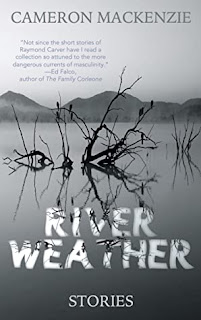
Cameron MacKenzie is the author of the new story collection River Weather. He also has written the novel The Beginning of His Excellent and Eventful Career, and his work has appeared in a variety of publications, including Salmagundi and The Michigan Quarterly Review. He lives in Roanoke, Virginia.


Q: Over how long a period did you write the stories in River Weather, and how did you decide on the order in which they'd appear in the collection?


A: I'm a little embarrassed to say that I've been working on some of these stories for over a decade, but the majority of them came about in the last four years or so, after I heard that my first novel was going to be published.


Once that happened, I got a surge of confidence—I suddenly felt that I wasn't a crazy person who locked himself away for hours every day to work on a pipe dream—and that confidence allowed me to put stuff on the page I wouldn't have considered previously.


I felt free to say "I know what I'm doing, I know what's good, and I can write good stuff." That was a big breakthrough for me.


Trying to determine the order of this collection was very tricky for me. I knew what would come first and last, but I thought about the rest of the order like an album, or the batting lineup for a baseball team.


The first few stories really have to grab you, really have to get on base, and then you can bring in a heavy hitter to drop the hammer.


After that, after you've got your points on the board and the reader hooked, you can get a little more complicated, a little more meditative, a little longer, but you also want to wrap up strong, with a good pop. As many mixed metaphors as I've got going on in there, that was honestly my thinking.


Q: The writer Ed Falco said of the book, "Not since the short stories of Raymond Carver have I read a collection so attuned to the more dangerous currents of masculinity." What do you think of that assessment?


A: It's funny—you sit down to write a story and you're just trying to write something honest and compelling. Then you write another one and another one. After a while you think you're trying to say something, or that you have something to say.


Maybe that impacts what you're doing in the moment, maybe not, but in any event, after you're done and you put all the stories together and you look at them all at once, you realize that they are something completely different than what you intended them to be, and yet, you're not surprised at all at what they truly are.


Years ago, when I realized I wanted to learn to write, Carver was the first writer I seriously studied. He was also one of the first writers I taught, and when you teach a story it really seeps into you. It changes you.


I think I was initially drawn to Carver when I was young because he explored themes that resonated with me—he talked about people I knew, and I think he became an unconscious guide for me.


That's all to say that I think Ed's right, and it's also to say that I think it's incredibly flattering to be considered anywhere near Carver's league.


Q: The stories take place in Northern Virginia. How important is setting to you in your writing?


A: This answer will reference the above answer a little bit. I THOUGHT I was always writing stories about the place I grew up, and I was, but not quite to the degree that I was writing about masculinity.
 

Nevertheless, I discovered almost the moment that I left Northern Virginia that I came from a place that was strange and alien to many people, so I chose to make that strangeness a central theme in my stories.


Northern Virginia was, and still is, a place where half of the population just pulled in; it's a brand new beginning for a lot of people, and they don't give a damn about anything that was going on before. Forests are being razed, subdivisions are thrown up in a handful of weeks, and money seems to be everywhere.


The driving force of that place is a wild-eyed rapacious capitalistic optimism—as though now, finally, in this untouched place, things are going to be done "right."


And then there's the rest of the people who live there, particularly the Latino workers who provide all the labor, as well as the rural white people who have been there for generations and are being steadily pushed out into West Virginia by the outrageous rise in the cost of living.


The more I began to dig into Northern Virginia, the more opportunities I saw for great stories, and the more I try to write about it, the more I learn new facets of the place that I called home for so long.


Q: How was the book's title (also the title of one of the stories) chosen, and what does it signify for you?


A: Oh what a great question. The thing about the river—the Potomac River—is that nobody even knows it's there. Nobody goes there. Nobody talks about it, but it's not three miles north through the trees.


The Potomac is a huge river, a very important body of water for a host of reasons, but the beehive of NoVa has no time or use for it.


And yet, the river determines everything, from the weather, certainly (the summer thunderstorms are epic), to the shape and the fertility of the land, to the ultimate strategic importance of the area that's brought people to it for thousands of years.


The river is the answer to the question that so few people want to ask in Northern Virginia, which is: "why?" Why here, why now, why this way?


No matter how much churn Loudoun and Fairfax counties experience, the river keeps moving, subtly shaping everything, outliving everything. It's like the forgotten, but persistent, god of the place.


Q: What are you working on now?


A: I'm writing a novel that's a continuation of these themes, a story that's trying to chart a collision between the rural white population and the immigrant Latino population, both of which operate under the surface of the NoVa madness. It's a bit of a thriller, which is a new form for me. I'm wrestling with it as we speak.


Q: Anything else we should know?


A: A bit of a sidenote on Ed Falco's blurb: as I said, to be compared to Carver is tremendously flattering, but there's really something to the second half of what Ed says, insofar as there aren't many people writing short fiction about masculinity with depth and compassion, certainly not for the last several years.


I'm more than aware of the disgusting excesses of masculinity—I write about it all the time—and of course it's an easy target, but I think for writers to demonize masculinity or ostracize it or simply ignore it works to the detriment of the discipline as a whole.


Writers—artists—should be able to see all aspects of humanity with a special sensitivity, especially those that are most troubling, most damaging, and most in need of understanding.


--Interview with Deborah Kalb

Q&A with Alex Perry


Photo by Tryston Hines


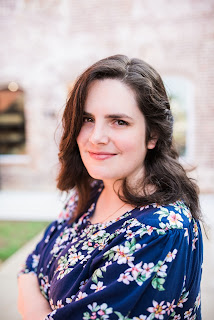
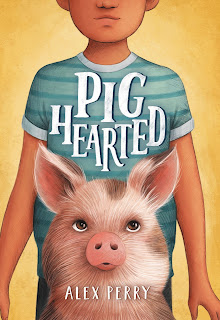
Alex Perry is the author of Pighearted, a new middle grade novel for kids. A former middle school teacher, she lives in Arkansas.


Q: You've said the inspiration for Pighearted came from a story on NPR about CRISPR technology. Can you say more about that?


A: In January of 2017, just after my family moved to Arkansas, I was listening to NPR and driving around our new town. I heard a story about a scientist that wanted to use CRISPR technology to grow human organs in pigs.


Actually, since the creatures would have some human DNA, they wouldn’t technically be classified as pigs any more. They’d be called chimeras.


As I understand it, the scientist wanted to remove a part of a pig’s DNA and replace it with human stem cells. The result would look like a pig with a human heart or liver. The hope was that there could be a pig farm where they could harvest organs for transplantation instead of bacon.


The concept is controversial. What if the process didn’t do exactly what it was supposed to? It’s called “gene editing,” but it isn’t quite as exact as it sounds. The NPR story mentioned that the pigs could possibly grow some human neurons.


Then I started to think about what it would be like to be a human/pig chimera with a human mind. What if it was aware of its fate? The idea reminded me of a high-tech Charlotte’s Web, and I turned that concept into Pighearted.


Q: How did you create your characters Jeremiah and J6?


A: J6, the human/pig chimera, was easy. What would it be like to be a pig in a human’s world?


I knew I’d want to make him very confident and a complete diva because that’s hilarious (or maybe I’d watched too many Muppet movies as a kid). He knows he’s unique and sees himself as much tougher, smarter, and more beautiful than the humans around him.


But his most essential characteristic is his heart. He’s driven by his humanity. His love and compassion define him more than his curly tail. The people, on the other hand, just see him as livestock. There’s something both fascinating and deeply unsetting about that kind of character.


It was more difficult to get inside Jeremiah’s head, so I took inspiration from my own childhood.


Jeremiah dreams of becoming a professional soccer player and loves being out on the field, but after he has a heart attack all of that is taken away from him. Getting a new heart is his only chance at getting his life back.


When I was 10, I was diagnosed with juvenile rheumatoid arthritis and went from racing other kids at recess to walking around school with a rolling backpack, cane, and elevator key. I felt some of what Jeremiah feels and that helped me connect with him and see the world through his eyes.


Jeremiah also feels guilty about how he impacts those around him and wants to personally solve every problem his family faces. He puts entirely too much on himself, and I remember feeling a lot of that as a kid too.


Q: What kind of research did you do to write the novel, and did you learn anything that especially surprised you?


A: I spoke to a cardiologist and heart patients that used the kind of heart pump Jeremiah uses, an LVAD. I also did a lot of reading about everything from the anatomy of the heart to the types of pigs used in clinical experimentation.


The most surprising thing I learned was how far technology had come in terms of artificial heart pumps and monitors.


In early drafts, I made up a heart monitor that would keep tabs on Jeremiah’s condition. As I learned more, I discovered that the actual device in use today, the implantable cardioverter-defibrillator, serves the story much better than anything I could make up.


Q: What do you hope kids take away from the story?


A: I hope it engages their critical thinking and gets them to consider a tough question that doesn’t have a single answer. This book doesn’t have a villain. It’s just people trying to do the right thing and do as little harm as possible. I think that’s most of us most of the time.


I also hope that it inspires kids to become curious about science and medicine and maybe look into careers that could one day help save lives.


Finally, the heart of the book is a story about siblings that love each other and act with empathy and selflessness. The world needs more of that.


Q: What are you working on now?


A: I’m drafting a story about two girls trying to find their missing sisters and finding friendship in each other.


--Interview with Deborah Kalb
Tuesday, October 26, 2021

Q&A with Rektok Ross


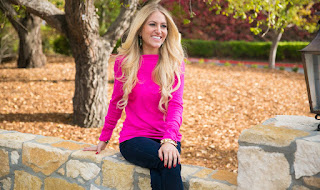
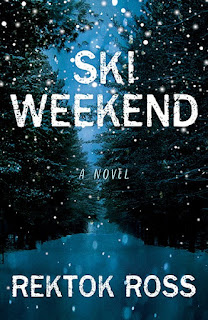
Rektok Ross (the pen name for Liani Kotcher, a trial attorney and writer) is the author of the new young adult novel Ski Weekend. She lives in San Francisco and Los Angeles.


Q: You write that the inspiration for this book came from a TV show about a family who became lost in the snow. How did you end up writing this novel?


A: I’ve always been fascinated with survival stories because they make you question what you would do if you were in the same situation as the people in the stories, and they also make you question life itself and how fragile it is.


I used to devour my mother’s Reader’s Digest magazines as a kid because they always had exciting, real-life adventure stories inside the pages.


With respect to the story that ultimately inspired Ski Weekend, I was home alone one weekend after I’d just moved to San Francisco and hadn’t made many friends yet so I spent my night watching one of those true crime news shows.


The story that night was about a family in the local area that got lost in the Pacific Northwest coming home from the holidays and it had such a tragic ending I couldn’t stop thinking about. When I was still thinking about the family and their horrifying ordeal weeks later, I knew there was something there that I had to explore.


Plus, I grew up in Florida and didn’t see snow until I was 17 so there has always been something eerie about the mountains in winter for me.


Q: You also cite the John Hughes film The Breakfast Club as an inspiration. How would you compare your cast of characters with the film's?


A: I am an ‘80s baby so, of course, a huge John Hughes fan.


I’ll always love the romance of Pretty in Pink and Sixteen Candles but for me The Breakfast Club is the most interesting story because it explores stereotypes and why putting people into boxes is harmful to them and to us because we miss out on getting to know some really amazing people based on untrue preconceived notions.


In The Breakfast Club there are five characters: a brain, an athlete, a basket case, a princess, and a criminal. There are six characters in Ski Weekend (seven if you include Champion the dog). I wanted to update my cast to make them relevant for this decade and more diverse to explore the world we really live in today.


That said, I still wanted to maintain a lot of the essence of these famous stereotypes—so I could later pick them apart—and generally kept a brain (Lily), an athlete/dumb jock (Hunter), a basket case (Sam), a princess (Britney), and a criminal/bad boy (Gavin). Sam’s brother, Stuart, is the sixth character and is a happy-go-lucky, geeky gamer.


Q: Did you know how the novel would end before you started writing it, or did you make many changes along the way?


A: I always outline before I start to write since I am a “plotter” (not a pantser), but I was never totally sure who would live and who would die, and these deaths have changed multiple times through multiple drafts.


I was kind of a wimp in the earlier drafts in that I fell in love with all my characters and didn’t want to kill any of them. Of course, that makes for a pretty boring survival story so I had to fix it.


There is also a surprising ending, in my opinion, and I didn’t see it coming when I first started writing and was very resistant to making happen because it’s not the way I saw things in my head.


I don’t want to spoil it, but things are more open-ended than I originally envisioned and my editor encouraged me to make this change. But now I’m really happy with how things end up. It’s probably more true to real life and will definitely invoke more questioning in the reader, which is good. I love books that sit with you after you finish.


Q: What do you hope readers take away from the story?


A: There are so many themes to explore in the book. First and foremost, I hope it is a thrilling read for folks as I always love a good thriller to escape into myself purely for entertainment value.


Beyond that, I hope the book opens a dialogue about the dangers of harmful stereotyping especially in today’s diverse world. I hope it also encourages people to explore new friendships and relationships with people from different backgrounds who they don’t think they have anything in common with and learn to appreciate each other’s differences—and commonalities.


Also, I spent an enormous amount of time researching real-world survival skills for the book, and I hope readers take those away and keep them in the back of their mind if they ever need them.


Q: What are you working on now?


A: Next up for me is a summer thriller, tentatively titled Summer Rental. I don’t want to say too much as it’s still very much in the early stages, but it’s basically my love letter to the ‘90s slasher with some added romance because I love mixing thrillers with romance. It’s kind of my thing!


Q: Anything else we should know?


A: I appreciate all my readers so much and love to hear from you. I am very active on social media, especially on my Instagram at @RektokRoss so feel free to connect there and also in my Facebook reading group The Book Nook.


I also love to support fellow writers and the writing community and host a weekly writing chat on the Clubhouse App called Level Up Writers along with my co-hosts, bestselling author Mary Weber and Emmy-award winning journalist Sorboni Banerjee. Writers are always welcome to join us any time!


--Interview with Deborah Kalb
Q&A with Nicci French


Photo by Johnny Ring


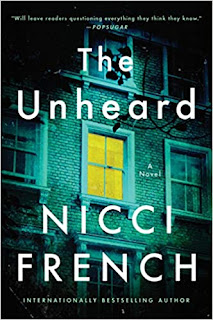
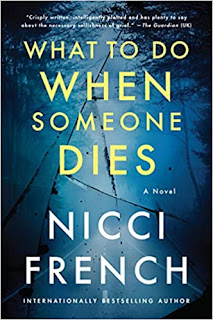
Nicci French (the pen name for wife-and-husband writing team Nicci Gerrard and Sean French) is the author of the new novel The Unheard. Their many other novels include the newly reissued What To Do When Someone Dies. They live in Suffolk, England.


Q: What inspired you to write The Unheard, and how did you create your character Tess?


A: We spend much of our lives talking about possible ideas. Could this be a thriller? We have to find something that hooks both of us and won’t let us go, something we want to live with for a year.


We remembered when our children first went to nursery school and would come back with some scrawled drawing. We would ask them what it was and they would give some strange explanation. We suddenly thought: what if one of those drawings seemed to show that the child had witnessed a murder? What would happen next.


It was clear what Tess, the little girl’s mother, needed to be. This is a story about everyday vulnerability. How much do we really trust those closes to us?


Tess is a single mother, just out of a failed relationship, and quite fragile. She is her child’s sole protector. And then she has to face the possibility that a terrible crime has been committed and that her child is the only witness - or that she is being so overprotective that people close to her will think she is unstable.


Q: Why did you decide to make Tess's daughter Poppy 3 years old?


A: Poppy’s age was crucial. It’s at that strange moment in your life when the child leaves the house and starts to have a life slightly separate from her parents, with her own friends, her own experiences.


But she is still too young to give a coherent account of them. She’s too young to be a reliable witness, and there’s a very porous boundary between her vivid imagination and reality.


Q: How was this novel's title chosen, and what does it signify for you?


A: This is the story of a little girl who is trying to communicate [something] horrible but nobody can quite understand what it is. And it is the story of a mother trying to fight for her daughter, but she is surrounded by people who think is wrong or misguided or mad.


The Unheard felt like this perfect description of this dark situation.


Q: Your 2008 novel What to Do When Someone Dies was re-released this year, and the Publishers Weekly review of the book says of your main character, “Obsessed, embroiled in deception, and unable to move forward, Ellie may destroy her own life before she understands [her late husband] Greg’s.” What do you think of that description?


A: It feels right. We’re fascinated by what might be called the madness of ordinary life: the madness of falling in love, of being the perfect mother, or of trying to deal with the sudden death of your partner.


In this book, Ellie has to mourn her dead husband while investigating whether he is the man she thought he was. We’re also fascinated by people who are willing to risk everything, their sanity, even their life, to get at the truth.


Q: What are you working on now?


A: The starting point of the book after The Unheard is a young woman who meets her first love after a gap of 11 years. He asks her to do a simple favour for him and she says yes, instantly. It turns out to be a very bad decision.


It’s an idea we’ve talked about for years, the thought that you might owe someone for something they did for you in the past and when the time comes to repay them, you have to do it, whatever the cost.


Q: Anything else we should know?


A: Everyone should know that we’ve taken a solemn vow never to write a thriller featuring the pandemic.


--Interview with Deborah Kalb. Here's a previous Q&A with Nicci French.

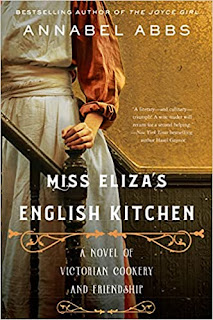
Q&A with Annabel Abbs


Annabel Abbs is the author of the new historical novel Miss Eliza's English Kitchen. It is based on the life of 19th century cookbook writer Eliza Acton and her assistant, Ann Kirby. Abbs's other books include the novel The Joyce Girl. She lives in London and in Sussex, UK.


Q: You've said you first learned of Eliza Acton when you inherited your mother-in-law's cookbook collection. What made you decide to write this novel based on Eliza's life?


A: There were lots of fascinating food writers in my collection but research suggested that Eliza Acton had the most interesting backstory.


She was also one of the most successful cookery writers – and a pioneer in her own right. She invented the recipe that we use today, with a list of measured ingredients and instructions on time and temperature. Before Eliza, recipes were little more than a string of often haphazard instructions.


Moreover, I discovered that a third of Eliza’s recipes had been plundered and plagiarized by the much better-known Mrs. Beeton. I decided that Eliza needed to be restored in some way. As much of the information about her lacked sources, a biography was out of the question. So my research became a novel, as rooted in fact as I could make it…


Q: How would you compare Eliza to some of the other women you've written about?


A: My previous protagonists lived in the 20th century, but Eliza is early Victorian and was actually born at the tail end of the 18th century, so the time period is very different.


But like my later characters, Eliza wanted to make a life of her own and a name for herself. In this respect, she’s very similar – but more radical because Victorian women weren’t supposed to want a public life, or to want independence.


Most poetry and cookery books were published anonymously at this time, but Eliza was determined to have her name on both her poetry and her food writing. I loved how feisty and determined she was. She had real courage!


Q: How did you research Eliza's life, and also that of her assistant, Ann Kirby?


A: I read a lot of old cookery books – both those in my collection and those in public libraries with antiquarian cookbook collections. And I cooked using the sorts of implements that Eliza and Ann would have cooked with (which was exhausting!).


Food history books were essential so that I could understand the tastes and flavors of the time. I also read Eliza’s poetry and her own two cookbooks, all of which showcase her voice beautifully. I read novels set in the same period or by authors writing at the time, and I steeped myself in the work of early Victorian female poets.


There are a couple of short biographies of Eliza that were useful, but Ann Kirby left nothing of herself, so she is largely fictitious.


I also spent time in the town where the two women lived and cooked for 10 years, attempting to follow in their footsteps. The town has changed beyond recognition so I also spent some time delving into its past and trying to imagine how it would have looked, sounded, smelled, and felt 200 years ago.


Finally, I visited as many “old” kitchens as possible. Luckily the UK is rich in historic buildings, many of which have authentically restored kitchens.


Q: How would you describe the dynamic between the two, and also their legacies today?


A: The relationship between Eliza and Ann struck me as unusually close. We know from census reports that Ann lived in Eliza’s house for 10 years and that, for some of that time, she was the only other person living there.


We also know from historic accounts that very few servants stayed as long as a decade with one family – staff turnover was usually very high. And throughout Eliza’s debut cookbook she refers to “we,” so I knew she wasn’t working alone (which would have been impossible back then anyway because of the sheer amount of work required to prepare a meal!).


In my imagination, the relationship developed along certain lines – which I won’t mention to avoid any spoiler alerting. But I figured that working every day in a kitchen for a decade would have fostered a bond of some depth between the women.


There’s an intimacy and rhythm to cooking together, which I felt would have enabled the two women to transcend their huge class differences. I think preparing food with other people lends itself to friendship. And the experience is nourished by then eating together.


Q: What are you working on now?


A: I’m currently working on a book about insomniac women – I can’t say more than that!


Q: Anything else we should know?


A: Only to say that cooking as our Victorian forebears cooked is very different from cooking today – it was much more physically grueling and demanding, as well as hot, smoky, and smelly.  


Temperatures were inconsistent, water had to be carried from outside, pans were huge and made of iron. No Magimixes, Kitchenaids or electric whisks. No overhead lights, extractor fans or microwaves. No fridges, freezers or out-of-season blueberries. Eliza thought all her kitchen work destroyed her health – she may have been right.


--Interview with Deborah Kalb. Here's a previous Q&A with Annabel Abbs.

Q&A with Sallie H. Weissinger


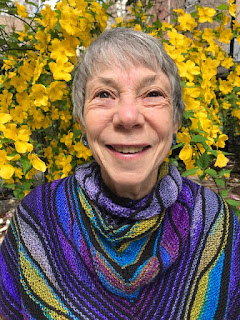
Photo by Courtney Flavin


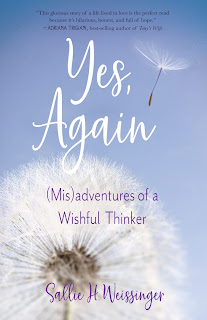
Sallie H. Weissinger is the author of the new memoir Yes, Again: (Mis)adventures of a Wishful Thinker. She is based in Portland, Oregon, and Berkeley, California.


Q: What inspired you to write Yes, Again?


A: Yes, Again started out as a personal journal, with the possibility it might become a memoir if the story and the writing turned out to be good enough. I thought I had something to say about the breadth and depth of a fully lived life. I hoped readers would resonate to my experiences and observations on life, love, loss, and gain. And risk-taking.


I was inspired to stick with the writing part when I saw a message emerging: “Don't give up.” “Don't lie down as long as you're still alive and kicking.”


Q: You describe some very difficult times in your life, as well as much happier ones. What impact did writing the book have on you?


A: I'd like to say that, while writing, I relived more of the happy times than the difficult ones, but that's not true. Revisiting the painful times flattened me.


Before starting to write, I had managed to divert myself, occupying myself with medical interpreting in Central and South America, teaching Spanish, and doing volunteer work with rescue and service dogs. I kept dizzyingly busy going to movies, plays, and the gym; walking and hiking; doing anything I could to distract myself.


Writing about it brought it all back. Ultimately, it was a relief to shake off the numbness, sit down, put pen to paper (well, put hands to the keyboard), and allow myself to cry.


But it wasn't all grief and misery. At some point, as I engaged in a superannuated version of the online personals, I began to see the ridiculousness of some of my misadventures.


How else to describe meeting a man at a coffee shop for the first time, only to have him talk about his hemorrhoid operation? There were encounters worthy of Saturday Night Live skits for the AARP crowd.


Dana Carvey would have been great as the guy telling me about his operation. I can just see him trying to get comfortable on the donut cushion he placed on the chair at the coffee shop. 


Q: How did you come up with the system you call PASTRAMI, and can you describe it for people who haven't read the book?


A: PASTRAMI was an extension of what I'd done professionally. I started my 23-year career at the Federal Reserve Bank of San Francisco as a recruiter and, before that, was a vocational counselor for injured workers reentering the workforce.


In my heart of hearts, I've never stopped being a recruiter, matching people with jobs. But this time it was personal. I put my recruiter hat back on, interviewing applicants and finding the perfect person from the candidate pool to fill the job, fill the empty chair at the dining room table, fill my heart and my bed.


One morning, it hit me like a bolt of lightning what I had to do. I sat down at my computer and developed a list of the necessary skills a candidate should have.


I came up with PASTRAMI, with each letter of the acronym referring to a quality I was seeking:  Politically liberal, Animal lover, Spiritual (but not religious), Tender (yet strong), and so forth.


PASTRAMI ended up being PASTRAMI ETC because I was looking for a partner with a few more attributes (Emotionally stable, Travel enthusiast, and Communicative). Then I “posted” the job opening by going to my friends and offering a “referral award prize” to a nonprofit to be chosen by the Love Liaison who came up with the winning PASTRAMI Candidate.


And guess what? It worked. And therein lies a juicy tale in my memoir.


Q: What do you hope readers take away from your story?


A: Well, I gave that away in the first question. The takeaway message is “Don't stop hoping, wishing, and working toward what's possible.”


And there's a little more:  “If you feel discouraged, take a break. Stay close to your friends. Do rewarding volunteer work. Pet your dog or cat.  And prune your roses – your garden needs you and you need it. Cultivate your garden.” (I know, Voltaire said it first.)


Q: What are you working on now?


A: Right now I'm taking a break, but I’ve talked with my editor to see if she’ll work with me on a story that warrants telling - I don’t want to discuss the topic because it would give away too much about Yes, Again. If my editor is up for it, I am too. 


Writing is a solitary process, and I’d like to do it with my friend Courtney.


Q: Anything else we should know?


A: I can’t think of anything. But if anyone wants to know more or ask me questions, my email is on yesagainmemoir.com. Thank you for letting me take this space and your time.


--Interview with Deborah Kalb

Q&A with Patricia Lakin


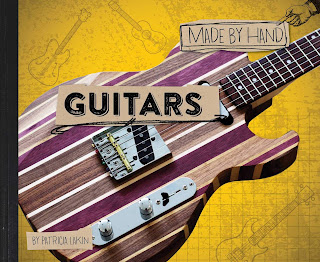
Patricia Lakin is the author of Made by Hand: Guitars, a new middle grade book for kids. The Made by Hand series also includes books about bikes, skateboards, and steel drums. Lakin, the author of more than 50 books, is a former elementary school teacher. She lives in New York City.


Q: Why did you decide to focus on guitars in your new Made by Hand book, and what inspired the idea for the series?


A: Previously, I worked with Karen Nagel, my editor at Simon and Schuster. She is a fan of handmade objects and knew I too felt the same way.


She confided that she had an idea for a series and if it became a reality, she asked if I’d be willing to be the writer. I thrillingly said yes and was delighted when we got the “go ahead.”


The idea was to focus on two objects used for transportation, one of steel and one of wood (bike and skateboard) and two books on musical instruments, also one of steel (steel drums) and one of wood.  And that was how Made By Hand: Guitars was born.


Q: How did you research the book, and did you learn anything that especially surprised you?


A: My home is very close to Lincoln Center where the New York Public Library’s Performing Arts Branch is located.  This library has a wealth of circulating books available that deal with the history of the guitar as well as books on guitar greats.


Luckily, I am also a weight lifter as I carried home easily 10 reference books all relating to some aspect of the guitar. Those books formed the basis of my research.


I also did research at New York’s Historical Society’s Library where I found a key article by a noted musicologist who discussed his beliefs of the history of the guitar.


In doing my research I discovered that there is no clear consensus in who created the first guitar or where it originated. But all musicologists agree that it is an ancient instrument.


And, as I state in the book, it has many musical “cousins” found in almost all parts of the globe. All one needed was a wooden neck, animal intestines to create strings and either an animal skin or a dried gourd for the instrument’s body.


Beside reading extensively, I listened to all forms of guitar music to get the feeling for the range of styles, beats, and moods that this simple, yet elegant instrument conveys.


And I did watch some online videos to see just how animal intestines can be turned into guitar strings (although steel is by far the more commonly used material these days).


I discovered that this elegant instrument is ancient, has “cousins” in all parts of the world, is central to such a range of musical styles, from classical to flamenco to jazz, to blues and to rock and roll. Finally, I learned just what a work of art it is to create an acoustic guitar entirely by hand.


Q: What do you hope kids take away from the book?


A: I would be thrilled if readers learned some new facts about the guitar—especially its ancient and diverse history.


I hope readers appreciate guitar-maker Meredith Coloma’s accomplishments. She is a highly respected luthier in a male-dominated field.


It is also my wish that readers marvel in the skill and artistry involved when any acoustic guitar is made by hand.


Q: What are you working on now?


A: I am currently working on a humorous fictional book about four friends who face various obstacles, all of which call for real-life engineering skills. Thus, the STEM elements in the story are grounded in real-life science.


Q: Anything else we should know?


A: Sure! It seems to make an impact when, as a published author, I visit an elementary school and share with students the fact that I never thought I would become a writer. My early education was the cause.


I went to a very strict school where creative writing was an afterthought. What was expected for each writing assignment was perfect penmanship and perfect spelling.


I mastered the handwriting but was and still am a very bad speller. After college, I became an elementary school teacher and often learned spelling tricks from the second and third graders I taught.


As an adult, after taking a creative writing workshop, I realized that my imagination and ability to dream up story ideas shouldn’t be dictated by my poor spelling. Besides, these days I have spell check on my computer.


Now as a full-time writer, I still get to do something I also love—being a guest teacher for elementary school students, these days via Zoom. During those visits, instead of discussing spelling hints, we discuss the writing process.


--Interview with Deborah Kalb