Wednesday, February 26, 2020

Q&A with Margarita Montimore


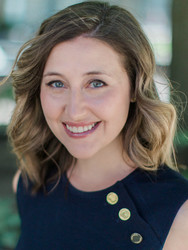
Margarita Montimore, photo by David Swanson
Margarita Montimore is the author of the new novel Oona Out of Order. A freelance book coach and editor, she lives in New Jersey.

Q: How did you come up with the idea for Oona Out of Order?

A: In my late 30s, I found myself experiencing a strange disconnect where it was hard for me to believe I was pushing 40 when there were days I woke up still feeling like I was 19 on the inside.

That got me thinking about what it might be like for a woman to experience her adult life aging chronologically on the inside but leaping into different points of her timeline every year.

As soon as I uttered the words, “What if a woman lived her life out of order?” I knew that was the next book I had to write.

Q: Did you write the sections in the order in which they appear in the book, or did you write them in chronological order and then move them around?

A: I wrote the sections in the order in which they appear in the book, though I also maintained a separate list that was chronological timeline for Oona. This helped me keep track of key events in her life year to year and ensure continuity.

Q: The novel has been compared to The Time Traveler's Wife and Life After Life. What do you think of those comparisons?

A: I haven’t read Life After Life, but it’s been on my TBR for ages and I’ve heard it’s excellent.

As for The Time Traveler’s Wife, that’s one of my favorite books, so I’m flattered by any comparisons to it.

That book is also a big reason I resisted writing Oona at first, because Audrey Niffenegger’s novel is perfection: the prose is gorgeous, and the love story it tells feels both epic and intimate. But then I realized Oona’s story would be different, beginning with her love life being far messier.

Also, I wanted use time travel to explore other relationships she’d have—romantic, familial, and platonic—as well as larger themes like identity and aging.

Q: What do you hope readers take away from the story?

A: That as much as we may try to craft a meaningful life, sometimes it all comes down to the smaller special moments we collect along the way and the people we share them with.

To quote a line from the book, “All good things end, always. The trick is to enjoy them while they last.”

Q: What are you working on now?

A: It’s been challenging to focus on drafting something new while in the midst of book promo, but I have a handful of new story ideas swimming around my head and I’m hoping to zero in on one of them once things settle down a bit.

I’ve also mapped out part of a sequel to Oona Out of Order—I’m not sure when I’ll explore it in more detail, but her story is definitely not over for me.

Q: Anything else we should know?

A: While writing this book, I always had music playing and often had a specific soundtrack in mind for various scenes in the story... so I created an Oona Out of Order playlist on Spotify.

--Interview with Deborah Kalb

Q&A with Camille Pagán


Camille Pagán is the author of the new novel This Won't End Well. Her other books include I'm Fine and Neither Are You and Life and Other Near-Death Experiences. Her work has appeared in a variety of publications, including The New York Times and O, The Oprah Magazine. She lives in Ann Arbor, Michigan.

Q: How did you come up with the idea for This Won't End Well, and for your character Annie?

A: For my 40th birthday, my husband, two children, and I went to Paris. We’d planned the trip for nearly a year—and by all accounts, it was a blast.

We stayed in a magical apartment in Montmartre with sweeping views of Paris and the Eiffel Tower and managed to do just enough sightseeing to make the most of the vacation without burning ourselves out. We even celebrated in the streets with the rest of Paris as France captured the World Cup.

But eight days is a lot of family time—especially for someone who’s used to spending long stints alone in front of her computer.

By the day after my birthday, I’d had so much togetherness that I felt like I couldn’t hear myself think. Sensing this, my husband volunteered to take our kids to a park on the Seine, so I could go for a walk by myself.

I was strolling along the river, watching the water rush wildly and thinking about what a feat it is to successfully manage relationships—even, or maybe especially, when they’re with the people you love most—when a single sentence popped into my head:

Hello seems like such an innocuous word, but it’s really a portal to loss.

Which is, of course, the opening line to This Won’t End Well. As with all of my books, the story came to me almost at once.

I thought: What if a sweet but cynical scientist’s heart was broken by her fiancé, who flew to Paris without her—and she decided to protect herself by swearing off new people, only to find herself entangled in the affairs of her glamorous new neighbor and the amateur detective investigating said neighbor?

That character is Annie, and she is quite possibly my favorite character since Libby in Life and Other Near-Death Experiences.

Q: Why did you decide to write an epistolary novel this time?

A: The book just came to me that way; it started with a letter from Jon to Annie, and when I began writing, it made sense to continue writing in letter format. As a writer, I enjoy new challenges, and it was a joy to write a novel that was unlike anything I’ve written before.

Q: What do you think the book says about commitment?

A: Without giving away too much, I think This Won’t End Well addresses the fact that commitment for commitment’s sake isn’t necessarily a good thing. Often times, we cling to jobs, relationships, and even old dreams that no longer serve us.

Q: You're also a journalist--how have journalism and fiction writing fit together for you?

A: I’ve been a health journalist and editor for nearly 20 years; it grew out of my natural interest in health. No surprise, most of my novels address mental or physical health in some way.

But aside from any research that I do to address those issue (e.g. investigating the opioid crisis for my last novel, I’m Fine and Neither Are You), I turn off “fact mode” in my head and lose myself in the story when I’m writing fiction.

As much as I love journalism, fiction still feels fun—which is maybe why I can’t stop writing novels!

Q: What are you working on now?

A: My seventh book is a follow-up to Life and Other Near-Death Experiences. I’ve just started working on it, but I’m having so much fun returning to these characters and Puerto Rico (where Life is largely set).

Q: Anything else we should know?

A: I love connecting with fellow book lovers; you can find me on Instagram at @camille_pagan or on Facebook at facebook.com/CamillePaganBooks.

--Interview with Deborah Kalb. Here's a previous Q&A with Camille Pagán.

Feb. 26

ON THIS DAY IN HISTORY
Feb. 26, 1802: Victor Hugo born.

Tuesday, February 25, 2020

Q&A with Kathleen Barber


Kathleen Barber is the author of the new novel Follow Me. She also has written the novel Truth Be Told. She lives in Washington, D.C.

Q: You write that the inspiration for this novel came from something you came across on the internet involving men who spy on women through their webcams. How did this discovery turn into Follow Me?

A: I don’t have the words to described how unsettled I was when I stumbled across an article entitled “Meet the Men Who Spy on Women through Their Webcams.”

I couldn’t decide what I found most horrifying: that it was reportedly very easy for these creeps to remotely install software on your computer granting them access to your hard drive and webcam, or that some of these men made a game out of collecting “slaves” (their name for the women they spied on) and then trading or even selling access to them amongst themselves.

I had such a visceral reaction to the article that I instantly knew I wanted to write about it. I wanted to explore how it felt to be on both sides of the comprised webcam, and so, in Follow Me, you’ll find a woman who is being secretly watched through her laptop and a man who is doing the watching.

Q: You tell the story from several characters' perspectives. Did you always know who your point-of-view characters would be, or did you change things around as you wrote?

A: I’ve always thought that each of the narrators—Audrey, Cat, and “Him”—have a perspective that’s imperative to the story, and so I always knew I wanted to hear each of their voices. I initially conceived the story in three parts, with each of them getting one chunk of the novel.

Once I started writing it, however, I changed my mind about the structure. The problem with my original plan was that the reader only knew what the current narrator knew, which meant they were missing out on a lot of the machinations behind the scenes.

Specifically, I had given Audrey the first portion of the book, and that meant I couldn’t reveal the steps that the character known as “Him” was taking to follow her. I decided to instead intersperse the characters’ perspectives, and I think that really heightened the tension.

Q: What do you think the novel says about the use of social media today?

A: Follow Me is both a love letter to social media and a cautionary tale about it.

In many ways, I’m a big fan of social media—I love that it allows me to remain in touch with old friends and to connect with new writing friends and readers, and I love to discover new books and other types of art through social media.

But I’ve always been really curious about and suspicious of influencer culture and the way many of these influencers package their lives for consumption, and so I wanted to explore that in this book.

In Follow Me, Audrey is as online as you can get: she’s both an influencer in her personal life, and a social media manager in her professional life. Living her life online in second nature to her.

It’s been largely successful for her thus far, helping her achieve minor fame and secure her dream job, and she no longer stops to worry about whether she’s sharing too much.

As social media becomes an ever-increasing presence in our daily lives, I wonder if we’re getting too complacent about it and whether we, like Audrey, are sharing too much without even realizing it.

Q: The novel takes place in D.C. How important is setting to you in your writing?

A: It’s important to me that I can visualize the setting, and so I only set my books in places that I’m familiar with.

My first novel, Truth Be Told (originally published as Are You Sleeping), was set in a fictionalized version of my hometown in Illinois, and the protagonist Josie lived in a neighborhood not far from my own former neighborhood in Brooklyn.

In Follow Me, Audrey and Cat live in the neighborhood in D.C. where I reside, and, while the actual building Audrey lives in doesn’t exist, it’s a mash-up of a few real buildings in the neighborhood. The coffee shop she frequents likewise doesn’t actually exist, but shares similarities with my favorite local spot.

As you might be able to tell, I don’t feel constrained in representing a setting exactly as it stands in real life, but I do think it’s important to be able to capture its general feel.

Q: What are you working on now?

A: I’m working on another suspense novel with a social media bent. It’s still in the drafting stages and subject to change, so I don’t want to say too much about it—but I’m excited about it!

Q: Anything else we should know?

A: It probably comes as no shock to you that I’m often on social media, so please connect with me on Twitter or Instagram!

--Interview with Deborah Kalb. Here's a previous Q&A with Kathleen Barber.

Q&A with T. Frohock


T. Frohock, photo by Misty Felde Photography
T. Frohock is the author of the new novel Carved from Stone and Dream, Book 2 in her Los Nefilim series. She lives in North Carolina.

Q: How did you come up with the idea for Carved from Stone and Dream?

A: The first Los Nefilim novel, Without Light or Guide, was set in 1932, prior to the beginning of the Spanish Civil War. As I had fielded a good number of questions about Spain and the Spanish Civil War during this period, I realized that most of my American audience didn’t have a strong familiarity with the Spanish conflict.

So I decided to jump Carved from Stone and Dream ahead a few years to February 1939. I wanted to hit the time period between the Spanish Civil War and the German invasion of France.

The story follows members of Los Nefilim—Spanish Nephilim that use light and music to create their magic—into La Retirada, the Republican retreat from the Nationalists at the end of the Spanish Civil War. The ideas for the events and the plot came from both historical and theological resources, which I then mixed together with old war movies.

The upshot of it all is that Carved from Stone and Dream is John Wick meets A Band of Brothers hopped up on supernatural steroids.

Q: This novel is part of a series—did you plan the series out before you started writing the first novel?

A: When I outlined the three Los Nefilim novellas (In Midnight’s Silence, Without Light or Guide, and The Second Death), I had a story arc that began with introducing Diago and his husband, Miquel. In the first novella, Diago discovers he has a son, and instead of abandoning the child, like everyone thinks he will, he rescues Rafael and tries to be a good parent.

When Harper Voyager wanted novels in the series, I expanded the books to include Diago’s relationship with his family in connection with the family of their friend, Guillermo, his wife, Juanita, and their daughter, Ysabel. While all three books remain focused on Diago, the other characters develop stronger roles so that we learn more about them, too.

While the Los Nefilim novels can be read, more or less, individually, people that read the novellas and then the books will find that they follow a single arc that will eventually end with the last Los Nefilim novel, A Song with Teeth, which is coming out in 2021.

I wanted to write a series about two closely entwined families, who were intimately involved in the politics of their era. I also like the idea of keeping the stories like thrillers with a lot of mystery and action.

Q: What kind of research did you do to write the book, and did you learn anything that especially surprised you?

A: While I worked on the outline for the novel, I read Blitzed: Drugs in the Third Reich by Norman Ohler, and Scott Soo’s The Routes to Exile: France and the Spanish Civil War Refugees, 1939-2009.

Both books provided two of the novel’s prominent subplots: the Pervitin experiments conducted on soldiers by the Nazis and the terrible trauma of the Spanish refuges as they were forced into French concentration camps.

After Blitzed, I’ve never read a history of the German invasion of France the same way again. While most histories focus on the battle strategies and troop movements, none broached the fact that the soldiers were taking Pervitin every day.

Their job was to stay awake and push through France, and with the help of the stimulant, they did. The costs were horrific. The drug increased the soldiers’ aggression, gave them heart attacks, and those that survived suffered from addiction.

At the time of the German invasion, Rommel, who went on to become the celebrated “Desert Fox,” was hopped up on Pervitin, like his troops.

Rather than wait for his engineers to establish pontoons to get the tanks across the rivers, Rommel put them on ferries, which could have been a disastrous move given the weight of the tanks. The ferries didn’t sink, the tanks made it across, France fell, and the rest, as they say, is history.

Q: What do you see as the right blend of history and fantasy as you write your books?

A: There isn’t really a rule of proportion that I use, because I like to weave them together. The historical backdrop must be factual and the characters carry the supernatural aspects of the story. Although in Los Nefilim, the characters rely more on their wits than on magic.

I would definitely say that Carved from Stone and Dream is more fantastical than the first novel, Where Oblivion Lives, which was more of a Gothic mystery. Carved from Stone and Dream slips deeper into horror.

Q: What are you working on now?

A: I’ve written a novel a year for the last three years, so I’m taking a little break and working on synopses for some other projects. I was dangerously close to burnout by the end of the last novel, which is never good. So I’m giving myself some time to promote the Los Nefilim books while I’m thinking about what I want to pitch next.

Q: Anything else we should know?

A: I update my blog far more than my newsletter, but you can subscribe to either or both at www.tfrohock.com, just scroll down a bit for the links. If you enjoy history, I write a series called Fieldnotes about interesting facts that I come across in my research.

--Interview with Deborah Kalb

Q&A with Shana Keller


Shana Keller is the author of the new children's picture book Bread for Words: A Frederick Douglass Story. She also has written the picture books Ticktock Banneker's Clock and Fly, Firefly!. She lives in North Carolina.


Q: Why did you decide to focus your new picture book on how Frederick Douglass learned to read?

A: When I read through an old biography about Frederick Douglass, I realized the amount of effort it took for him to learn how to read and write is one many children can relate to. So I thought it would be neat to share how one of the greatest orators and activists of all time learned.

Q: How did you research the book, and did you learn anything that especially surprised you?

A: I started reading a biography about Douglass written by William S. McFeely. From there, I went back to the actual autobiographies Douglass wrote himself. Then, I read even more books, including children’s books, about Douglass. A few mentioned, but none focused solely on, this great achievement of his.

As the story developed, I took a trip to Baltimore and met with an amazing docent named Bradley. He works with the Frederick Douglass-Isaac Myers Maritime Park & Museum. He answered many of my questions and gave me a tour of the museum (which I highly recommend).
  
Q: What do you think Kayla Stark's illustrations add to the book?

A: I am so glad Kayla wanted to work on this project! Her style, from my perspective, puts everyone on equal footing. Despite the heavy topic of slavery and enslavement, there’s an optimism in her drawings and an underlying sense of togetherness I see in the children in the story. It’s very inspirational!

Q: What do you hope kids take away from the book?

A: That despite some of the worst odds on the planet, people can succeed. I hope children get a sense from this story that our power comes from our own ingenuity. Where there’s a will, there is a way.
  
Q: What are you working on now?

A: Multiple historic picture books with a focus on African American history.

Q: Anything else we should know?

A: If teachers or parents want to demonstrate and connect how Douglass learned—they can show their students four letters from a foreign language (one they aren’t familiar with). Have them trace those letters as Douglass did, and keep track of the time to see how long it takes them to memorize all four.

For fun, you can ask them how long they think it would take to learn the entire alphabet. 

--Interview with Deborah Kalb

Feb. 25

ON THIS DAY IN HISTORY
Feb. 25, 1937: Bob Schieffer born.