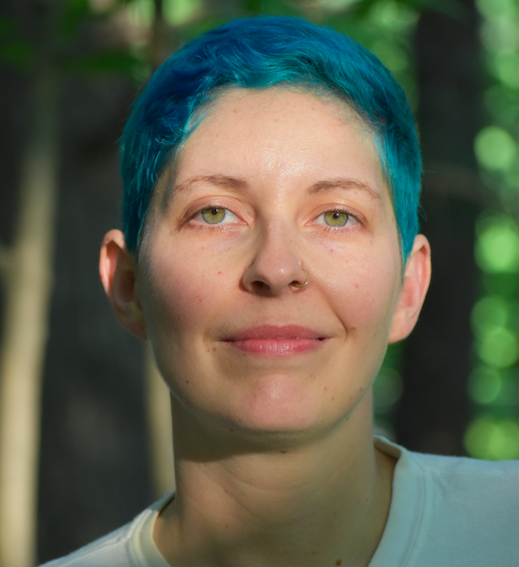
Lally Pia, M.D., is the author of the new memoir The Fortune Teller's Prophecy: A Memoir of an Unlikely Doctor. She is a psychiatrist, and she lives in Davis, California.
Q:
What inspired you to write this memoir?
A:
I had an unusual life spent in four continents, with significant setbacks that
occurred in each country. These were character-forming. My experiences battling
hardships significantly affected my life trajectory and gave me an overriding
positive approach to life as each obstacle was navigated.
The
biggest push to write the memoir came from a constant exhortation from friends
to “write about your life... It’s such a great story... it will inspire others.”
I have always been more interested in fiction and action than memoir, but to
please my friends I pretty much put the story skeleton down under duress!
Then,
I got involved in the craft and began editing. I also sought critique and the
process became more cerebral and fun, especially when I realized that the story
could be inspiring to others. I wrote page-long entries into a diary from ages 13
to 20, so it was helpful to have a resource to keep the dates straight.
Q:
How was the book’s title chosen, and what does it signify for you?
A:
My daughter Shanthi, age 29, came up with the final title. I’d gone through
dozens of other potential titles in discussions with my publisher, Brooke
Warner.
The
original title, carried with me from the memoir’s inception, 10 years back was:
“Doctor of doctors,” which was the prophecy that I had carried with me all my
life. It was thought to be too lofty for the main themes of the memoir of a
naive girl!
I
finally settled on “The Fortune Teller’s Prophecy” because it was a theme that
ran through the memoir and the prophecy was something I clung to when life was
rough.
The
second part of the title, “A memoir of an unlikely doctor,” was important to
me, because there were so many times along the way that I was under such
hardship that I scoffed at the prediction. I almost quit medical school even
after I finally made it in!
I
thought it would be important to give hope to those who struggle in med school
like I did, especially those who are older, like I was. I started med school at
age 36!
It sends a message of hope that you should not
give up, which is the most important thing that I want the memoir to symbolize.
Even in my psychiatric practice, I want most of all for my child patients to
feel hope for the future. It is amazing how optimism can be curative.
Q:
What impact did it have on you to write the book?
A:
I struggled with restricting the book to its current size of just over 100,000
words, as I had to decide which threads to emphasize and which to clip. Because
it is a complex story, this was very hard.
I
noticed, as I read the audiobook out to my husband, that unexpectedly I broke
down several times, and we had to do several takes in order to get through the
reading. It struck me that perhaps I was not quite as healed as I thought I
was, and it definitely connected me back to a vulnerability I thought I’d
outgrown.
I
realized, however, that if the writing had the power to take me down, perhaps
it would reach into the emotions of my audience.
It
was very difficult for a very private psychiatrist to expose feelings of
helplessness and poor decision making to my readers, but having heard from them
it helps them to better relate.
My
first few “takes” at the book cut out much of the emotion. I see now that I was
struggling to save myself from going back into the uncomfortable spaces, but it
also distanced my audience. So I added back the tough incidents and my early
readers have told me this helps them to feel more connected.
Q:
Can you say more about what you hope readers take away from the book?
A:
I want my readers to treasure and value resilience. I want them to keep
thinking about all the different options they have to get out of a feeling of
entrapment (such as within a toxic marriage). I want them to catch the subtle
warnings that they are in a bad relationship.
I
want people who are immigrants to this country to be inspired by my story and
to help them understand the value of culture and family and friends in the
paths we take.
I
also want to share how important it is to be vulnerable and dependent on others
at times (like I was) as I simply could not have made this journey without the
many, many hands that helped me through, from welfare to friends providing
financial assistance, to all my mentors along the way.
I
am so grateful for all the help and support, and yes, dependence on others,
that made my journey possible.
In
this country of standing up for yourself and individualism, I hope my story
will help readers understand that our beautiful tapestry of welfare support is occasionally
not utilized just to “scam the system” as many believe. For people who were in
my position it can actually make great things possible.
I
want to inspire a feeling of patriotism in readers that will make them appreciate
that this is a truly magnificent country I am proud to call my own, and that
sometimes your dreams really can come true.
Q:
What are you working on now?
A:
I am working on several different stories in different stages of completion.
One
is almost completed: Andorea is a story of psychological suspense which follows
a female psychiatrist who works in a jail. Should she say what she knows to
help a condemned man go free, or should she remain quiet so she can protect her
medical license?
This
is based on my work in a jail in Redwood City and in Folsom Prison, when being
with imprisoned people had a profound impression on me. It raised many ethical
dilemmas.
Another
novel is one in which an embalmer is suspicious about the fate of some of the
bodies she receives at the medical school (based on my work as an embalmer at UC
Davis medical school).
Finally,
I am working on a suspense novel called The Letter from Grandma in which a
child is getting letters over the years, supposedly from her dead grandmother,
but who is really the author of the letters, and what is the purpose of the
letters?
Q:
Anything else we should know?
A:
My experience of having a stroke one year back moved me to write an article
about gratitude for those who help out when you are at your most vulnerable. I
was in a difficult and vulnerable place to have my role as doctor switched to patient.
“A
Letter to Brock Purdy” received publication in the local paper and an extended version
was published in Doximity’s Med Ed (an online publication for medical
professionals). I feel that the account is an example of my best writing, as it
came from my heart, late one night. It epitomizes my values of thankfulness.
I
composed “My Last Reserve,” a song about a person struggling to find a way. I composed
the lyrics and my husband helped with the music accompaniment. A friend’s
daughter sang what I wrote one afternoon.
It
is up on my website, but has not received much air time or traffic. My dream is
to have someone pick up the song and sing it to motivate others.
--Interview with Deborah Kalb




.jpg)


.jpg)


