Monday, August 29, 2022

Q&A with Frances O'Roark Dowell


Frances O'Roark Dowell is the author of the new middle grade novel Hazard. Her many other books include The Class. She lives in Durham, North Carolina.


Q: What inspired you to write Hazard, and how did you create your protagonist?


A: I’m an Army brat and feel a kinship with any Army brat I meet, young or old. Growing up, my family and I went through lots of moves, which involved lots of new friends, new schools and new cultures.


As an adult, I’d assumed that Army brat life was pretty much the same now as it was back then. It wasn’t until I had the opportunity to talk to some middle school students who had parents serving in Afghanistan that I began to understand how much things had changed since I was a kid.


These kids’ parents had been deployed multiple times, to both Iraq and Afghanistan, and when your mom or dad goes to war, you don’t follow along. Some of the students I talked to lived with their grandparents or other relatives and had never moved, and some had only moved once or twice. All of them had gone for long stretches of time only seeing their military parent via a computer screen.


That conversation occurred eight or nine years ago. The U.S. was no longer in Iraq but was still sending troops to Afghanistan. To be honest, like a lot of Americans, I hadn’t been paying much attention after the first few years of what would come to be known as the Forever War. At some point I lost track of where we had troops.


What I knew about the war mostly came from news stories about the difficulties soldiers faced when they returned to the States. While the number of U.S. soldiers killed in these wars was low, the number of soldiers who returned with physical and psychological disabilities was high (totaling close to a million, by recent estimates).


After talking to those students, I began paying closer attention. I started wondering what it was like to have a parent go to war--not just once, like when my dad did a tour in Vietnam, but again and again.


How would it affect you psychologically? What kind of defenses would you build up? How would you react if your mom or dad came home from one of those deployments a changed person? A person with only one leg instead of two, or someone who couldn’t stop thinking or dreaming about the war? 


And that’s where the idea for Hazard was born. The character Hazard took a while to develop. At first, he was in sixth grade, but the more I wrote, the older he got. It took a while to figure out that he played football, but once I did, I had a very clear picture of who he was and what he wanted. I understood better the shape his story would take.


Q: You tell the story in a variety of formats, including verse, emails, and texts--how did you come up with that structure?


A: I started with the intention of writing the novel entirely in verse. But then I decided that I wanted Haz’s dad, Brandon, to have a voice in the novel. I didn’t want him to be just a body in a bed; I wanted him to be a real person.


I also wanted to convey what his experience in the military in general and Afghanistan in particular had been like, so I decided to include some emails from him. I knew that Brandon’s emails to Haz and his brother probably wouldn’t reveal the harder facts of his deployment experience, but his emails to his wife might.


That’s when the idea for a research project was born, where Haz would gather documents as part of his anger management therapy. 


The texts between Hazard and his best friend Jackson came about because my editor, Caitlyn Dlouhy, felt like we weren’t seeing enough of Haz’s life at school and with friends, etc. Those texts were so much fun to write! I have two sons, so I’m well versed in the language of adolescent male texting. It was also interesting to try to create the sense of a real friendship via texts. 


Q: How would you describe the dynamic between Hazard and his dad?


A: That’s an interesting question. Brandon’s been a good dad, and Haz loves and admires him. When his dad loses a leg in an IED, it’s  difficult for Haz on a number of levels.


First of all, his dad’s body has been irrevocably changed. One thing I don’t see talked about much is how aware children are of their parents’ bodies. When we’re little, our parents loom so large and we notice every detail–the freckles and scars, the shape of their hands, the funny little cowlick, etc. If I close my eyes, I can see the light brown spot on my mother’s cheekbone, a spot that she’s had ever since I can remember. 


It can be very hard when a parent’s body changes, whether it’s from injury or old age. For Haz, the loss of his dad’s leg is traumatic in part because his father has always been this big, athletic guy. Haz doesn’t know how the loss will change his dad, or how it will change his feelings about his dad. He gets freaked out wondering where the leg went. How is he going to react to his dad when he sees him for the first time after Brandon’s return to the States?


Another thing about parents: We reach an age, usually in adolescence, where we start seeing our parents as complex and complicated–which is to say, human. Our understandings of who our parents are get reconfigured.


This happens to Haz after he learns that his dad ordered a young man to be shot–a young man who may or may not have been about to set off an IED. It’s an action that really messes with Brandon’s head, causing what therapists call moral injury. I think by the end of the story, Hazard sees his father as much more vulnerable than he’d realized, both physically and psychologically. 


Q: What do you hope readers take away from the story?


A: There are one or two things I can think of right off the bat.


First, if you don’t feel your feelings and try to understand why you’re feeling them, you can end up doing stuff that’s destructive to yourself and others. This is what happens with Haz when he doesn’t deal with his feelings about his dad losing a leg in an IED blast. He makes a bad hit on the football field. He hurts someone.


Figuring out your feelings isn't always easy. You've got to talk them out. You've got to write them out. Fortunately, there are people around who can help you. I hope in particular that boys will see that it’s important to talk through the really tough stuff. Boys feel things as deeply as girls; they’re just not encouraged to deal with those feelings in direct ways. 


I also hope Hazard encourages readers to think about what it’s like to be in a military family. We tend to either deify or vilify soldiers in our society: they’re either Marvel Comic superheroes or else infested with toxic masculinity.


But soldiers and their families are real people, with all the good and bad stuff that’s a part of being human. Most Americans–including myself–didn’t pay a lot of attention to the war in Iraq and Afghanistan, in part because we feel so little connection to our military families. It’s easier to glorify them to think about what their lives are actually like and the price these families pay for their service.


Q: What are you working on now?


A: I’m working on another Army brat story, though so far this one is a conventional novel, not a novel in verse. I’m on the second draft, in which the story has evolved from a road trip story into a wilderness adventure story. The working title is Tell. Wish me luck on my revision!


Q: Anything else we should know?


A: The most interesting feedback I’ve gotten about Hazard so far is that it’s a great book for reluctant readers. I’m excited by the prospect that some kids out there who don’t like to read will pick up Hazard and enjoy it. Maybe they’ll be inspired to read more books–and maybe even write one someday!


--Interview with Deborah Kalb. Here's a previous Q&A with Frances O'Roark Dowell.

Q&A with Melanie Conklin


Melanie Conklin is the author of the new middle grade novel A Perfect Mistake. Her other books include Every Missing Piece. She lives in New Jersey.


Q: What inspired you to write A Perfect Mistake, and how did you create your character Max?


A: The initial inspiration for A Perfect Mistake was the idea of a kid who personally fears making mistakes having made a big one with serious consequences.


From my experiences with my husband and son’s ADHD, I know that people with ADHD receive an inordinate amount of negative feedback in their lives, so it made sense that Max might have ADHD, too, and a strong aversion to making mistakes.


This pits his personal growth against the plot, which makes for a more engaging story. I often start from the character’s emotional growth arc in order to figure out who they are as a person.


Q: The Kirkus Review of the book says, in part, “Mystery and just a little peril make an absorbing vehicle for an exploration of ADHD.” What do you think of that description, and can you say more about why you decided to focus on ADHD in the novel?


A: I actually love “mystery and a little bit of peril,” because while there are some intense scenes in A Perfect Mistake, most of the bad stuff happens off stage. That’s a hallmark of middle grade. We explore serious issues but present them to readers in a safe way, so they can think through these kind of challenges without harm.


So many readers young and old are diagnosed with ADHD that it seemed like a natural topic to present for a middle grade audience. I do not have ADHD, so it took a lot of research and work with expert readers to ensure Max’s depiction honored the lived experience of a person with ADHD.


Q: Did you know how the novel would end before you started writing it, or did you make many changes along the way?


A: I always know the way a novel will end before I start writing it! Usually, the pieces I know are: the character’s initial emotional state, the inciting moment of the plot, the character’s emotional growth arc, and the climax moment.


Everything else is a total guessing game and I often change the external events of the plot quite a bit. A Perfect Mistake got a new ending after the first draft I turned in to my editor, and that is a typical revision for me!


Q: How was the novel's title chosen, and what does it signify for you?


A: You’re the first person to ask me this! I like titles that are thematic and can contain multiple meanings. For me, A Perfect Mistake speaks to both the external plot, of the incident that happens to Max and his friends, and also to the idea of perfection.


It’s a mistake to think that we can ever be perfect. To quote from the book: “𝚃𝚑𝚎𝚛𝚎𝚜 𝚗𝚘 𝚜𝚞𝚌𝚑 𝚝𝚑𝚒𝚗𝚐 𝚊𝚜 𝚙𝚎𝚛𝚏𝚎𝚌𝚝. 𝚃𝚑𝚎𝚛𝚎𝚜 𝚘𝚗𝚕𝚢 𝚝𝚛𝚢𝚒𝚗𝚐, 𝚊𝚗𝚍 𝚜𝚘𝚖𝚎𝚝𝚒𝚖𝚎𝚜 𝚏𝚊𝚒𝚕𝚒𝚗𝚐, 𝚊𝚗𝚍 𝚝𝚑𝚊𝚝𝚜 𝚘𝚔𝚊𝚢.”


Q: What are you working on now?


A: Right now, I’m working on my next middle grade novel, Crushed. It’s a #MeToo story set in middle school. Most girls have experienced harassment by that age and it’s a topic I have a lot to say about. The book includes a chorus of voices from my main character’s life chiming in with their own experiences with sexism, misogyny, and harassment.


Q: Anything else we should know?


A: My previous novel, Every Missing Piece, is now in paperback! It’s my very first paperback and I’m so excited to have that option for readers now. The paperback also includes a preview of the first few chapters of A Perfect Mistake.


--Interview with Deborah Kalb

Q&A with Dan Harary


Dan Harary is the author of the new book Flirting with Fame: A Hollywood Publicist Recalls 50 Years of Celebrity Close Encounters. A longtime publicist, he lives in Beverly Hills, California.


Q: What inspired you to write this memoir about your experiences as a publicist in Hollywood?


A: During Spring 2021 when most of us were still in lockdown due to Covid, I was sitting in my living room and realizing that my upcoming 65th birthday in June was only a few months away. Then I glanced across the room to see a framed poster I have on my wall – it’s a promotional poster for a live concert by legendary Woodstock singer Richie Havens from 1972.


That year, I began work as the stage manager and lighting director for a small rock concert hall in my hometown of Asbury Park, New Jersey, and Richie Havens was the very first celebrity I ever met. (I worked at that venue from ages of 15-18 – from 1972-1974).


That’s when a lightbulb went off over my head: I realized I had been meeting, working with, or interacting with celebrities for 50 years!


Once that thought hit me, I took out a piece of paper and a pen, and simply began writing down a list of every movie, TV, rock and pop music star I’d ever encountered since 1972, and the list was so long, I suddenly realized I had the skeleton of a book. 


My original title for this book was going to be “Close Encounters of the Celebrity Kind,” but another author used that title years ago; so that’s when the phrase “Flirting with Fame” popped into my head.


I wrote my book in chronological order, starting with my childhood experiences: both of my parents were gifted musicians and theater performers; my love for the pop music band The Monkees when I was 10 years old; my years working with major rock bands during the ‘70s at the Sunshine Inn; my college years in Boston; my brief job in New York City at Columbia Pictures; and then the history of my entire career, following my relocation from New Jersey to Los Angeles in 1980 when I was just 24 years old.


In early 1984, I became the very first publicist for The Playboy Channel and worked with Hugh Hefner and numerous Playboy “bunnies” developing promotional media coverage for a few years.


From there, I was a publicist at Columbia Pictures Television, where I worked on a major movie studio lot; then I was a VP of publicity for two of LA’s most prominent entertainment industry PR agencies for nearly 10 years. When I turned 40, in 1996, I opened my open PR company, called The Asbury PR Agency, and have been running it now for 26 straight years.


During those past nearly 40 years, I met countless stars from every field of show business, either at movie premieres or red carpet events or black tie galas or at TV or movie studios, or simply just in “real life.”


Some of my friends have called me the “Zelig” or “Forrest Gump” of show-business. I see myself more like the “Where’s Waldo” of Hollywood!


Q: Of the various celebrities you write about, are there a few that especially stand out for you?


A: Yes, many of the celebrities I’ve met have stood out – most of them for the exhilarating feeling I experienced when I met them.


Among that group would be people like Micky Dolenz from The Monkees – he had been my childhood hero!; also Mel Brooks, Kevin Costner, Ann-Margret, Tom Hanks, Sylvester Stallone, Brooke Shields, Kirk Douglas, Michael Jackson, Steven Spielberg, and Brian Wilson of The Beach Boys.


There are also a handful of celebrities I’ve met who were less than pleasant to me – that group includes Sally Field, Jerry Seinfeld, and Arnold Schwarzenegger.


And, without question, the most awkward moment I ever had with any celebrity was when I was introduced by Meryl Streep and was so nervous, I accidentally called her "Carla”! Carla was actually the name of the woman standing next to me at the time! I’m still cringing over that one, and that took place 32 years ago!


Q: How would you describe the dynamic between you, as the publicist, and the celebrities you work with?


A: Of the hundreds of celebrities I’ve met and/or worked with, I can honestly say that almost all of them were incredibly pleasant, collaborative, and easy to work with.


Many times when I was running a red carpet event, I would encounter these major folks as they began to walk toward the media hordes, usually corralled in bleachers off to one side. I would approach these stars, introduce myself, shake their hands, and then gently ask them if they’d consider being interviewed by the media.


Ninety-nine out of 100 times they would say, “Yes, sure,” and then I would escort them over to the cameras so reporters could get their stories. Among some of the more wonderful folks that I did this with were Jane Fonda, Shirley MacLaine, Ted Danson, Chevy Chase, Sting, Graham Nash, Dan Aykroyd, Julia Louis-Dreyfus, and many others.


I also have met many, many celebs in “real life” and just approach them as people instead of as icons. If you don’t ask them for autographs or to pose with you for photos, they are usually very pleasant to talk with for a few minutes.


Note of advice: If you see a celeb and want to meet them, gauge the “moment” first – make sure they are not distracted or appear to be in a hurry. “Read the room” and you will almost always be able to have your moment with them – also be sure to make it quick. These folks don’t really want to hear your entire life story while you and they are standing in the same line at the grocery store!


Q: What do you hope readers take away from the book?


A: The only thing “special” about me is that I have a nice ability to narrate stories via the written word. I’m not famous; I’m not a celebrity. In fact, I never even wanted to be a publicist, but sometimes life just happens.


So when I wrote Flirting With Fame, I was writing stories from an “Everyman’s” point of view. These are the moments since 1972 when I was fortunate enough to meet or work with very famous people, and the unique, fleeting moment I had with them, quite often under strange, off-beat or humorous moments!


I came to Hollywood in 1980 at age 24 to be a comedy writer for TV. While that never happened, I did come close to fulfilling that goal three times. Instead, my life course steered me into the PR field, where I’ve been fortunate to have had a very good living.


I know most people never even see a celebrity in real life during their times here on Earth. I’ve met almost every celeb I ever wanted to meet. So, again, the only “special” thing about me is that I’m something of a “celebrity magnet.” 


The way I crafted my stores was to share with the reader how an “everyday/nothing really special” kind of guy reacted when suddenly confronted with people like Barbra Streisand or Madonna, or Sally Field, or Jack Black, or Kirsten Dunst, or Gilligan and The Skipper from Gilligan’s Island. All of my moments were real, and terribly “human.”


Q: What are you working on now?


A: My second book will be published in mid-September; it’s called Carrots and recounts the very odd and unusual history I’ve had with girls and women since birth.


The book, which took me 42 years to complete, reveals early childhood traumas I had forgotten about for decades; the undiagnosed depression I lived with for 25 years; my troubled 11-year marriage; the many women I loved and lost or never loved at all post-divorce; my 20 years as a sex addict; and my most recent years as a calmer, more peaceful man.


Then, my third book, entitled After They Came, will be published in March 2023. That one is a science fiction novel and tells the story of a man, down on his luck, who tried to commit suicide on his 60th birthday – but instead, he is rescued by two benevolent aliens who came to Earth both to save his life and concurrently to solve all of mankind’s problems! That’s the book I’m hoping becomes a movie one day.


Finally, my fourth book, scheduled to be published during early 2024, is called Inside the Cutting Room. That book recounts the 25-year history of a famous New York City nightclub called The Cutting Room, which just happens to be owned by my lifelong best friend, Steve Walter. The club has presented hundreds of live shows from major rock and pop music stars, and Lady Gaga herself was discovered there in 2006 when her name was still Stefani Germanotta!


Q: Anything else we should know?


A: Please visit: www.danhararyauthor.com!


--Interview with Deborah Kalb

Aug. 29


ON THIS DAY IN HISTORY
Aug. 29, 1632: John Locke born.

Sunday, August 28, 2022

Q&A with Alec Nevala-Lee


Photo by Brian Kinyon


Alec Nevala-Lee is the author of the new biography Inventor of the Future: The Visionary Life of Buckminster Fuller. Nevala-Lee's other books include Astounding, and his work has appeared in a variety of publications, including Analog Science Fiction and Fact and Lightspeed. He lives in Oak Park, Illinois. 


Q: What inspired you to write this biography of architect and futurist Buckminster Fuller (1895-1983), and how did you research his life?

A: I’ve been fascinated by him ever since high school, when I first encountered Fuller and his geodesic domes in the pages of the Whole Earth Catalog.


As a followup to my previous book, Astounding: John W. Campbell, Isaac Asimov, Robert A. Heinlein, and the Golden Age of Science Fiction, Fuller seemed like a natural choice. During his lifetime, he was the most famous futurist in the world, and he offered me the chance to explore some of my favorite themes on a greater scale.


Researching the book involved spending a lot of time in Fuller’s papers at Stanford—they amount to perhaps the single largest archive for a private individual in history—and interviewing as many of his surviving relatives, students, and colleagues as possible. It took me about three years of nonstop work, which is actually pretty fast for a book of this size and complexity.

Q: You begin the book with a meeting between Fuller and Steve Jobs. Why did you decide to start there, and how would you describe the dynamic between the two?

A: It was important for me to connect Fuller with the generation of Silicon Valley founders embodied by Jobs, and I had originally intended to start with Fuller’s posthumous appearance in the Apple commercial that introduced the slogan “Think Different.”


While I was researching the book, I learned from Jobs’s friend Daniel Kottke that the two men had actually met, which was a fact that had never been revealed before in print. It was clearly a fantastic opening for the book, since my central thesis is that Fuller was the prototype for the modern startup founder.


Unfortunately, we don’t know what Jobs and Fuller said to each other in private. It’s obvious that Jobs was a fan of Fuller, who was initially less than impressed by the Apple II computer—he said afterward that he thought it was “a toy,” although he eventually came to see it as the fulfillment of everything that he had predicted.

Q: In a New York Times review of the book, Witold Rybczynski wrote, “The strength of this carefully researched and fair-minded biography is that the reader comes away with a greater understanding of a deeply complicated individual who overcame obstacles — many of his own making — to achieve a kind of imperfect greatness.” What do you think of that description?

A: I love that review, and I think that Rybczynski gets at the heart of what I was trying to do.


Most of the previous books about Fuller present a very idealized, uncritical picture, and I’m no longer interested in that kind of myth. At this point, most of us have started to realize that becoming a figure like Fuller—or Steve Jobs, or Elon Musk—is impossible without some kind of personal cost.


I still think that Fuller is an incredibly useful role model for people who want to produce change, but for his example to be instructive, we need to be honest about the downside, as well as the ways in which he fell short of his own high standards.


My greatest hope is that readers will come away with a better sense of how and why Fuller accomplished so much, as well as the hidden consequences of his choices, which went largely unacknowledged during his lifetime.

Q: How would you describe Fuller's legacy today?

A: You can see Fuller’s influence everywhere—in physical structures like Spaceship Earth at Epcot Center, in catchphrases like “synergy,” in the cult of the startup founder—but I also think that he would be surprised by the extent to which he has fallen out of the conversation.


His values and assumptions have been absorbed by our culture, but Fuller himself isn’t as widely known as he used to be, in large part because he had trouble creating a lasting movement that wasn’t driven by the power of his own personality.


One of my goals in writing this biography was to provide readers with an accurate portrait that would allow Fuller to be rediscovered by an audience that hasn’t been served by previous works. I still think that Fuller’s story is incredibly valuable, and I’d like to think that this book will encourage people to seek out his ideas firsthand.

Q: What are you working on now?

A: I’ve got a few shorter nonfiction pieces that I’d like to write before tackling my next project—I wasn’t able to work on much of anything else while I was writing this book, and there are a lot of other subjects that I’ve been meaning to tackle.


After that, I do have an idea for another ambitious biography that would build on Inventor of the Future, in the same way that this book builds on Astounding, but I’m not quite ready to reveal the details yet.

Q: Anything else we should know?

A: Although the more critical aspects of this book have received a lot of attention, I want to make it clear that I admire Fuller, and I think that nearly everyone would benefit from knowing more about his work. He had a huge positive impact on my life, and I’d like nothing better than for this book to introduce him to a new generation of fans.


--Interview with Deborah Kalb

Aug. 28


ON THIS DAY IN HISTORY
Aug. 28, 1913: Robertson Davies born.

Saturday, August 27, 2022

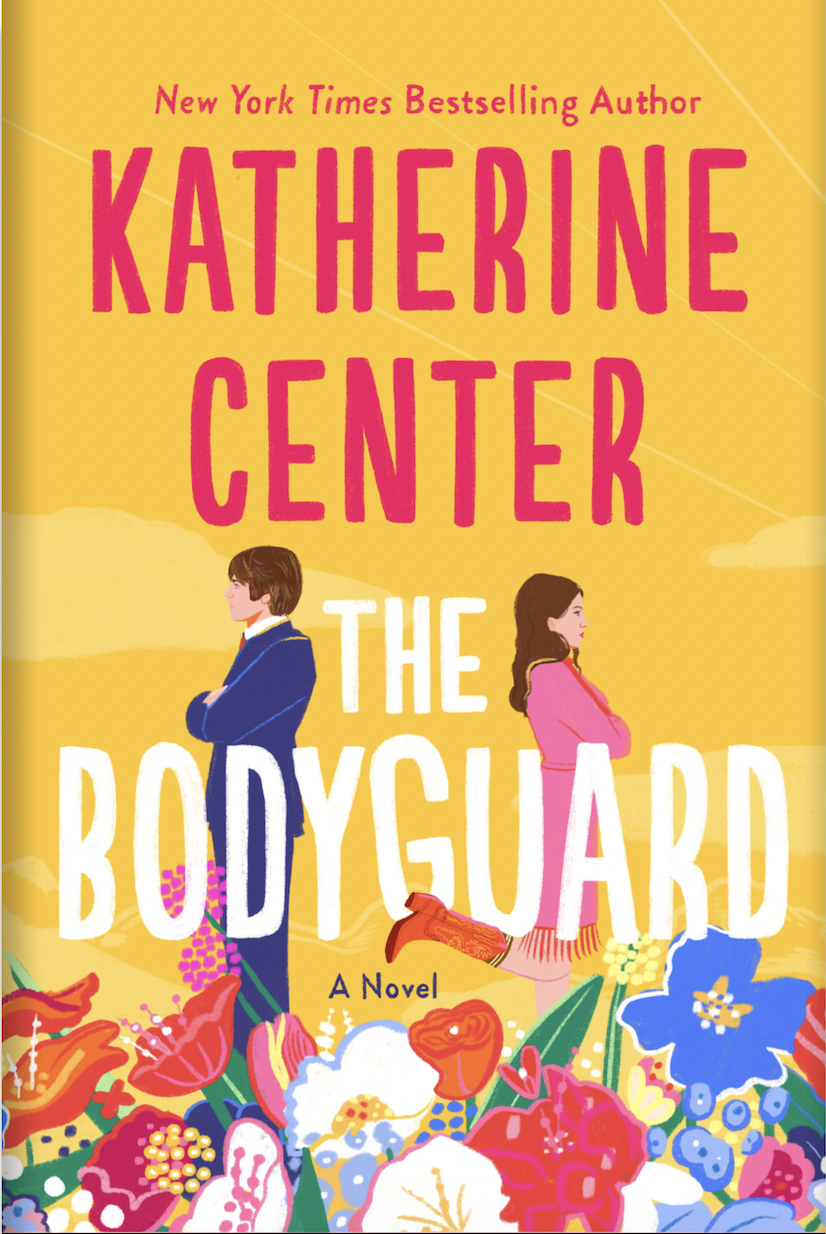
Q&A with Katherine Center


Katherine Center is the author of the new novel The Bodyguard. Her other books include Happiness for Beginners, and her work has appeared in a variety of publications, including USA Today and InStyle. She lives in Houston.


Q: What inspired you to write The Bodyguard, and how did you create your characters Hannah and Jack?


A: I heard a podcast a while back about women bodyguards—and how they were in demand these days because they didn’t look like bodyguards. Not fitting the stereotype actually made it easier for them to get their jobs done and move around undetected.


That idea stuck with me, and I found myself looking for ways to write a story about a woman bodyguard. So I that’s how I came up with Hannah—but then I needed someone for her to protect.


I tried a couple of different ideas for Jack before deciding to make him a movie star. At first, I worried that writing about a movie star would seem too implausible. But my editor encouraged me to try it, and as soon as I gave myself permission to write a dashing, sexy, hyper-famous character like that, the story took off.


It was just fun. It was fun to learn about fame, and acting, and that world. It was fun to go behind-the-scenes. And it was fun to see the two characters clash, and argue, and eventually team up and look after each other. Everything about writing this story was delightful.


Q: The writer Christina Lauren said of the book, “As always, Center’s writing wallops readers with wisdom, wit, and a deep understanding of her dimensional characters. And The Bodyguard is pure, unvarnished delight. It sparkles bright with flirtation, banter, and the all-encompassing thrill of falling in love over a thousand tiny moments of connection.” What do you think of that description?


A: I love it! It very much captures what I’m trying to do with stories. Because I’m trying to write stories about three-dimensional people who have to struggle with real, hard things—and find wisdom in that struggle . . . but I’m also trying to write about, and savor, the joys that show up even in the midst of it all. So that quote really captures so much! 


Q: The novel is set in Texas--how important is setting to you in your writing?


A: It depends on the book, to be honest!  Sometimes the setting is totally essential—and other times I’m focused on other aspects of the story.


For The Bodyguard, the ranch setting was crucial, because so much of the dramatic premise is about two people whose lives would never ordinarily even cross paths winding up in a situation where they have to live together in isolation from the rest of the world. And not only live together—pretend to be dating each other!


So the intensity of being removed from their normal lives is essential for creating events that drive the plot—and also the energy that brings the story to life.


Q: What do you hope readers take away from the story?


A: I’m always kind of quietly making the argument that joy is just as important as sorrow. That living a rich, full life means honoring our sorrows and struggles—not ignoring them—but also really savoring our joys and blessings. I hope The Bodyguard is a story that lets readers do that in real time—laugh and swoon and feel hopeful and inspired.


In the end, I’m hoping that people come away satisfied and nourished—with some thoughts about what really matters in life that they can bring back to their own lives.


Q: What are you working on now?


A: I turned in my summer 2023 book a few weeks back, and we’re just finishing up final edits. Next week, I get to start working on my summer 2024 book—a story that is so fun and so yummy I can hardly wait to start writing. 


Q: Anything else we should know?


A: Another of my books is headed to Netflix as a movie! My novel The Lost Husband got adapted into a film in 2020 and hit number 1 on Netflix—and now that same director, Vicky Wight, is adapting my novel Happiness for Beginners as a Netflix original. It stars Ellie Kemper, Luke Grimes, Nico Santos, and Blythe Danner.


Not sure of the exact release date yet, but I got to do a cameo in the movie—so look for me drinking champagne with Blythe Danner in the wedding flashback!!


--Interview with Deborah Kalb. Here's a previous Q&A with Katherine Center.