Wednesday, July 26, 2017

Q&A with Madelyn Rosenberg and Wendy Wan-Long Shang


Madelyn Rosenberg
Madelyn Rosenberg and Wendy Wan-Long Shang are the authors of the new novel for kids This Is Just a Test, which takes place in the 1980s and features a boy who is Jewish and Chinese-American. Rosenberg's other books include Canary in the Coal Mine, and Shang's include The Great Wall of Lucy Wu. They both live in the Washington, D.C., area.

Q: How did the two of you come up with the idea for this book, and for your main character, David? 

WS: I had been wanting to do a project with Madelyn for a while - and we came up with what we had in common. We were both the "onlies" at our schools (me being Chinese-American, and Madelyn being Jewish) and grew up in the '80s. We both had specific memories from the '80s that we shared with David, such as watching [the TV movie about nuclear war] The Day After.
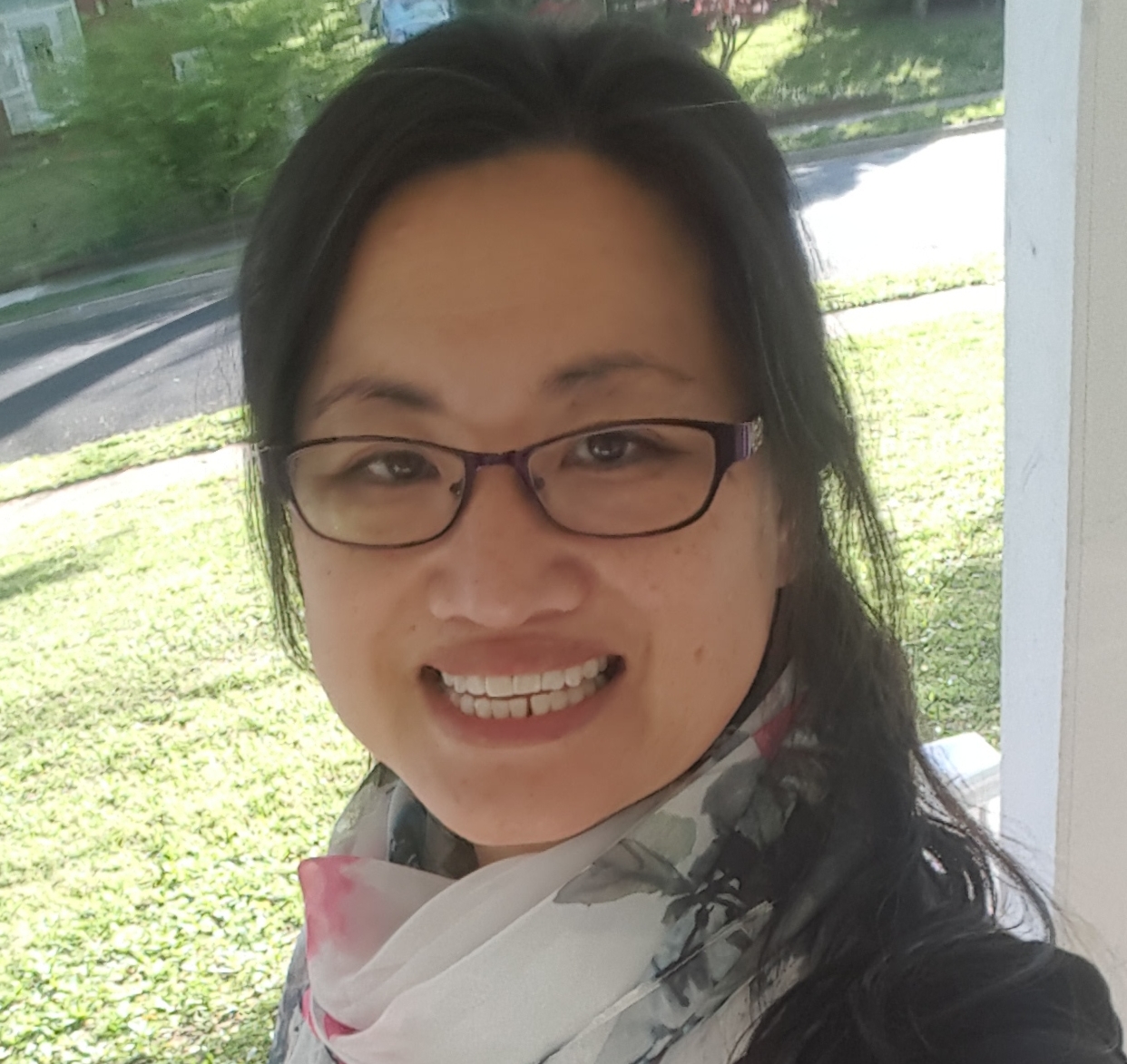
Wendy Wan-Long Shang

MR: Right. That time period became our touchstone -- the thing we knew well, so that we could concentrate on other things, like characters, plot, humor and fear.


Q: How did you work together on the book? Can you describe your process of collaborating?


WS: One of us would write, and then throw it to the other when we got tired or stuck. You can pretty spoiled that way as a writer. You mail off your manuscript and then presto! You’re not stuck anymore.


MR: We also walked a lot to talk things out. And we spent a lot of time sitting together at Wendy’s kitchen table.


Q: Did you remember all the 1983-84 details you include in the book, or did you need to do some research?


MR: There was plenty we remembered, but also, plenty we forgot. We had to do some research to supplement those memories. That meant looking at old newspapers and magazines. It meant watching The Day After again -- though the memory of watching that show for the first time had traumatized us both, we needed to see it again through a different lens. 


WS: Looking back at magazines and movies at the time, it was pretty amazing to see how the Cold War influenced so much of our pop culture. We were also processing a lot of other issues, such as women’s rights and the Vietnam War. It makes you wonder how we’re being shaped now, and what we are trying to process.

Q: How did you come up with the book’s title, and what does it signify for you?


MR: “This is Just a Test” is something David says when he’s trying to figure things out, referencing the phrase from Emergency Broadcast System. I believe they used “only” instead of “just,” after that ubiquitous long beep assuring you that everything’s okay. In the book, David has spent a lot of time preparing for the future. But he has a moment when he realizes that the real test doesn’t come in the future. It’s all of the stuff that’s happening in the moment, right now. 


WS: We went through A LOT of titles before we got to this title, which I love. When we were drafting the story, we nicknamed it "1984" because that’s when the story ends.  

Q: What are you working on now?

MR: We’re working together on another book, though I don’t think we’re ready to talk about it in public yet. And I always have a mix of middle grades and picture books in varying stages of construction. 


WS: I am working on my first picture book, and have some ideas that I would like to develop further for middle-grade books.


Q: Anything else we should know?


WS: We hope this book will give young readers and their families an opportunity to talk about what it was like to grow up in the ‘80s, and how things are different or the same. We also hope our readers will see that we have gone through uncertain times and come out the other side.


MR: Trivia is something else that comes up in the book, and Wendy and I both played a lot of Trivial Pursuit in the 1980s. Wendy was an expert at it. I remain hopeless.

WS: Not true! Although I believe that a lot of my knowledge about the world comes from that game, for better or worse. Also, I spent a lot of the ‘80s trying to make my hair as voluminous as possible. See: home perm. See also: are my bangs high enough?
 

--Interview with Deborah Kalb. For a previous Q&A with Madelyn Rosenberg, please click here.

Q&A with Amy Silverstein


Amy Silverstein is the author of the new memoir My Glory Was I Had Such Friends. It focuses on her second heart transplant and the role her friends played in helping her. She also has written the memoir Sick Girl, and her work has appeared in SELF, Prevention, and Glamour magazines. She lives in New York.


Q: Why did you decide to write this second memoir, and what does the title signify for you?

A: I had to tell this story. What my friends did for me is something that needs to be shared. I felt this deeply and swiftly after my second transplant.

Having had my first transplant at 25 years old and my second at 50, and noting the marked difference in how my friends showed up (or, as it happened, did not show up the first time), I felt there was something beyond my own narrow experience to write about—something universal:  that empathy expands with age, and it’s a magnificent thing to recognize and celebrate. 

Friendship, seen through the intense lens of my story, quickly became the center of the book I would write about my second heart transplant.

And the title:  Well, it signifies that I am not the hero here. I am not the inspiration, as I see it.  I have worked with all my might and intention to stay alive in my post-transplant years. Survival has not been easy, and the friends, family and doctors who’ve been with me on this journey know this well. 

But any glory—any praise or credit or wonder or magnificence—has its place in those around me: my husband, my friends, my son, my family, as well as in the two organ donors and their families who have given me my pulse—twice. 

In this book, I’ve chosen to focus on my friends, yes, their glory. But my main thought is that whatever glory may be, it surely is outside of myself.

Q: Have your friends read the book, and what do they think of it?

A: My friends told me that the book made them cry even though they lived the whole story alongside me. They say they learned things about me (I was extraordinarily open and honest in writing this book), and that they appreciated how I wrote deliberately about what I learned from each of them during our time in my hospital room. 

They felt that I gave voice to the unspoken marvels of what we all accomplished together. 

I am so thankful for my friends’ allowing me to write them on paper. They gave me free rein in weaving the happenings and meanings as I saw them to be. 

My friends insisted that I write without regard for how they might appear. It was easy, though, because they were a rainbow of angels – sounds like I’m overdoing it with that phrase, sorry. But yes, they were colorful, magical angels in this book—and in my hospital room.

Q: You describe some extremely difficult experiences in both your memoirs. What impact did writing the books have on you, and how are you doing now?

A: Let me say this: I have not found it cathartic in the least to put my worst medical challenges and dire moments on paper. If anything, I’ve learned that it is, instead, courageous to do so. 

Because when you pull the curtain away and show the truth of the truth, it is hard to look at—and then, hard to defend, when a few very vocal readers rebuke you for it.

So, writing these books has taught me (forced me?) to examine closely what my purpose is in writing them. My aim cannot be for praise or even for understanding, as reader reactions will run never be uniformly positive and affirming. 

Here’s where I’ve landed with regard to my books’ impact: I hope to make readers reflect on their own lives and feel something that they hadn’t before picking up my books. 

Maybe some readers might feel less alone. Maybe some might understand a family member better, or view medical challenges differently, or find a new way to be strong or kind or empathetic, or have a sense that the universe is full of unimaginable situations that are worth their attention and thought.

I’ve lived an unusual existence. Its realities show up in bold, bright colors, thrusting life lessons to the fore. We learn from each other in this life, right? By example. By inspiration. And yes, by rejection and criticism. At this point, I am honored to put my story and myself out there, and I do so with a sense of pride and hope.

Q: What do you hope readers take away from your story?

A: At its core, My Glory Was I had Such Friends is about the power of women to show up for those we love, and the amazing happenings that come of our reaching deep down and pulling out the strengths and abilities that have formed and solidified within us as we’ve grown older. 

We women are wonderful nurturers, listeners, and tenders; for some of us, this part of ourselves feels like it’s in our DNA. But beyond this, we have a powerful presence that can change the course of our lives and of those around us as well. 

Oh, how our hard-earned wisdom matters! And our intuition! And our cleverness that shines in the most useful, humanistic ways! 

I hope readers will take away a sense of the possibilities that lie deep in their friendships, just waiting to be discovered.

Q: What are you working on now? 

A: I’m writing articles for online and print publications, and doing some appearances at bookstores, as well as some radio and television shows. 

It’s a fun and busy time, and I’m finding that each opportunity to revisit my book and write or talk about it shows me again with the marvel of my friends and the amazing life force they were and are for me.

Q: Anything else we should know?

A: That I am living a completely different life now—different from the very sick 26 life years after my first transplant. 

This is because the medical science of heart transplant is much improved, and it is practiced with expertise and compassion at my new transplant center in California. I actually feel well; this is an astounding outcome that neither my friends nor I thought was possible.

I didn’t get a chance to write much about this in my new book, but maybe I will in my next one...

--Interview with Deborah Kalb

Q&A with Robinne Lee


Robinne Lee is the author of the new novel The Idea of You. In addition to writing, she is an actor who has appeared in a variety of films, including Hitch, Seven Pounds, Hotel for Dogs, and Fifty Shades Darker. She lives in Los Angeles.

Q: You write that a conversation between you and your husband led to the idea for this book. Can you describe how the book eventually took shape, and how you came up with your characters Solène and Hayes?

A: A few years ago, my husband was away on business and I was up late surfing music videos on YouTube when I came across the face of a boy I’d never seen in a band I’d never paid attention to, and it was so aesthetically perfect it took me by surprise. It was like…art.

I spent a good hour or so Googling and trying to figure out who this kid was and in doing so I discovered that he often dated older women, and so the seed was planted.

When my husband returned a couple of days later, I joked with him that I’d found the perfect guy and I was leaving him and our two kids, “oh, and by the way, he’s half my age.” My husband laughed, and then a moment later said, “You know, that would make a great book.”

He’d no sooner said it than I just knew. I could see it playing out so clearly in my head. I thought the story was rife with possibility.

Besides the obvious alluring aspects of what it could be like to date someone famous and beautiful and young and exciting, I wanted to fully explore the psychology of that kind of relationship. I wanted to delve into how our culture conditions us to believe that it’s verboten for women of a certain age to be attracted to younger men.

I wanted to write a novel that challenged certain myths: that female sexuality ceases to exist after we hit middle-age; that having kids makes us no longer sexually attractive or viable; that women at a certain point in their lives – the point where they should be at their strongest and most prolific – become invisible.

I wanted to look at what it is to be a mother and to have the onus of always putting someone else’s wants and needs before your own. What it means to sacrifice your own happiness and pleasure and freedom for your offspring’s.

All of that was compelling to me. I wanted to confront society’s codes about what it is women should or should not do, and how we should or should not feel.

And I wanted to do it with a story about two people who are in every way at the top of their game, but different. Who might seem completely mismatched on the outside but who connect in a very profound and real way.

Additionally, I wanted to take a hard look at fame and celebrity and how it affects people. How fandoms operate, and how their subjects – while revered and idolized – in many ways suffer at the hands of those who love them most. I think our culture has a way of romanticizing what it is to be famous, and I have seen firsthand, how damaging and suffocating it can be.

To me, it was a delicious combination. And because of my experiences as a woman, as a mother, as an actress, and as someone who’d worked in the music industry and with members of a highly popular boy band -- I once managed a group that was produced by one of the New Kids on the Block -- I felt like it was something I was uniquely qualified to write.

From the beginning, I had a very specific idea of who I wanted my protagonist to be. What kind of woman she was: sophisticated, elegant, smart, cultured.

I knew I wanted to put her in the art world, because it was a world I’d always been intrigued by but knew very little about and I welcomed the opportunity to learn something new.

I recalled being at an art fair in Aspen a year prior and spotting a woman about my age who was elegantly chic and understated and breathtakingly beautiful. The kind of woman you see and you think: “I want to know her story.” So, she was kind of who I had in mind when I began building Solène.

And almost immediately, I decided to make her French. I mean, few things sound more alluring than a French art dealer! I’m a huge Francophile. I used to live and work in Paris and am very familiar with the people and the culture. And I felt comfortable enough writing from that perspective.

And then I worked very hard on crafting a 20-year-old boy-bander who could hold her attention for more than five minutes. I needed him to be confident and charming and articulate and witty. I needed him to be creative and an artist. I wanted him to be self-assured and comfortable in his skin.

And then on top of all that, I needed him to be vulnerable and real, and believable as 20. And in doing so, I created a kind of romantic hero. A modern-day Mr. Darcy. And then, I fell in love with him.

Q: How was the book's title chosen, and what does it signify for you?

A: The book’s title was one of the last elements to come together. I’d originally had another title that my agent was not crazy about and so I spent a few months brainstorming, while I was incorporating his edits.

I found “The Idea of You” in the text itself. And to me it signifies two things. It’s a reference to Hayes’ celebrity and his concern with people confusing who he truly is as a person with the idea of who he is. Solène addresses falling in love with him vs. falling in love with the idea of him.

And it also speaks to how we, the public, glom on to celebrities and think we know them and adore them, when it’s really just an image that has been cultivated and marketed and fed to us. The theory that we worship the idea of these people without ever knowing them.

Q: It's interesting that your character Solène's family is originally from France, and there's been a lot of focus recently on the age difference between new French president Emmanuel Macron and his wife. Do you think there are different attitudes in the U.S. and France when the woman in a relationship is older than the man?

A: I think the French have always been more tolerant and had more progressive ideas about sex and sexuality than we have here in the United States.

I blame that on our puritanical roots. The French are much more comfortable with sex and viewing themselves as sexual beings. They are more comfortable with nudity and sexuality in their media. They are much more casual about taking lovers. They are at ease with PDA. They are just a more sensual people.

It’s part of why I chose that background for Solène. I wanted her to wrestle with having that kind of sexual freedom in her DNA but living in a more conservative country.

The age gap between President Macron and his wife is 25 years, which is only a year more than the gap between Donald Trump and Melania. So, the fact that we are even having this conversation is sad. And while the Macrons certainly raised eyebrows in France, I think a similar older woman/younger man political coupling would be positively scandalous in the U.S.

Q: How do acting and writing coexist for you?

A: As professions, it’s tricky. I’ve made a living for the better part of the past two decades as an actress, and writing was always what I did for myself for fun, in my downtime.

So even as I was writing this and completely consumed with the process, any time I got a call for an audition or work I had to drop everything and make that my priority.

And that was frustrating at times. I’d bring my laptop on sets and be writing in between scenes, and my head would be elsewhere, and it was not always easy to click it on and off.

But as an artist, acting has been tremendously helpful with my writing. As writers we pay very close attention to detail. We step into a new place and identify the sights, the sounds, the smells, and we make note of them for later use.

But actors learn to associate emotions with those observations. We call them sense memory and we rely on them to evoke a specific response, a behavior. Being able to bridge those two, to bring the emotion to the observation of detail is a skill that acting has given me.

Additionally, acting has given me an affinity for dialogue. For knowing what flows and what feels natural and organic. Where we pause, where we breathe. All those components factor in to creating realistic conversation.

And finally, years of studying playwrights, has made me very aware of meter and rhythm in my writing. I read my work out loud over and over again because I need it to sound aesthetically pleasing. I need it to sound like music. And those are all things I’ve learned from acting.

Q: What are you working on now?

A: I’ve been so consumed with promoting this book, and acting gigs that it’s been difficult to really throw myself into my next writing project. I’m developing a few different ideas at once and we’ll see which one pans out first.

But in the meantime I have a film coming out in the fall, Til Death Do Us Part. And I have Fifty Shades Freed coming out next Valentine’s Day. And I’m out there promoting the book as much as I can. And in between all that, I’m still being a mom to two school-aged children. And that takes up an awful lot of time.

Q: Anything else we should know?

A: A note to your writers who are just starting out: you never know what will feed you and inspire you, so don’t be afraid to try it all. I have a BA in Psychology, and a law degree. I’ve worked in the music and the fashion industry, and for the past several years I’ve been an actress in theater, television, and film. All of those things came into play in the writing of The Idea of You. 

--Interview with Deborah Kalb

Q&A with Raymond Ahrens


Raymond Ahrens is the author of the new novel True East, which focuses on a woman searching for her missing husband in the Amazon. He also has written the novel Drive. He lives in Newton, Massachusetts, and Del Ray Beach, Florida.

Q: How did you come up with the idea for True East and for your character Katy?

A: The seed of True East sprang from a simple question. Two people “visit” an exotic city: one travels there, but has little memory of it, the other never goes, but creates a permanent image scraped together from TV, the internet, and Google maps. Which person’s recollection is the “correct” one?

Q: Do you know how your novels will end before you start writing them, or do you make many changes along the way?

A: Writing a novel is similar to running a marathon. One pictures the starting line, visualizes the finish, but what happens in between is unimaginable. 

An example: I knew from the start that Katy would fly from Rio to Manaus, but before I reached that point in writing True East I stumbled upon an article about Fordlandia, which not only was the proper distance for refueling, but more importantly was emblematic of failed American exceptionalism.

Q: How did you choose the title True East for this novel, and what does it signify for you?

A: The title “True East” was there from the beginning, meaning the sun rising in the east simultaneously everywhere on earth on the spring equinox, but as the novel evolved it was also the direction of the first exodus by humankind out of Africa.

Q: How important is setting in your writing?

A: The Amazon was important. As Katy makes her way upstream (cleansing), it is a repudiation of the horrors Joseph Conrad witnessed in his great novella Heart of Darkness. Rio was fun and helped with the suspense. Concord reflected the depth of Katy’s despair and challenges Emerson’s lovely Transcendentalism, regarding his silence on America’s treatment of Native Americans.

Q: What are you working on now?

A: I have returned to “Requiem in Granite,” a story I spent eight years on before casting it aside. A stronger writer now, I have learned that a novel is more than a collage of images, ideas, and poetry— it is first and foremost, a story.

Q: Anything else we should know?

A: Having studied English literature, I would love to teach a course on True East, or do the soundtrack for the movie, concluding with “Over the Love,” from The Great Gatsby, which echoes the novel’s ending, as “Young and Beautiful” initiates Katy’s journey into self-reliance.

--Interview with Deborah Kalb

July 26

ON THIS DAY IN HISTORY
July 26, 1856: George Bernard Shaw born.

Tuesday, July 25, 2017

Q&A with Eve Chase


Eve Chase is the author of the new novel The Wildling Sisters. She also has written the novel Black Rabbit Hall. She lives in Oxford, England. 

Q: How did you come up with the idea for The Wildling Sisters, and for your characters Margot and Jessie?

A: At the very beginning, when my first page was terrifyingly blank, I could see four sisters and a lifeless body on an English lawn so I hammered out the prologue, which, unlike most of the book, remained pretty much unchanged by subsequent edits.

I always knew I wanted to write about sisters, and also that particularly bucolic Cotswold landscape. Jessie’s character formed later, as I wrote. 

Q: As you noted, one of the themes running through the novel is the bonds between sisters. Why was that something you wanted to explore?

A: I’ve always been interested in family dynamics and what happens when you push familial bonds to their limit - that volatile mix of loyalty, love and dysfunction. Sisters in particular fascinate me as I have three brothers. Obviously, I’d love any of the Wilde sisters as my own!

Q: The novel is mostly set in a house called Applecote Manor, which plays an important role in the lives of the characters. How important is setting to you in your work?

A: A sense of place is important if you want to transport a reader into the heart of a novel, I think.

In the case of The Wildling Sisters this meant conjuring up the old house and its lush grounds as vividly as I possibly could without slowing the plot. I wanted my readers to smell Aunt Sybil’s sweet pink roses after they’d turned the last page.

Q: Did you know how the novel would end before you started writing it, or did you make many changes along the way?

A: I always make a million changes along the way, and rewrite endlessly. But I always knew, more or less, how the novel would end. I’d find it very hard to write not knowing where I was going at all.

Q: What are you working on now?

A: I’m afraid I get superstitious about novels in progress – don’t want to jinx it!

Q: Anything else we should know?

A: In the UK the novel is called The Vanishing of Audrey Wilde. I love both titles. 

--Interview with Deborah Kalb. For a previous Q&A with Eve Chase, please click here.