Sunday, April 2, 2017

Q&A with Natasha Wing


Natasha Wing is the author of the new children's picture book When Jackie Saved Grand Central. Her many other books for kids include the Night Before series. She lives in Colorado.

Q: Why did you decide to write this book about Jackie Kennedy's efforts to save Grand Central Station?

A: I was in Paris about eight years ago and visited the Musée d'Orsay, which was a train station that was turned into an art gallery.

I told my agent about my trip and she said, "You know, Jackie Kennedy saved Grand Central from being torn down" and the light bulb went off. I was curious about what it took to save Grand Central and why a former first lady was involved. I couldn't imagine New York City without Grand Central!

I'm also interested in architecture so that, combined with a glamorous first lady, caught my interest.

Q: What kind of research did you do to write the book, and was there anything that especially surprised you?

A: I read books about Grand Central and Jackie. I also spoke to an historic preservation consultant who had written articles about Jackie Kennedy and how she helped restore the White House. I watched the video of Jackie showing the improvements she made to the White House.

I also wanted to soak in the location so I went to Grand Central and spent the day there having lunch at the Oyster Bar, whispering into the Whispering Gallery, shopping at the market, and finding the memorial plaque for Jackie.

The surprise about Grand Central was how much in disrepair it was back then - they had to scrape layers of tobacco stains off the ceiling to reveal that gorgeous mural beneath.

Q: What do you think the book says about historic preservation--and about the impact of Grand Central Station on New York City?

A: I'm hoping the book is an example of why buildings are important to us, and therefore why it's important to preserve them.

I wanted to show that people fight for many things they love, be it human rights or old buildings that have a special place in the city in which they live. If you have a passion, then it's your obligation to stand up for what you believe.

Preserving buildings are important because they are glimpses into our past. Oftentimes, buildings used materials that would be too expensive to use anymore. And the skills that went into crafting ornate designs or carving railings is sometimes lost on modern builders. 

Grand Central is such a hub in New York City, and also a gateway to the millions of visitors who pass through it every year, that it has become a mini-city inside a city!

Q: What do you think Alexandra Boiger's illustrations added to the book?

A: Her illustrations have a French feel to me, which I love. I also appreciate the symbolism she used - the birds, the colors meant to capture emotions, and Jackie's red coat. And of course I love the end pages that depict the cerulean ceiling in the terminal. 

Q: What are you working on now?

A: My agent is shopping around a story about the founder of the PTA, another female activist story. And I'm in the research stage of a biography about the first female park ranger. My husband and I enjoy visiting the national parks so this topic interests me.

Q: Anything else we should know?

A: I love discovering little-known facts about people and crafting stories around them that younger kids can read. I hope the readers are then curious enough to want to learn more.

Another possible future story is about prairie dogs. I helped save urban prairie dogs trapped by development in Fort Collins, Colorado and learned a lot about them and their key role in preserving prairie lands that I think someday I'll be moved to write about them. 

--Interview with Deborah Kalb


Q&A with Brad Stone


Brad Stone is the author of the new book The Upstarts: How Uber, Airbnb, and the Killer Companies of the New Silicon Valley Are Changing the World. He also has written The Everything Store: Jeff Bezos and the Age of Amazon and Gearheads: The Turbulent Rise of Robotic Sports. He is senior executive editor of global technology at Bloomberg News, and has covered Silicon Valley for more than 15 years. He lives in the San Francisco Bay area.

Q: How did you come up with the idea for your new book, and why did you choose to focus on Uber and Airbnb?

A: They’re the most interesting stories of the last wave of growth in Silicon Valley…there was duality in the stories. You could juxtapose them. There wasn’t enough story there to focus on one, like Amazon. The combination was a richer portrait.

Q: You begin the book by looking at the weekend in January 2009 when President Obama was inaugurated. Why did you start there?

A: It seems like a long time ago—a simpler, gentler time. I was worried it would seem like two books mashed together, and as I did the reporting, I was amazed at the points of intersection.

You want all your main characters in one room, and they were both kicking around anonymously at Obama’s inauguration. It was a starting point…the masses in D.C. showed the need for both companies.

I wanted to bookend the story. I thought Hillary Clinton was going to win, and thought the founders would go back for the inauguration…

Q: You also look at some companies that never really made it. What were some of the differences between those companies and the successful Uber and Airbnb?

A: To me, this is a critical point. If we’re going to criticize Uber and Airbnb, we should juxtapose it with what [something] looks like with the same mentality, but trying to work within the framework of the rules. 

And we had examples. Couchsurfing took the idealism too seriously, and never got anywhere. Taxi Magic worked within the framework of yellow cab companies [and didn’t succeed]. There are plenty of reasons to criticize Uber and [its CEO] Travis [Kalanick] but had he tried to be a good boy, the outcome would have failed.

Q: I was going to ask you about Uber’s recent controversies. What do you see looking ahead for Uber, and also for Airbnb?

A: Uber had one thing after another, a lot of wounds that were self-inflicted. It has a ways to go to mature into a professional company. They’re looking for a COO. But people love the service, and they’ve integrated it into their lifestyle.

I don’t know if it will have a large impact on the business in the short term. There are a lot of places where it doesn’t have a lot of competition and Uber is a superior service.

In Silicon Valley, long-term success is [tied to] who you can hire, whether you can arrange the next change. They’ve got to get on [a more stable] footing. If they pull off a successful IPO—the drama exists in the bubble of media and technology [rather] than the customers who value the service.

For Airbnb, they’ve established a global brand. Their biggest challenge is regulatory pushback in cities. Some is fueled by the hotel industry, some is legitimate by neighbors who don’t want the home down the street turned into a tourist district. It will cap their supply, which is tough for [them]…

Now, the question on Airbnb is how much the regulatory stuff limits growth of their primary business, and how far they can take the new business of trips and other services.

Q: Are you going to work on another book now?

A: God, no!...I finished The Everything Store and now this, I have a day job, I have kids—and the next thing hasn’t presented itself. These are dynamic companies, and I wanted to be the first to chronicle their history.

Q: Anything else we should know?

A: It’s a book for anyone in business or who’s interested in entrepreneurship, who want to see what it takes to succeed in this climate. I think of these as adventure stories. In a way, it’s like the grand achievement of our age…

--Interview with Deborah Kalb


April 2

ON THIS DAY IN HISTORY
April 2, 1805: Hans Christian Andersen born.

Saturday, April 1, 2017

Q&A with Christine Hyung-Oak Lee


Christine Hyung-Oak Lee, photo by Kristyn Stroble
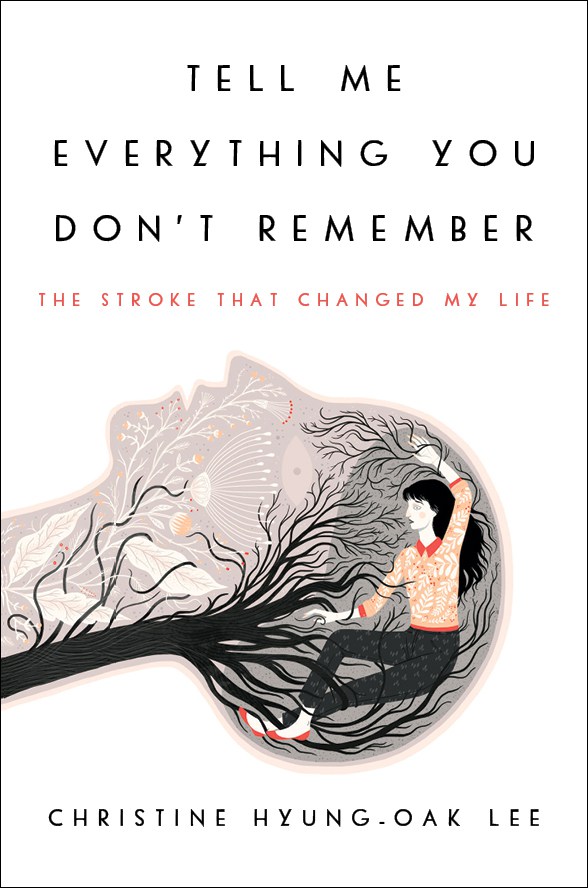
Christine Hyung-Oak Lee is the author of the new memoir Tell Me Everything You Don't Remember: The Stroke That Changed My Life. It recounts her experience of having a stroke at age 33. Her work has appeared in a variety of publications, including The New York Times, The Rumpus, and BuzzFeed. 

Q: Before you wrote this book, you wrote an essay for BuzzFeed about your stroke. Why did you decide to write the essay, and how did that develop into the book?

A: I had a couple horrible years in 2013 and 2014. A lot went wrong, but mostly, I had postpartum depression and a destroyed marriage.

Also, in 2014, BuzzFeed asked me to write an essay about my stroke. I was fortunate enough to be paired with Sandra Allen, whose editorial guidance provided the sanctuary I so badly needed as a person and a writer to write an essay that has, in hindsight, become the pivot point of my writing career.

It wasn’t until I was going through an upheaval that brought me to my knees that I could look back on the stroke and see it with new meaning.

I channeled all the sadness and hope I felt then into my telling of the stroke. I gained new understanding of myself, my life, and the place my stroke had in my story through writing the essay. When I subbed it to my editor, I thought no one would read the thing—and then my essay went viral. It’s an understatement to say that I was in disbelief.

Ultimately, agents and editors reached out to me opening dialogue—which then turned into a two-book deal with Ecco/Harper Collins, the first of which (Tell Me Everything You Don't Remember) is based on that very essay. The second book is my novel, The Golem of Seoul.

Q: This book deals with some very difficult topics. What was it like to write about them, especially given your struggles with short-term memory loss in the wake of your stroke?

A: In 2014, I had an infant and was recovering from postpartum depression. My husband left me for someone else. And I began writing Tell Me Everything You Don’t Remember.

I was going through a darkness so intense that the stroke felt like a light in my life. All the other pain, because of the age of the pain, felt like paper cuts next to the new pain.

Memory is sometimes ignited by emotion. I could remember rape and abuse and depression and sickness because they were linked by pain and suffering.

Even though I had short-term memory problems, the one thing I was able to retain were emotional memories. And so I returned to them over and over in my journals and also in the telling of my recovery.

Q: How would you compare yourself today with the person you were before your stroke?

A: The person I used to be is a person who planned everything to the most intricate detail. I feel exhausted just thinking about it. I still plan, but not to that extent—I’m just too tired, or maybe I’m wiser. Sometimes, honestly, I can’t tell. Maybe wisdom comes from an exhaustion that forces my mind to take lessons from what my body will not undertake.

Also, the person I was before the stroke took no as a viable answer. And I just don’t do that anymore. I go around the no. Life is too short.

Q: How was the book's title selected, and what does it signify for you?

A: The original title of my memoir was Whole. My editor asked me to pick another title, because she felt it did not really encompass the entire experience of the memoir. So I made a list of titles as they came to mind, from very bad ones to ones I thought might be acceptable.

Tell Me Everything You Don’t Remember popped into my head because I felt like that was the challenge laid before me. And that was by far everyone’s first choice.

Q: What are you working on now? 

A: I’m working on my novel, The Golem of Seoul. It is in many ways the sequel to the memoir—because this is the very novel to which I strived to return while in recovery. It tells the story of two Korean American immigrants in 1972 New York City who make a golem to help them find a lost family member. 

--Interview with Deborah Kalb

Q&A with Caroline Starr Rose


Caroline Starr Rose is the author of a new novel for children, Jasper and the Riddle of Riley's Mine. Her other books include May B. and Blue Birds. She has taught English and social studies in four different states, and she lives in New Mexico.

Q: How did you come up with the idea for Jasper and the Riddle of Riley's Mine, and for its setting during the Klondike Gold Rush?

A: Jasper and the Riddle of Riley's Mine is a blend of a couple different ideas that had been floating around in my head for a while. When I was first researching the American frontier for the novel that became May B., I happened to read a book called Women of the Klondike. It was a fascinating glimpse into a moment in history I hardly knew anything about.

A few years later, my sons asked if I’d ever write a book about a boy. Around the same time, as I was thinking about their question, I read an article in the Albuquerque Journal about an eccentric millionaire named Forrest Fenn who had hidden treasure somewhere in the Rocky Mountains and written a cryptic poem about its location.

The first person to figure it out could keep the treasure. Lots of treasure hunters have searched, but so far no one has found Fenn’s fortune.

I took that Klondike setting, added my first boy protagonist, Jasper Johnson, and threw in a mysterious mine worth millions available to the first person who could solve five riddles leading to its location.

Just writing about it now makes me think, “I’d like to read that book!”

Q: Was there anything that especially surprised you as you researched the book?

A: This is the first book I’ve written with such a recent history (if 120 years can be called recent!). There was so much information available about the Klondike Gold Rush, more than I had encountered when researching my other historicals. This was both handy and a little overwhelming.

Q: Do you know how your novels will end before you start writing them, or do you make many changes along the way?

A: I generally have a sense of the ending, though I’m usually not sure how I’m going to get the story there. I make so many changes it’s sometimes discouraging, but that’s the writing process. It’s not efficient, but no effort is ever wasted.

Q: Which authors do you particularly admire?

A: Karen Cushman is the master when it comes to middle-grade historical fiction. I also love Katherine Paterson, Kwame Alexander, Beth Kephart, Rebecca Stead, Kate DiCamillo, and Gary Schmidt. I could go on!

Q: What are you working on now?

A: I have a picture book about the Pony Express coming Oct. 1 called Ride On, Will Cody!. According to legend, 15-year-old Will (later known as America’s greatest showman, Buffalo Bill) traveled 322 miles in 21 hours and 40 minutes, only stopping to switch out the 21 horses necessary to cover the distance. It was the third longest run in Pony Express history.

Q: Anything else we should know?

A: Interested readers can find me here.

--Interview with Deborah Kalb


Q&A with Deborah Kops


Deborah Kops is the author of the new young adult biography Alice Paul and the Fight for Women's Rights. Her other books include The Great Molasses Flood and Were Early Computers Really the Size of a School Bus?. She lives in the Boston area.

Q: Why did you decide to write this biography of Alice Paul?

A: When I was doing research decades ago for a short book for middle-grade children on leaders of the woman suffrage movement, I learned about Alice Paul’s brilliant fight for the ballot.

In 1913, when she was 28, she reignited the sleepy suffrage movement in the United States, beginning with a parade in Washington before President Woodrow Wilson’s inauguration.

Paul was big on pageantry, so there were floats and an unforgettable herald, Iris Milholland, who rode at the front of the parade on a white horse.

When the United States entered  World War I in 1917, Paul and the National Woman’s Party, which she co-founded, came up with ingenious ways to remind the nation that while American soldiers were fighting, in the president’s words, to “make the world safe for democracy,” American women couldn’t vote.

They picketed the White House with increasingly provocative banners and when Paul and other party members were sent to jail, they went on hunger strikes.

A congressman from Arkansas compared Paul and her militant sisters to grains of sand that the wind blows into your eyes. You just have to get rid of them!

Without the constant pressure from the Woman’s Party, Congress probably would not have passed the amendment in 1919; it would have taken even longer.  (The Nineteenth Amendment, which gave women the vote, was ratified by the states the following year.)

The other thing that drew me to Alice Paul was that in the early 1920s, she wrote the Equal Rights Amendment, which would have made all laws that discriminated against women unconstitutional.

For decades she lobbied Congress to pass the amendment, and she lived long to see a new women’s movement rise up in the late sixties and make the passage of the ERA its rallying cry.

Q: What did you learn that especially surprised you?

A: I was surprised to learn that before the 1913 march, Alice Paul, who was afraid of no one, allowed herself to be bullied by racist white women who said they would not participate if black women did.

So Paul asked the 22 founders of a new sorority at Howard University, Delta Sigma Theta, to march with other African-American women in the back.

But the sorority had the last word. On March 3, 2013, it marked its hundredth anniversary and that of the historic suffrage event with the Delta Centennial Suffrage March. Thousands of feminists joined them in Washington.

Another surprise, a much better one, was Paul’s role in adding the word sex to Title VII of the 1964 Civil Rights Act when it was moving through Congress. I was working at a favorite cafe when I discovered this, and I remember getting goose bumps.

Title VII as drafted made it illegal for employers to discriminate against someone on the basis of race. Paul lobbied to have the word sex added to the amendment, and two key members of Congress—Howard Smith and Martha Griffiths—went to bat for it (though some suspected Smith of using it to try and sink the Civil Rights Act).

This one-word addition to Title VII made it illegal to discriminate against women in the workplace. Title VII remains a powerful legal tool that helps women fight inequality.

Q: What impact did Paul’s Quaker upbringing have on her life and her activism?

A: Paul grew up surrounded by a community of Quakers who believed that women should have the right to vote. Her realization, when she was an adult, that many people in the United Kingdom and the United States opposed woman suffrage came as a shock. By the time she was 28, she had decided to make woman suffrage and then women’s rights her life’s work.

There was one more thing that her Quaker background taught Alice Paul: to be comfortable with silence, which is characteristic of Quaker meetings. During discussions at the National Woman’s Party headquarters, Paul was often the quietest, which may have contributed to her effectiveness as a leader. Everyone waited for her to speak.

Q: How would you describe the dynamic between Paul and President Woodrow Wilson?

A: It was adversarial right from the start, when Woodrow Wilson arrived at Washington’s Union Station before his inauguration and found it disconcertingly quiet because so many people were on Pennsylvania Avenue watching the suffrage parade. Wilson much preferred dealing with the leaders of the more moderate and less provocative National American Woman Suffrage Association.

As for Alice Paul, she had this to say about Wilson in an interview for an oral history project: “He was a nice type of man to have as your adversary because you could be pretty certain of what he would do.”

Q: You begin the book with a description of a protest Paul undertook in 1917. A century later how would you describe Paul’s legacy?

A: She was a great model for today’s activists. Paul and the National Woman’s party that she led demanded the vote—they didn’t beg for it. And when men with power tried to suppress them, they persisted. Many commentators heard echoes of the historic 1913 parade in the marches that took place on January 21 in Washington and around the world

The Equal Rights Amendment continues to inspire women who are agitating for a level playing field. Nevada seems to be in the process of ratifying it 45 years after Congress passed the amendment, even though it is long past the deadline for ratification.

Finally, the sex amendment to Title VII of the 1964 Civil Rights Act, which Alice Paul had lobbied for so successfully, continues to benefit women.

As Louis Menand wrote in The New Yorker, Paul, Smith, and Griffiths “gave women the handle to the door to economic opportunity, and nearly all the gains women have made in that sphere since the nineteen-sixties have been made because of what they did.”

Q: What are you working on now?

A: A YA novel set in the 1970s in Vermont, when young people who identified with the counterculture were moving into the state and shaking things up.

Q: Anything else we should know?

A: A lot of people are unsure of when to use suffragette, and when to use suffragist. The militant young women in the U.K. who worked with the Pankhursts called themselves suffragettes. In the United States, the women who fought for the ballot, militants and moderates alike, called themselves suffragists.

One more thing: Most of the members of the National Woman’s Party, including Alice Paul, considered themselves proper ladies. So when they appeared in public, they almost always wore hats—even, or maybe especially, when they held up banners that were insulting to the president. (Paul favored purple ones.) 

Women often secured their hats with hat pins, which could double as a weapon. When an unruly crowd mobbed the women marching in the 1913 parade, one marcher called out, “Girls, get out your hat pins.”

--Interview with Deborah Kalb

April 1

ON THIS DAY IN HISTORY
April 1, 1926: Anne McCaffrey born.