Wednesday, October 28, 2015

Q&A with Caroline Fredrickson


Caroline Fredrickson is the author of the new book Under the Bus: How Working Women Are Being Run Over. She is the president of the American Constitution Society, and also has worked for the ACLU and NARAL Pro-Choice America. She lives in Silver Spring, Maryland.

Q: You write, “So while the media debate ‘opt out’ and ‘lean in,’ the real focus should be on those who are ‘left out.’” What do you see as the most important problems that should be addressed for women in the workplace?

A: There are a number, but one of the most significant issues remains that with women continuing to be the dominant caregivers, we haven’t adopted the workplaces for them to thrive and also take care of their responsibilities at home.

Q: In the book, you state that many people are still left behind despite the passage of legislation over the past century to improve working conditions. What are some of the reasons the legislation did not succeed in addressing these concerns?

A: In part the origins of the exemptions that left so many women out have sort of been forgotten. It was a surprise to me, and somewhat appalling, what were the stated reasons behind the exclusions: They were forthright in saying the wanted to exclude African Americans from the law.

Q: What were some of the other things that surprised you as you researched the book?

A: In terms of child care, I was surprised by the half-hearted effort in World War II. Even some women in American history known as being protective of women in the workforce [and their access to work] were protective of mothers.

There was a begrudging understanding that women taking traditionally men’s jobs was a necessity, but they were rather concerned about the fact that mothers were working at all, despite the fact that it was necessary.

Also, [it surprised me] to uncover the history of the close call we had with universal child care legislation in this country. Legislation was passed—it’s hard to imagine in this day and age. But it didn’t make it over the finish line because of Phyllis Schlafly and the organizations she supported.

Q: How did you come up with the book’s title, and what does it signify for you?

A: You try and come up with something that sounded catchy, but encapsulates the point of the book.

There is a visual element that’s real here. When you look at the Congressional Record, and read about how members of Congress discussed how they would carve out this group of workers...people who worked in the fields and in houses—as a result, 90 percent of African American women were carved out of any protections of the New Deal initially. There was incredible exclusion of African American workers. It was shocking.

Q: You ask, “Why do women, particularly women of color, continue to earn less than men?” Why do you think that still is true now?

A: There’s a big hangover from these exclusions. The home care industry is dominated by women of color. It’s finally beginning to get the protection it deserves [which] is a big step forward way too long in the making.

Women dominate the low-wage workforce and those women tend to be women of color. It’s two-thirds women, and a large proportion of the two-thirds are women of color. Between the two things, you start to see why wages lag so much.

Q: What impact have temporary workers had on working conditions for women?

A: It’s a big issue because even when you can make inroads for legal protections, [employers will] hire temps. A company will have workers for decades who are still designated as temps and don’t get the same benefits as other workers.

For a workforce that’s particularly vulnerable, it’s a very high burden for low-wage workers to overcome, so they don’t tend to challenge it. So unscrupulous employers, or ones driven by the bottom line, [can] take the low road and not appropriately categorize their workforce.

Q: Do you think any of the presidential candidates are addressing the concerns you raise in the book?

A: Yes! I was really pleased that in the last Democratic debate they talked quite a bit about…family leave. It was refreshing to see. Unfortunately, I haven’t seen quite as much on the Republican side, but even there, there is a recognition that [these] ideas matter. Marco Rubio announced a family leave policy—it’s purely voluntary, but that he needs to talk about it is significant.

Q: What do you see looking ahead?

A: I tend to be an optimistic person, so I’m pretty optimistic! [Actions] on the state and local level are very encouraging. There are so many places where they raised the minimum wage, even red states where it was raised through ballot initiative. [Issues like] paid sick leave, parental leave…across the board, conservatives and liberals, Democrats and Republicans, see a real need to make changes in workplace policies.

No matter what happens at the presidential level, there will be change, because the American people want it. It has to come from the bottom up, not the top down.

Q: What are you working on now? Another book?

A: I’m so busy between my regular day job and a lot of speaking to ACS audiences and others, it’s kept me on the road and busy. I’d like to write more about a general issue facing so many workers—misclassification, and [the transferring] of high-wage jobs into contingent jobs.

I wrote about adjuncts in The Atlantic last month. It’s interesting to see how structures to protect workers are slowly being dismantled, and [employers] are using more contractors and temporary workers…

It’s started to [affect] lawyers and doctors. It deserves a lot of attention—these issues are encompassing a larger and larger percentage of the workforce, including professionals.

Q: Anything else we should know?

A: The one other [reason] I’m optimistic is the women I talked to are amazing. I was so buoyed by the work these women had done, often immigrant women, seeking better legal protections. It’s pretty incredible seeing how brave they are. If we all join together, we can accomplish a lot.

--Interview with Deborah Kalb

Oct. 28

ON THIS DAY IN HISTORY
Oct. 28, 1903: Evelyn Waugh born.

Tuesday, October 27, 2015

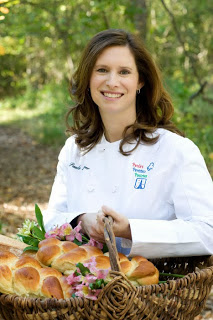
Q&A with Paula Shoyer


Paula Shoyer is the author most recently of The New Passover Menu. She also has written The Holiday Kosher Baker and The Kosher Baker. A former practicing attorney, she is based in the Washington, D.C., area.

Q: You write, "Jews who host the holiday often feel that preparing the house and food for Passover makes them feel a little too much like the Israelite slaves. The New Passover Menu has arrived in order to set you free." What are some of the ways you try to accomplish that in the book?

A: I made sure the recipes were easy and didn't require special equipment to prepare them. I also indicate the prep and cook time so people can plan and find recipes that fit into their schedule.

Q: What are some of the biggest perceptions and misperceptions about Passover food?

A: That everything is dry and made with matzoh meal. For Passover cooking I focus on the world of ingredients you can use and not on the ones we are prohibited to eat. There are so many options.

It's really the same food you make all year, just omit those made with ingredients you cannot use such as flour, rice, etc.

Q: What are some of your favorite and least favorite Passover foods?

A: I love matzoh balls, but in New Passover Menu I gave them a facelift with some new flavors. Least favorite are matzoh pies - where people layer matzoh with meat or vegetables and the result is bad taste and texture.

And don't get me started on those candied fruit wedges that they sell for Passover. In the book I love the linzer tart, the gluten-free granola and the gingered red pepper and tomato soup.

Q: What are some of your own Passover traditions?

A: All week long we eat lots of fresh vegetables prepared different ways and I kosher the outdoor grill so we can grill chicken and meat. For the seder I give everyone their own mini seder plate with little bowls of the seder plate components.

Q: What are you working on now?

A: A Shabbat menu book.

Q: Anything else we should know?

A: Homemade is always better, especially on Passover when packaged baked goods are particularly bad. 

--Interview with Deborah Kalb. For a previous Q&A with Paula Shoyer, please click here. She will be participating in the Local Author Fair at the Washington DCJCC on Tuesday, Oct. 27, 2015, at 7:30pm.

Q&A with Morton Kondracke


Morton Kondracke is the author, with Fred Barnes, of the new biography Jack Kemp: The Bleeding-Heart Conservative Who Changed America. He also has written the book Saving Milly. Kondracke has been executive editor and columnist for Roll Call, Washington bureau chief of Newsweek, and a senior editor of The New Republic. 

Q: You write, “Jack Kemp was the most important politician of the twentieth century who was not president, certainly the most influential Republican.” Why do you think that’s the case, and what do you think were his greatest accomplishments?

A: People need to remember what the 1970s were like--and how everything turned around beginning in 1983. Kemp was instrumental in catalyzing two decades of prosperity and more. The '70s were the era of "stagflation"--high unemployment (averaging 7 percent from 1975-80) and soaring inflation (average, 9 percent, 13.5 in 1980).

Keynesian economists, dominant in academia and government, admitted they had no explanation or cure for such a high "misery index." Neither did Presidents Nixon, Ford or Carter.

Kemp had an answer, derived from Supply Side economists Arthur Laffer and future Nobelist Robert Mundell: cut individual tax rates across the board (to promote growth) and hold down money supply (to contain inflation). The formula actually had worked in the late Kennedy-early Johnson era, but was forgotten.

Kemp's greatness results from his being the original and leading political advocate of Supply Side economics. He converted Ronald Reagan, who made it the basis of his economic program.

The 1981 Reagan tax cuts, modeled on Kemp's 1978 Kemp-Roth bill, plus his 1986 tax reform, pioneered by Kemp, lowered the top income tax rate from 70 percent to 50 percent, then to 28 percent.

After a deep recession, 1981-83, engineered by Federal Reserve Chairman Paul Volcker to crush inflation, Reaganomics caused the economy to boom through the 1990s (it was not substantially altered by Bill Clinton). America's economic success, along with Reagan's defense buildup (made affordable by prosperity) stressed the Soviet Union to the breaking point.

The percentage of Americans believing the country was headed in the right direction went from 13 percent in 1979 to 69 percent in 1986. And, all around the world, democratic capitalism was deemed to be "the end of history." Reagan was the president who instituted the turnaround, but Kemp deserves partial credit for catalyzing it.

Q: You note in the book that “we have written this book because we believe that America is in trouble, perhaps more deeply in trouble than in the 1970s. And we think that Jack Kemp’s spirit—and his policy ideas—could again help the country turn around.” Can you say more about that?

A: Kemp's answer to almost every problem [involved] economic growth. In a stagnant or shrinking economy, he said, politics becomes a process of pitting one group against another--black against white, rich against poor, Sun Belt against Rust Belt.

America is again in a period of glacial growth, stagnant median incomes and rising costs for health care and college, causing a long-term decline in disposable incomes. Only 25 percent of voters think the country is headed in the right direction. A majority believes the next generation of Americans will be worse off than their parents.

And politicians are indulging in divisive politics, blaming "the one percent" or "the 47 percent" for profiting at others' expense. Donald Trump and others blame Mexican immigrants. The American Dream is in question.

How to re-ignite growth? I believe tax reform is imperative--lowering rates and eliminating special interest loopholes (and subsidies) that make the economy inefficient.

Also, public investment in infrastructure and scientific and medical research. More parental choice in the schools their children attend. (Kemp never did because the need was not clear in his time, but I'd add quality early-childhood education.) And entitlement reform which tames the growth of benefits (and U.S. debt) while also curbing farm subsidies, ethanol requirements and other corporate welfare.

Kemp was not a "redistributionist," taxing the rich to "give" to the poor (or middle class). He wanted to create opportunities for all to rise, and thought efforts to raise taxes to equalize would make everyone poorer. (This does not mean he'd oppose efforts to eliminate special breaks--"rents"--obtained by lobbyists for their clients.)

Kemp's spirit was optimistic, idealistic, inclusive and compassionate. He believed there were no limits to America's growth potential and, with John F. Kennedy, that "a rising tide lifts all boats." Though also, that "some boats are stuck on the bottom"--poor people who need special help to succeed: education choice and low-tax enterprise zones to attract investment to poverty areas.

Q: What would Kemp think of the current Republican presidential field? Do you think if he were alive today and running for president that he would have much support?

A: Kemp would be appalled by the tone--and much of the content--of the Republican campaign. He deplored (and never indulged in) negative campaigning and personal attacks.

He favored comprehensive immigration reform, including a path to citizenship for illegal immigrants with clean records. He also opposed "austerity" (or "Herbert Hoover," "green eye-shade," "root canal") economics--the Republican tendency to exalt balanced budgets over growth.

Deficits and debt were not the problem that they are today, but he always opposed proposals for a constitutional amendment requiring balanced budgets, which many of the GOP candidates favor--even Jeb Bush, Marco Rubio and John Kasich, ostensible "growth" candidates.

(In a recession, with revenues down and unemployment benefits increased, the amendment would require tax increases or slashed spending, deepening the downturn.)

I suspect Kemp would have difficulty if he were running today. He'd be dismissed as a RINO by the Tea Party for his views on immigration and the balanced budget amendment. He was criticized in his own time for being too concerned with poverty and minorities.

On the other hand, he'd advance his positions with conviction and energy--more than displayed so far by Bush, Kasich or Rubio.

Q: What would he think of the current way Congress is operating, and the problems facing the House Republican leadership?

A: He'd be appalled by the willingness of the Freedom Caucus to shut down the government or let the Treasury go into default in order to force policy changes. He was uncomfortable with Newt Gingrich and his Conservative Opportunity Society's attacks on the Democratic leadership of his era. He'd certainly oppose the toppling of GOP leaders by a small minority of GOP members.

House Ways and Means Chairman Paul Ryan was once Kemp's assistant and is now his truest disciple--a growth-oriented conservative who spends time with poor people....

Q: What are you working on now?

A: I've been working on the Kemp Oral History Project (interviews with 100 fellow football players, congresspersons, staff, family and friends sponsored by the Jack Kemp Foundation), researching and writing the book for nearly four years. Now I'm book-promoting.

I still blog for Roll Call and I will certainly keep sounding off. But at age 76, I think I want to do something different--help poor kids get into college. I'm on the boards of Dartmouth College, the Parkinson's Action Network and Folio, a membership library in Seattle. I don't see another book in my future. 

Q: Anything else we should know?

A: Besides having historically important impact, Kemp lived an interesting life. He was raised in a Christian Scientist home and absorbed for life some of its tenets--or at least their corollaries.

The tenet that all reality is spiritual leads to a belief that one can do whatever one believes he or she can, and an optimism that when one door closes, another opens.

So, Kemp wanted at age 5 to be a professional quarterback. He was too small to play at a major college and, even at Occidental College, he only started in his junior year. He was drafted No. 523 in the National Football League, but was cut by five teams in three years.

He never gave up and the door that opened was the American Football League, where he became a star. He was also president of the American Football League Players Association and believed that collective bargaining is a basic human right.

In Congress, his taking up tax-writing offended senior Republicans (he was never on the House Ways and Means Committee), but he was indefatigable in pushing Supply Side, eventually converting Reagan and changing America.

He was a natural leader. And a "bleeding heart" who genuinely (if fancifully) believed that the GOP could again be "the party of Lincoln," the natural home of African-Americans (by producing growth and jobs). 

--Interview with Deborah Kalb

Q&A with Nicholas Stargardt


Nicholas Stargardt is the author of the new book The German War: A Nation Under Arms, 1939-1945. His other work includes Witnesses of War and The German Idea of Militarism. He is Professor of Modern European History at Magdalen College, Oxford, and he lives in Oxford, England.

Q: Why did you decide to write this book, and how does your analysis differ from that of some other historians?

A: There hasn’t been a history of German society in the Second World War. There are whole libraries on military strategy, the Nazi leadership and the Holocaust, but we simply have not known what the German people thought they were fighting for. And this was a war the regime could not have fought without mobilizing everyone.

So, this book does something quite different from what historians have explored till now. I wanted to know what people experienced but also how completely the war overturned and transformed their lives and perspectives.

Individual voices have a special place here, because one of the key questions which interested me was how far Germans grappled with their own consciences during the war, especially as they realised what kind of war their side was fighting.

The individual voices give us a vivid and multi-dimensional chronicle of events. But they also tell us how couples courted from afar through letters, or dealt with family separations and death. They help us to gauge the inner, emotional and moral changes wrought by the war.

Q: How did you choose the people whose stories you follow throughout the book?

A: I wanted to get beyond the normal cast of well-known literary figures who wrote diaries. There are carpenters and farmers' sons, school teachers, a florist and a female photojournalist, young men fresh out of high school.

Wartime separation meant that many people wrote letters and diaries who would not have normally left a written record of their thoughts and feelings.

I was particularly interested in collections of letters – especially between lovers, close friends, or children and their parents – where both sides of the correspondence survive. That way we can see how their relationships changed during the war – often in ways they did not expect. 

This kind of history-writing depends on what I would call "critical empathy" – a willingness to explore and do justice to the inner lives of people in the past, without forgetting that they were not at all like us.

Q: You ask, "To what extent...did [Germans] discuss the fact that they were fighting for a regime that was committing genocide?" How do you answer that question?

A: We knew that when the deportation and murder of the Jews was at its height in 1941 and 1942, people talked about it in private, and that a lot of information circulated in Germany about trains or sites of mass shootings which attracted many witnesses. Information about the death camps trickled out much more slowly, but stories about them started to circulate too.

In any case, the murder of Jews in the Soviet territories was carried out visibly by firing squads or gassing vans and so there was enough information for many people to realise that all the Jews were being murdered. But they had little cause to dwell on it.

What surprised and puzzled me was that a year later people started talking openly in public about the murder of the Jews right across Germany. This was in the summer and autumn of 1943, and the events which prompted these conversations was the saturation bombing of German cities and the mass evacuation of their inhabitants. 

People started to see the bombing as Allied retaliation (sometimes even as divine punishment) for the murder of the Jews. This was a complicated kind of response, which combined a sense of collective guilt with feelings of intense vulnerability under the impact of the bombing.

It was this that made me realise that when Germans started referring to the murder of the Jews like this, their real focus was on their own plight.

That in turn made me think that we could only understand what they meant if we knew what they hoped for and what they feared. It was at this point that I realised I had to write this book, because there was nothing else which could answer these questions.

Q: You write, "Even in 1945, there were two quite different conversations about guilt in Germany." What were those, and how did they evolve over the succeeding decades?

A: Yes, as the Allies reached the German frontiers in 1944 and 1945, there were many reports that ordinary citizens expected – and accepted – that they would be punished for what they had done to the Jews.

This continued into the early months of occupation, but then these rather frank acknowledgements of German culpability were drowned out by a chorus of voices calling the International War Crimes Tribunal at Nuremberg "victors' justice" and stressing instead the sufferings inflicted on Germans – by British and American bombing, mass rape of women by Soviet troops or the death of civilians expelled from the former German provinces in the east.

In the first decade after the war, this cult of Germans as victims of the war, even as victims of the Nazis, was much stronger, and it only began to be eclipsed in the late 1950s and early 1960s as subsequent war crimes trials were held.

But even in the last decade or so, German discussion of the suffering of their civilian population in the war tends to recreate some of this victim narrative, whereas since the 1990s it has become equally common to see Germans as a nation of perpetrators.

What I’ve tried to do is to get past these rigid categories by going back to how people experienced their roles at the time and showing how Germans could become perpetrators by imagining themselves to be victims.

Q: Is there anything else we should know?

A: What I learned [that most surprised me] is that it was not necessary to be a Nazi to fight for Germany, but that it was also impossible to remain uncontaminated by doing so. The war was rarely popular at home but it was always seen as a legitimate patriotic duty to defend the homeland.

Much as in the First World War, Germans nourished their sense of patriotic commitment from religious faith or by ransacking the texts of their great 18th and 19th century poets. But of course these deep cultural values could not escape being tainted by the brutal and increasingly genocidal way in which the war was itself being fought.

The other thing that really surprised me was how long people went on hoping for a better outcome than defeat. Even after they realised that the war would last a long time or that a complete German victory was no longer likely, they kept imagining scenarios which made going on worthwhile.

This is a very basic change to how historians have understood the war and changes our understanding of how much people were willing to mobilise themselves and to transform themselves in order to keep the war effort going.

I have been amazed by the response so far [to the book in Germany, where it is on the bestseller list]. Of course as an author you never know how a book will be received and with a work like this which takes 10 years, you really can't predict what people will be interested in by the time you're done.

What's so striking is that people have been equally positive about this way of writing and the bigger arguments. It seems as if the passing of the generations who lived through this period makes it easier for younger Germans to imagine themselves in more than one role in this past. That may partly explain this response.

--Interview with Deborah Kalb

Oct. 27

ON THIS DAY IN HISTORY
Oct. 27, 1872: Emily Post born.

Monday, October 26, 2015

Q&A with Sophie Cook


Sophie Cook is the author of the novel Anna and Elizabeth. She is an attorney and mediator. She was born in Budapest, Hungary, and immigrated in 1951 to the United States. She lives in Washington, D.C., and New York City.

Q: You based your main characters on your grandmother and her friend. Why did you decide to write a novel rather than a work of nonfiction?

A: It’s a hard question. The answer is I’ve always wanted to write fiction. I’m not a historian. I didn’t think I would be able to write an actual story of events. They’re not famous people, so I couldn’t resort to documents.

The principal impulse was to recreate the world that was there before my time that disappeared with the Holocaust and the war. I wanted to imaginatively recreate that world, and only fiction can do that.

Q: How much did you know about the lives of your grandmother and her friend, and how much research did you need to do to write the novel?

A: I was very fortunate insofar as both my parents felt strongly that my brother and I should know about the past, including the more tragic parts of it. I have found correspondence between my parents and my aunt, and they did not want to bring us up in cotton balls.

I knew about my grandmother’s murder in the Hungarian Holocaust, but my opportunity to talk about life before that came when my mother was living with us in the ‘70s in Washington, D.C. I was taking my first fiction-writing course. She was very supportive and very helpful. Many of the details are what she told me.

I did have to do research about the history of Hungary, the Austro-Hungarian Empire before World War II. At that time, there was no Internet, so I went to the Library of Congress. There was a small collection on this particular subject. That, with reading the Hungarian literature of the time, was enough.

There’s a wonderful saying by Henry James: When you’re doing fiction, do just enough research to get you going. That’s how I did it for this novel.

I did know one of my grandmother’s maids who was younger. I stayed in touch with her…after we left Hungary in 1947. In 1964 and 1967 I was able to visit her. She inspired part of the character of Anna. It was not a lifelong friendship [though]—I invented a great deal.

Q: The book was published in 2009 in a Hungarian-language edition. Why did you publish it first in Hungarian?

A: I couldn’t get a publisher here. The first time I submitted the manuscript in the ‘80s it was a different publishing industry, and the publishers would write back, explaining why it had been rejected. They said, We like the story and the characters, but your writing could be better—which [could have been] a polite way of saying, You write like a lawyer. I was a lawyer.

I had an opportunity to get a master’s in fiction from Johns Hopkins. I rewrote the book in 2002-3, and my cousins in Budapest said, Why don’t you publish it in Hungary? The publisher got me a wonderful translator—but then [they] took no trouble to distribute and publicize it.

I decided, at some point after my contract with him expired after five years, I was going to publish it. It’s a good novel and people would like it.

Q: Was it difficult to balance your roles as granddaughter/daughter and novelist?

Budapest, c. 1890
A: I only had that issue [briefly] and it wasn’t so much me with myself as with my mother. I left the ending somewhat open. I knew the details of my grandmother’s and great-aunt’s murder.

My mother was devastated when this happened. It was the tail end of the German occupation, when the city was liberated. She went in search of witnesses and filed an affidavit. It was a very painful subject for her. The man who committed the murder committed a number of murders, and he was hung.

This is not primarily a Holocaust novel, and I did not want to go into the terrible details of how Elizabeth died. Of course, the Holocaust is looming over the story anyway. I left that a little bit open. It was the only time I didn’t write about events the way I might have in another context. I wrote a memoir about my mother [which looks at these issues].

Q: How did you come up with the novel’s structure, which includes chapters taking place over several decades and told from different characters’ perspectives?

A: It was pretty chronological, except the opening chapter…to start at the end and [then] go backward is a contemporary convention I followed.

As far as changing the points of view and voices…there is an exchange of letters between Elizabeth and Anna where they speak in their own voice, and it brings you more directly into the relationship at that point. They become more and more equal.

There’s the section with Kate’s diary, and there’s Andrew’s voice—because it’s another generation, I thought, let them tell their stories in their own way. In the last section, I went back to the third person.

Sophie Cook's grandfather
Q: Did you publish the memoir about your mother?

A: No, I was surprised I wasn’t able to publish it. It is the story of recovering from trauma. She lived a long life, and the reunion with her sisters [in the United States after the war] meant a great deal to her. She had survivor’s guilt about her mother and aunt’s murder. She had found hiding places for all of us during the Holocaust.

Because of her sisters, because of her courage, she became serene, and was able to recover from the terrible experience…

Q: Are you working on another book?

A: I am, yes. I’m working on a fictional autobiography of a Swedish writer I loved in my childhood, Selma Lagerlof. She was very famous in her day. She was the first woman to get the Nobel Prize in Literature; she was translated into English. Now she’s forgotten, except in Sweden.

She was a very interesting woman—she was a feminist, she was gay, she was a pacifist. Again, I am not a scholar. There are scholarly biographies of her—but I wanted to recreate a part of her life she never wrote about, her relationship with her father.

Q: Anything else we should know?

A: For me, the most interesting part was when I started out thinking I would recreate a Golden Age. Then, after conversations with my mother and [doing] research, I found out that after 1918 in Central Europe, there really was no Golden Age…

The story of people like Anna in some ways is more interesting than my sentimental imagery. That’s the way life is! 

--Interview with Deborah Kalb. Sophie Cook will be participating in the Local Author Fair at the Washington DCJCC on Tuesday, October 27, 2015, at 7:30pm.