Monday, January 14, 2019

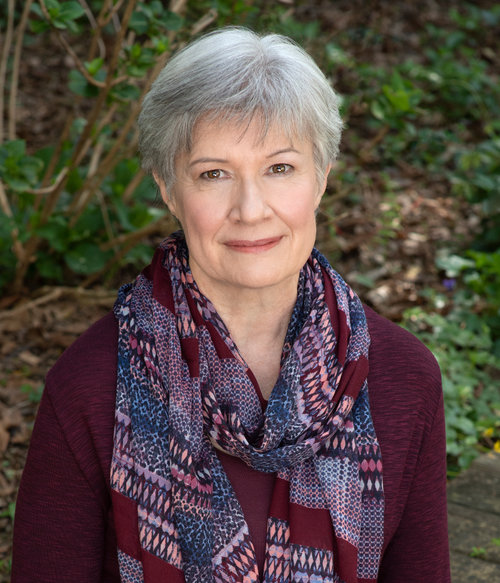
Q&A with Kathryn Schwille


Kathryn Schwille is the author of the new novel What Luck, This Life. Her work has appeared in a variety of publications, including New Letters and Memorious. She lives in Charlotte, North Carolina.

Q: How did you come up with the idea of centering a book around the 2003 Space Shuttle Columbia disaster?

A: In February 2005, I saw an Associated Press story in my local newspaper about a conference of forensic scientists. A police document examiner from Israel had delivered a talk about the unique project she’d undertaken.

Eighteen pages from the Columbia diary of Israeli astronaut Ilan Ramon had been found on a forest floor in East Texas. The pieces of the metal-bound notebook, which had survived two months in the elements, were battered and stuck together, some even wadded. Her job was to separate the pages and see if there was anything for his widow to read.

I’d never heard about the discovery of a diary, so I began wandering the internet, wondering what else had been found. Thousands of searchers had descended on that very rural area and had found so much we never heard about. East Texans were in a situation that no one had been in before, with space debris at their feet. I couldn’t get it out of my head.

Q: Some of the chapters are written in first person, while the others are in third person. Why did you decide to write it that way?

A: The project began as a collection of linked stories. When I write, I “hear” narrators, and in this case, I heard quite a few. I couldn’t settle on one, which seemed okay, since I wanted to tell the story of a town. In the end, I was able to knit the sections together – I hope – in a way that offered a unity of effect, even though it’s not a traditional novel structure.

Q: The book has been compared to Winesburg, Ohio, and Olive Kitteridge. What do you think of those comparisons?

A: I’m an ardent admirer of Elizabeth Strout’s work and I could only wish that my work ever comes near to her brilliance in Olive Kitteridge. What Luck, This Life might be similar in that the shuttle disaster is in every chapter, if sometimes only nominally, in the way that Olive is in every story, even if she only floats through in the background.

At the end of Olive Kitteridge, the reader has a fuller picture of her character. At the end of What Luck, I hope the reader has a fuller picture of the disaster and what it meant for the people on the ground.

I am, of course, flattered by the comparison to Winesburg, Ohio, a book that’s often cited as ground-breaking, even though it’s also not considered Sherwood Anderson’s best work. Anderson, too, hoped his book would tell the story of a town.

The critics were hard on it in 1919, and they deemed its structure unsuccessful, though perhaps if the stories had not been so uneven in quality, the reviewers would not have harped so much on the structure. George Willard is considered the main character in Winesburg, but he does not become a fuller character by the end to the same degree as Olive Kitteridge.

Q: How was the book's title chosen, and what does it signify for you?

A: The manuscript had four or five titles before this one. None seemed just right. As I was reading through the manuscript, after yet another round of revisions before sending it off on yet another round of submissions, I found what I’d been looking for was there all along, on the last page.

I wanted a title that could hold the whole of the work as a novel. An astronaut looking down on earth, in the midst of an adventure so few humans will have, feels very fortunate in that moment. The reader knows his joy won’t last. I like the irony of the title, the allusion to both the thrills and horrors that await us. To me, the phrase holds the hope that our fortunes can change.

Q: What are you working on now?

A: I’m working on a novel which – though I’m not yet sure how – touches on the new kinds of families being formed by sperm donations.

Q: Anything else we should know?

A: I knew that the Columbia’s break-up was often overshadowed in American memory by the Challenger – a televised blow-up in 1986 that so many saw on TV. But I’ve been surprised at how often people really don’t remember the Columbia, or repeatedly confuse it with the Challenger.

I call the Columbia the national tragedy that happened between the two larger, horrific pillars of 9/11 and the war with Iraq. I want people to remember it, and know its story.

--Interview with Deborah Kalb

Jan. 14

ON THIS DAY IN HISTORY
Jan. 14, 1912: Tillie Olsen born.

Sunday, January 13, 2019

Q&A with Katrin Schumann


Katrin Schumann is the author of the new novel The Forgotten Hours, which focuses on a young woman whose father is accused of assaulting her friend. Schumann's other work includes the nonfiction books The Secret Power of Middle Children and Mothers Need Time Outs, Too. She lives in Boston and Key West.

Q: You've said that the idea for The Forgotten Hours was inspired by people you knew. How did the initial inspiration turn into the book, and how did you come up with your character Katie?

A: There was a dark moment in my life when I went through a couple of difficult experiences--through two close friends on opposite ends of the spectrum--involving consent and assault accusations. 

At the time, I was so involved emotionally that it took over my life. I felt protective and afraid, and my loyalty was badly shaken. I learned how incredibly hard it is to admit to yourself that your instincts might be off. I felt unmoored and lost.

I kept thinking, what am I supposed to be learning from this? In a way, I too was a casualty, and I realized that my experience was more universal than I'd initially thought--all those who are accused of crimes, whether they’re guilty or innocent, have loved ones who suffer along with them.

I think of them as peripheral victims, and I wanted to find a way to explore and explain that experience. I chose a narrow lens through which to look: the daughter of the accused, because I wanted to show how much we’re impacted by our limited perspectives, and I wanted the stakes to be high--will the accused man’s daughter, Katie, be able to build a healthy and happy life?

I was trying to create a character who is smart and strong and has a good heart, who is capable of great things, but has been damaged by circumstances beyond her control. I liked the idea that Katie forges ahead valiantly, and that from the outside her life looks pretty damn good, but on the inside it’s a different story: she’s lost her sense of safety and her belief in herself.

Q: What resonance do you see the story having during the current #MeToo era?

A: These are issues we've been struggling with for a long time, and it's an incredible coincidence that my novel happens to be coming out when the #MeToo conversation has been amplified around the world.

One of my goals was to get people thinking about the nuances, the gray areas. It's in our natures to want to point fingers, and my book looks at how it can be dangerous to jump to conclusions.

We have biases, expectations, selective memories, strong loyalties--all this information is competing with itself. I wanted to examine this, and let the reader see how complex navigating truth and reality can be.

But, ultimately, I believe that love wins; in these sobering times, I wanted to show that we—empathic, thoughtful humans—can indeed face our own weaknesses and those of the people we love, and heal. 

Q: The story jumps back and forth in time. Did you write the chapters in the order in which they appear, or did you move things around as you wrote?

A: I did move smaller memories around a lot, because memories are often nonlinear and random, and I wanted to explore that.

I knew where the longer chapters set at the lake that summer night should go--I knew that they provided the all-important spine to the story. They complement and contrast and play off the present day chapters in a sort of dance, both emotionally and in terms of plot.

It was challenging to write this way, but once I found the “voice” of each era, each timeline, the story really seemed to take off. 

Q: How was the novel's title chosen, and what does it signify for you?

A: Originally, I had a very different working title that I loved, but it ultimately didn't set quite the right tone. The novel ended up being more of a dreamy pastiche of overlapping memories, butting up against reality, and I needed to find a way to convey that in the title.

I spent weeks brainstorming--listening to my favorite songs and jotting down ideas, thinking in terms of theme, picking important words and playing around with them.

And then one day, “The Forgotten Hours” popped into my head and I knew I had it. It captures what I was trying to convey so well--the idea of being imperfect, out of control, overlooking or assuming things, of looking backwards for answers.

Q: What are you working on now?

A: I have a novel coming out next year that's also about a young woman dealing with circumstances beyond her control--in this case, the aftermath of a war.

It's set in East Germany and Chicago at the beginning of the Cold War, and it's the story of a young photographer forced to choose between her freedom and her child when her husband, a member of the newly-formed Secret Police, discovers she's having an affair.

It also explores this idea that people are not easy to define and label; they’re rarely all good or all bad. 

Q: Anything else we should know?

A: I wrote this book to challenge readers to think deeply about an uncomfortable issue, but I also wanted to point out the beauty of our world—the beauty of our never-ending search for love and connection, of our ability to be resilient and hopeful in spite of our pain and uncertainty.

--Interview with Deborah Kalb

Jan. 13

ON THIS DAY IN HISTORY
Jan. 13, 1926: Michael Bond born.

Saturday, January 12, 2019

Q&A with Eugene L. Meyer


Eugene L. Meyer is the author of the new book Five for Freedom: The African American Soldiers in John Brown's Army. He also has written Chesapeake Country and Maryland Lost and Found...Again. A former Washington Post reporter and editor, he is the editor of the B'nai B'rith Magazine and a contributing editor for Bethesda magazine. He lives in Silver Spring, Maryland.

Q: You note that you first learned about the five African Americans who participated in John Brown's raid while working on an article for The Washington Post in 2000. At what point did you decide to write this book?

A: I became aware of the five men when covering a cemetery plaque dedicated to one of them – Osborne Perry Anderson – over Veterans Day that year. Anderson was the sole survivor of the raid and wrote the only insider account. 

When I left The Washington Post in January 2004, I wrote a much longer article about him for the Post Magazine. I learned that he was close to Mary Ann Shadd Cary – both were from Chester County, Pa. -- and had followed her to Canada after passage of the Fugitive Slave Act in 1850.

There, as the first black female editor and publisher in North America, she produced the Provincial Freeman, and he worked for her as a printer and sometime writer. She would later help him write his book, A Voice from Harper’s Ferry.

During the war, they were both recruiters for the U.S. Colored Troops, and afterwards, he followed her to Washington, D.C., where she raised money for his healthcare and then for his funeral when he died in 1872.

I speculated there was more to their relationship and in 2007 looked at her papers at Howard University. I found nothing about him. But I did find letters she had published in the Provincial Freeman from John Anthony Copeland, another African American raider, to his family on the day of his execution. They were heart-wrenching.

It was then I realized there was a larger story here, perhaps even a book, but it had to be about all five men.  Thus, was born the idea of Five for Freedom.

The idea languished for a few years until I signed on with an agent. I had been working on a memoir, which he liked but wasn’t able to sell. I then turned back to Five for Freedom, and we signed a contract in March 2016, with a July 2017 deadline.

Q: How did you research the book, and what did you learn that particularly surprised you?

A: I had something of a head start with my earlier research on Anderson, but there was still much to learn in a short period of time on a subject to which many historians would devote years in the normal course of their research and writing—while also employing an army of researchers.

But I’m a newspaper guy used to working on deadlines, so this was a welcome rather than a daunting challenge.

Two of the raiders were from Oberlin, Ohio, so I spent some time there during August 2016, and, on the same trip, I drove up to Chatham, Ontario to learn what I could about that Afro-Canadian redoubt where Anderson had lived and worked before joining with Brown.

I also spent time in Harpers Ferry and Charles Town, West Virginia, and in Winchester, Va., conducting both archival research and interviews. In addition, I traveled around Fauquier and Prince William counties, Va., to view locations that played a role in the pre-raid narrative. 

I traveled to tiny Cannonville, Utah to interview a descendant of Dangerfield Newby, who’d joined with Brown to free his enslaved wife and their children back in Brentsville, Virginia.

One of the most important lessons from my research – which did not surprise me but buttressed what I had long known – was that our racial history, though usually seen in stark black and white terms, was so much more complicated and nuanced. It still is today.

Four of the five men were of racially mixed background, and all were free men of color when they joined with Brown. The fifth, Shields Green, claimed to be a direct descendant of African royalty and was known as Emperor. He had escaped from a Charlestown, S.C. plantation and was generally regarded as not biracial.

That is why I insisted on calling them African Americans, avoiding the racially polarizing and inaccurate labels of black and white.   

I was surprised to learn about the great debate that occurred in the Virginia General Assembly in January 1832 over slavery. 

Following the Nat Turner rebellion, the previous August, some 2,000 Virginians presented 40 petitions to the legislature. They ranged from status quo to graduated emancipation to outright abolition. Thomas Jefferson Randolph, the third president’s grandson, argued the middle ground.

Ultimately, the lawmakers couldn’t agree on anything, and less than three decades later, after the John Brown raid, the nation was engulfed in the Civil War, a bloodbath that resulted in some 750,000 deaths but, alas, also failed to resolve the underlying issues, with which we continue to grapple today.  

Q: In the book's epilogue, you focus on Ashton Robinson III, a descendant of Dangerfield Newby. Why did you choose to end the book with his story? 

A: Ashton’s story is the American story, and I felt that – not only as a descendant of Dangerfield Newby but as an African American man whose identity and heritage had been hidden from him -- his life brought into sharp focus what Swedish sociologist Gunnar Myrdal called “An American Dilemma,” incorrectly defining it then as “The Negro Problem.”

In truth, it was never that. It was and remains that we, as a nation, have never overcome our original sin of slavery, and, until we do, we will never achieve the aspirational goal of, as New Orleans Mayor Mitch Landrieu has put it, out of many we are one. Five for Freedom is very much an American story. It belongs to all of us, and Ashton embodies it.

Q: What do you see as the five men's legacies today? 

A: They died to make us free, but the struggle continues.

Q: What are you working on now? 

A: I am looking into the historical intersection of race and gender in the fight for women’s suffrage. 

My memoir also remains a work in progress. Zelig-like, it seems, I lived and reported half a century of recent history, from the antiwar movement of the 1960s on, from inner city streets to Wounded Knee, from Chesapeake to Appalachia, starting as the kid-in-residence at the old New York Herald Tribune Washington Bureau during the 89th Congress, watching LBJ sign the 1964 Civil Rights Act, interviewing the Beatles and Thurgood Marshall, covering the Iran hostage release, and working for The Washington Post during Watergate.

But, also as a reporter of conscience trying not to cross the line into advocacy, letting my work speak for itself. I also address from a personal perspective the challenges of writing about race for a major metropolitan newspaper and my time as a newspaper union activist at a pivotal moment for the industry in the pre-internet era.

Q: Anything else we should know?

A: Five for Freedom is not only about how these men came together at a fateful time and place, October 1859 in Harpers Ferry. 

It is also about the world into which they were born and raised, their families, their lives and deaths, and their descendants down through the generations. As a National Park Service Ranger told me, “This is not a story of the past. It is a story from the past that is relevant to the present.”  

It’s been a privilege and an honor to be able to tell the stories of these largely forgotten men, overshadowed for 160 years by their martyred commander. They were truly “hidden figures” who came to Brown for different reasons and by different routes. Hopefully, they are hidden figures no more. 

--Interview with Deborah Kalb

Jan. 12

ON THIS DAY IN HISTORY
Jan. 12, 1876: Jack London born.

Friday, January 11, 2019

Q&A with Kelly Jones


Kelly Jones is the author of Are You Ready to Hatch an Unusual Chicken?, a new novel for kids. It's a sequel to Unusual Chickens for the Exceptional Poultry Farmer. She has also written the young adult novel Murder, Magic, and What We Wore. She lives near Seattle.

Q: At what point did you know you'd be writing a sequel to Unusual Chickens for the Exceptional Poultry Farmer?

A: I've visited lots of schools since Unusual Chickens for the Exceptional Poultry Farmer was published, and every time, kids want to know what happens next. They helped me keep wondering that too.

Then, in spring of 2016, I had a conversation with my editor, who asked if I'd thought about writing a sequel. I admitted that I'd had a lot of ideas about it... My agent and I submitted a synopsis for a sequel along with my next middle grade novel proposal, and Knopf Books for Young Readers decided to buy both books, as announced in September 2017. 

Q: How do you think your character Sophie has changed from one book to the next?

A: In Are You Ready to Hatch an Unusual Chicken? Sophie isn't as lonely -- she's making friends, and getting to know her community. But she's also realizing how much she doesn't know yet, and how much work taking care of chickens can be.

I think the first book was about learning to manage on her own, and the second is about learning to let people help. 

Q: What do you hope kids take away from the book?

A: That it's not a bad thing to ask people if they can help you out sometimes, and that it doesn't mean you don't know how to do things, or couldn't learn. Asking for help means competent people can get more things done, not less!

(This is something I think I'll spend the rest of my life trying to learn -- yet another way Sophie is a faster learner than I am.) 

Q: Who are some of your favorite authors?

A: Too many to count, of course, but here are a few of the middle grade writers whose work I love! 
Angela Cervantes
Ronald Smith
Kim Baker
Varian Johnson
Stephanie Burgis
Kat Yeh
Ursula Vernon

And I have books by Henry Lien and Sundee Frazier in my pile to read next -- I can't wait! 

Q: What are you working on now?

A: My next middle grade novel, tentatively called Sauerkraut. It's about a boy who wants to be known in his community as a maker; he has a plan to build a computer from scratch, and enter it into the county fair.

Only, while he's cleaning up his uncle's basement to raise enough cash for his project, he meets the ghost of his great-great-grandmother...who really needs his help making sauerkraut.

I'm looking forward to seeing it in bookstores this fall, and finding out what readers think! (No chickens in this one, but there are a couple of goats...)

Q: Anything else we should know?

A: If you'd like to keep up with what I'm working on (and reading!), you can follow me on Twitter and Instagram at @curiosityjones, and sign up for my email updates on my website.

You can also order signed copies of all of my books via a link on my site, through my local independent bookstore. 

--Interview with Deborah Kalb. Here's a previous Q&A with Kelly Jones.