Thursday, January 10, 2019

Q&A with Laura Sims


Laura Sims is the author of the new novel Looker. Her other books include the poetry collections Staying Alive and My god is this a man. She lives near New York City. 

Q: How did you come up with the idea for Looker?

A: Until fairly recently I lived in a Brooklyn neighborhood comprised mostly of middle- to upper-middle class families, with the odd celebrity mixed in.

In Brooklyn, whether you’re just barely managing to rent a basement apartment or living in a fully renovated brownstone that’s only one of several homes you own, you can’t help mixing and mingling with everyone around you, at least to some extent. It has an equalizing effect, but class differences still stand out in sharp relief—especially in the case of a celebrity.

Though they walk the same pavement you do, you see they don’t have to hustle quite as much; city life isn’t such a struggle for them as it might be for you. Their lives can look exalted from the outside, contained in a bubble.

So one day I was walking home from the grocery store in the middle of the dead heat of August, lugging bags of food up the street, dreading the long climb up the stairs to my apartment, when a movie star passed by.

This was not an uncommon experience, but it always gave me a little frisson: I know that face! Something we all do, I think, when this happens.

She was groomed to perfection, even on this unbearable day, and was striding weightlessly, it seemed to me, up the block. I watched her for a moment, and while I felt a slight twinge of envy, as we all probably do, this voice popped into my head that was rife with bitterness; it would not be silenced.

I knew instantly it was the voice of a woman whose disappointments, frustrations, and rage were pushing her with increasing velocity to the edge of an abyss. So I went home, dealt with the groceries, and sat down immediately to write what the voice dictated. The novel unspooled from there.

Q: Why do the narrator and the actress remain nameless throughout the novel?

A: I left them nameless simply because it felt right. But looking back at that choice, I think the namelessness of the narrator gives the book a greater intimacy, perhaps. You’re so deep inside her head that her name is irrelevant.

It also highlights how society views her, or at least how she perceives that society views her: as an invisible woman, one who has passed through youth to middle age, and has been shut out of the societal institutions of marriage and motherhood that continue to give women status and security.

But even so, I see her as quite powerful. She stalks around acting on her bitterness and rage, emotions that women, especially, are supposed to keep hidden. To me she’s a primal female force, channeling women’s rage. Her namelessness makes her all the more universal in that regard.

In the case of the actress, though, her namelessness works entirely differently. It marks her as powerful; “the actress” is her title, and she bears it like a queen. She has no need of a common name. My narrator may use the phrase ironically, but that only confirms its/her power.

“The actress” signifies a number of things: wealth, status, and beauty among them. Add to that the actress’s seemingly solid family life, and she becomes my narrator’s perfect foil, her perfect object of envy and desire.

I suppose, on the other hand, “the actress” is also limiting; she’s confined to that and nothing more. Whereas my narrator has the freedom of namelessness, the actress has nothing but what she appears to be to the world.  

Q: Did you know how the novel would end before you started writing it, or did you make many changes along the way?

A: Early on in the writing process I had an image combined with a spoken line in my head that I felt made the ending, though I didn’t know exactly how I’d get there. It turned out that the exact wording of the line was jettisoned, but the gist of the ending has remained the same through many revisions.

Above all I wanted it to seem natural, the inevitable outcome of my narrator’s decisions and actions, not the result of careful plotting, so that it could preserve that headlong feeling throughout the latter half of the novel, as things unravel to their end.

I realize that some readers will feel dissatisfied—the ending does not tie up any loose ends, explain motives, or deliver justice—but that is all just as it should be.   

Q: How was the novel’s title chosen, and what does it signify for you?

A: The title chose me! When I first started writing the book, I dreamed that I was holding the finished book in my hands—it was a black hardback with the title and my name in bold white letters. I woke up with that title in my head, knew it was right, and never “looked” back—haha.

Interestingly, one of the bound manuscript copies my publisher made looked very much like the version I’d seen in the dream.

For me the title is flexible in its simplicity. “Looker” can refer to either the narrator or the actress, for instance, and it’s a kind of reclamation of that word that men use to describe attractive women, too.

I usually think of my narrator as “Looker,” of course, because of her spying habit, but it could also refer to the actress, who is, in the traditional sense, a “looker.” But so is the narrator, too, or she believes herself to be—and beauty, as we all know, is inextricable from perception.

“Looker” incriminates the reader, too…aren’t we all “lookers” these days, looking on social media and elsewhere at other lives, comparing them to our own? We’re a society of lookers; we’re all complicit.

Q: What are you working on now?

A: I’m working on a novel about a receptionist/aspiring poet in a small-town bank who begins receiving oddly threatening phone calls that ultimately change her life—for weird, better, and worse. I won’t say anymore since I’m in the throes of writing and revising!

Q: Anything else we should know?

A: I’m a crazy cat lady. I have one terribly spoiled cat at home named Rocket, and wish I could hoard many more. 

--Interview with Deborah Kalb

Jan. 10

ON THIS DAY IN HISTORY
Jan. 10, 1928: Philip Levine born.

Wednesday, January 9, 2019

Q&A with Brenda Woods


Brenda Woods is the author of The Unsung Hero of Birdsong, USA, a new novel for kids that takes place in a Southern town during the post-World War II era. Her other books include Zoe in Wonderland and Saint Louis Armstrong Beach.

Q: How did you come up with the idea for The Unsung Hero of Birdsong, USA, and for your characters Gabriel Haberlin and Meriwether Hunter?

A: The first book I ever wrote in the early 1990s was an adult World War II novel and one of the main characters was a member of the 761st Tank Battalion. That book was never published but I always wanted to include this little-known fact in a book and so…The Unsung Hero of Birdsong, USA was written and Meriwether Hunter came to life. 

Also, I grew up during the Civil Rights era and always had a curiosity about the white people who had marched arm in arm with people of color. I wondered where their moral sense of justice had come from and when it had been born. Some of them were jailed, others were assaulted, and several lost their lives in the process. I imagined that Gabriel later became one of those marchers and Freedom Riders.

Q: What type of research did you do to write the book, and did you learn anything that particularly surprised you?

A: I did extensive research, primarily online. I researched the geography, current events, climate, colloquialisms, slang, movies, temperature, and even who was predicted to win the World Series. There was also a book about the 761st that I used as a reference.

Two things I learned that I hadn’t previously known about were: The Green Book, which was a publication for African-Americans that allowed them to travel safely below the Mason-Dixon Line, and about the blinding of Isaac Woodard Jr. in 1946 in the town of Batesburg, which is not far from the fictional setting of the book.

Q: Did you know how the novel would end before you started writing it, or did you make many changes along the way?

A: From the very beginning, I knew how this book would end. The first part of my writing process is always to write the beginning and ending of a book in longhand. There have been a couple of times when I changed an ending but not for The Unsung Hero of Birdsong, USA.

Q: What do you hope kids take away from the story?

A: I hope they take away the fact that genuine friendship crosses the man-made lines of color and/or age. I also hope they gain an understanding that even as young people it’s OK to begin to think about issues of genuine freedom and justice.

Q: What are you working on now?

A: I am working on my first free verse novel, which is set in the 1960s.

Q: Anything else we should know?

A: Good humans come in all colors.

--Interview with Deborah Kalb

Jan. 9

ON THIS DAY IN HISTORY
Jan. 9, 1908: Simone de Beauvoir born.

Tuesday, January 8, 2019

Q&A with Carole Boston Weatherford


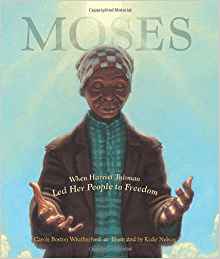
Carole Boston Weatherford is the author of the new children's picture book The Roots of Rap. Her many other books include Moses and Schomburg. She is a professor of English at Fayetteville State University in North Carolina.

Q: Why did you decide to focus on the roots of rap in your new picture book?

A: I began my career as a poet in the early 1980s when rap was taking off. Even then, I was rooted in the oral tradition, often writing in the vernacular or about jazz. Then, “The Message” was released by Grandmaster Flash and the Furious Five. Its lyricism and social consciousness resonated with the younger me.

Years later, my children exposed me to a bold new generation of rappers. Like no other medium, hip hop speaks to global youth. I created a college course called Hip Hop: Poetry, Politics and Pop Culture. The course places rap on the continuum of African American oral and literary traditions.

As I rethink my past work (Freedom in Congo Square, The Sound that Jazz Makes, Sugar Hill, Jazz Baby, Before John Was a Jazz Giant), I wonder: Have I been rapping all along? I only hope The Roots of Rap is a worthy tribute to the art form and artists it celebrates.

Q: When you’re writing about music, do you try to make the text sound like the type of music you’re focusing on? 

A: Yes. I do. Poetry makes music with words. That’s why you can hear drumming in Congo Square, hot jazz in Sugar Hill and a saxophone riffing in Before John Was a Jazz Giant. That’s why I added a beatbox to Roots of Rap.

Q: What do you think Frank Morrison’s illustrations add to the book?

A: Frank’s illustration are sooo dope! He captures the essence of hip hop culture. His paintings pulse with energy.

Q: What do you hope kids take away from the book?

A: Poetry is vital to children. It teases the tongue, trains the ear to listen and gets kids ready to read. Above all, I hope that children enjoy Roots of Rap as poetry. I also hope more children will try writing rap and discover the power of their own voices. 

Q: What are you working on now?

A: I am working on two artists’ biographies and two accounts of hate violence—one a lynching in my family. All four manuscripts are book-length poems. I’m hoping for a taker.

--Interview with Deborah Kalb. Here's a previous Q&A with Carole Boston Weatherford.

Q&A with Mary Cronk Farrell


Mary Cronk Farrell is the author of Standing Up Against Hate: How Black Women in the Army Helped Change the Course of WWII, a new book for older kids. Her other books include Fannie Never Flinched and Pure Grit. She lives in Spokane, Washington.

Q: Why did you write Standing Up Against Hate?

A: The first thing that caught my attention was how the army sent these women to England to process a backlog of mail—seven airplane hangars of mail! Mail was critical to the morale of the soldiers. They had no cell phones, or phones of any kind. Words on paper. That was their only communication with loved ones at home.

Hitler’s last-ditch effort to save his Nazi regime in December 1944 has become known as the Battle of the Bulge, and it was while American GIs fought this six-week battle that the mail piled up, a lot of it Christmas letters and packages.

Every military man was needed to fight the war and couldn’t be spared to sort mail, so the 6888th Postal Battalion was called in, 800 black women to get that mail sent to the troops. They achieved this in record time.

Another fact that lit my fire to write this book was that until late in the war, hundreds of black women who’d gone through basic army training sat idle, their own backlog of sorts.

They had no assignments due to segregation and racist attitudes among army commanders. Others were assigned to scrub floors and do laundry, jobs no white army women ever had to do. At the height of World War II, the army wasted precious human resources due to the color of soldiers’ skin.

In the midst of this mindset, black women showed tremendous fortitude, patriotism and courage, standing up against hate at great risk to their careers, their liberty and their lives.

Q: How did you research the book, and did you learn anything that especially surprised you?

A: Much of my research came from personal accounts of women who served in the Women’s Army Corps during World War II. I also found black newspapers of the time to be a wealth of information. Finding those online takes some digging, but it’s amazing to have that information at my fingertips.

Q: The book includes a variety of photographs and newspaper stories from World War II. How did you find the right material to include?

A: I discovered many photographs of African American WACs at the National Archives and Records Administration Still Pictures Division in College Park, Maryland. That is an amazing place to visit.

I found Lieutenant Colonel Charity Adams Early’s papers at the Library of Congress. She was the first African American woman commissioned as an officer in the U.S. Army. Speaking with her son and daughter was one of the highlights of my research. Another was reading the autobiography of Dovey M. Johnson, another of the first black WAC officers who really inspired me.

Q: What do you hope readers take away from this book, and what is the legacy today of these women?

A: I hope that readers of this book will have a better understanding of some of the roots of the race issues challenging America today. I’m a history nerd who believes that only by acknowledging the pain of the past can we move toward healing today.

I hope people will be inspired by the courage of these black women who stepped out of accepted roles for blacks and for women of the 1940s. They paved the way for black women’s success in the U.S. Armed Forces today. Maybe more importantly, many of them went on to engage in the Civil Rights Movement of the 1960s.

Q: What are you working on now?

A: Currently, I’m writing a YA novel and hoping to negotiate photo rights for a nonfiction book involving a woman and the Vietnam War. It seems these war stories I write tend to generate more war stories. Will that continue? I don’t know.

Q: Anything else we should know?

A: A similar theme continues to emerge in my writing. I’m curious about what motivates people to step out of the ordinary, how they find the courage to preserve in adversity, to take the risks required to change situations or themselves.

I can’t possibly write books about all the people who inspire me. But I do explore the lives of courageous people on a regular basis on my blog. It’s more to keep myself going than anything, but you’re welcome to join me at http://www.marycronkfarrell.net/blog.

--Interview with Deborah Kalb