Friday, June 2, 2017

Q&A with Dean Robbins


Dean Robbins, photo by David Giroux
Dean Robbins is the author of the new children's picture book Margaret and the Moon: How Margaret Hamilton Saved the First Lunar Landing. He also has written Two Friends and Miss Paul and the President. He lives in Madison, Wisconsin.

Q: Why did you decide to focus on computer expert Margaret Hamilton in your new book?

A: A couple years ago I noticed a striking photograph that had gone viral on social media. It pictures a typical-looking young woman from the 1960s, with wire-rim glasses, long hair, a stylish dress, and a charming smile. She stands next to a stack of paper that reaches over her head. 

This was Margaret Hamilton with the code she wrote for NASA’s Project Apollo as director of software programming. The viewer realizes this is no ordinary young woman, but a genius who helped get astronauts to the moon using early computer technology.

It was revelatory to learn that a woman had played such a significant role in the 1960s space program, given the male faces we’re used to seeing from that era. It occurred to me that this might be a powerful story to tell for children.

Q: How did you research her life, and what did you find out about her that particularly fascinated you?

A: There wasn’t much published information about Margaret Hamilton, so I had to start digging—something I enjoy as a longtime journalist. I tracked down her email address and wrote to see if she’d be willing to tell me her story. Margaret has little interest in self-promotion—she’s a scientist to the core, with tremendous integrity—but she was taken by the idea of a book about her life that she could read to her grandchildren.

So we spoke and exchanged emails. Margaret offered previously unreported details of her life, including her love of problem-solving from an early age. She described philosophical discussions about the universe with her father, a poetic type who encouraged her curiosity.

Margaret also explained her pioneering work with NASA. There was no road map for using computers back then, so she had to make up solutions as she went along. She had a knack for anticipating problems, and that paid off when a human error occurred right before the first moon landing in July 1969. 

The error caused the mission’s guidance computer to overload, which could have been disastrous but for Margaret’s brilliant programming. Her code allowed the computer to focus on its most important task: landing the lunar module on the moon. That incident became part of Margaret’s legend at NASA, and it forms the climax of Margaret and the Moon.

Margaret generously sent me vintage photographs and even real examples of her Project Apollo code. These images helped inspire the book’s illustrator, Lucy Knisley, who even incorporated the code in a couple of her drawings. My resourceful Knopf editor, Julia Maguire, also created a two-page spread showing the rare photos of Margaret in her childhood and NASA heyday.

Q: As a woman in a male-dominated field, how did her gender affect Margaret Hamilton’s career?

A: As the book shows, Margaret was acutely aware of inequality even as a young child. She wondered why there were only daddy longlegs, so she renamed some of them “mommy longlegs.” She wondered why only boys played baseball, so she joined the local team herself. She wondered why more girls didn’t grow up to be doctors or scientists, so she studied hard in every subject at school. This determination helped her climb through the ranks in a male-dominated field, which was extraordinary in the 1960s. 

Nevertheless, Margaret remained relatively unknown for decades after her signature achievements with NASA. Today, we’ve come to realize that women’s stories have been unfairly neglected throughout history, and that’s why people were delighted to discover the viral photograph of Margaret with her stack of world-changing code. Since then she’s begun getting the attention she deserves, including a Presidential Medal of Freedom. She’ll even be part of an upcoming “Women of NASA” Lego set!

Q: Did she see the book, and if so, what did she think about it?

A: I was nervous when it came time to show Margaret the book. She had patiently told me about the technical elements of her work and her role as a software engineer—a term she coined in the early days of computer science. 

Those details would have been too complicated for the elementary school readers of Margaret and the Moon, of course, so I tried to responsibly simplify and compress the story. I worried Margaret might disapprove, but it was just the opposite. She thought the book captured the spirit of her life and work, and she was charmed by Lucy’s illustrations. I was grateful for her magnanimity!

Q: What are you working on now?

A: I’m working on more nonfiction children’s picture books about heroes like Margaret Hamilton. Some are about unfamiliar people, while others focus on lesser-known angles in the lives of already famous figures. I’ve always idolized ordinary folks brave enough to stand up to powerful forces of oppression. These are the stories that inspired me as a child, and it’s a thrill to write books that might similarly inspire today’s young readers.

Q: Anything else we should know?

A: I thought I’d mention how the illustrations contribute to the effect in Margaret and the Moon. Lucy Knisley is a comics artist who has created witty and insightful autobiographical books like Relish and Displacement. Julia Maguire thought she might have the right touch for Margaret and the Moon, and it proved to be an inspired choice. 

Lucy brought so much of her own wry sensibility to the project, adding visual jokes that make me laugh out loud. She also created sublime images of Margaret gazing at the universe that take my breath away. In writing the story I imagined illustrations that were both playful and cosmic, and no one could have rendered that singular tone better than Lucy. 

--Interview with Deborah Kalb. For a previous Q&A with Dean Robbins, please click here.


Q&A with Caroline Giammanco


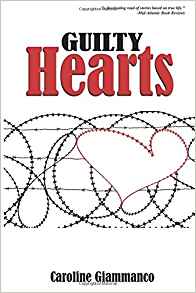
Caroline Giammanco is the author of the new book Guilty Hearts, which focuses on prisoners and their partners and families. She also has written Bank Notes: The True Story of the Boonie Hat Bandit, which looks at her own relationship with a prisoner. A longtime teacher, she lives in Missouri.

Q: What were some of the factors leading to your writing Guilty Hearts?

A: There are several reasons. Writing Bank Notes was my opportunity to tell our story—the story of Keith Giammanco’s fall from middle-class father into crime, our prison experiences, and our love story.

It’s not easy putting your personal life out there for the world to see, but we believed it was important to use Keith’s compelling high-profile case to bring awareness to the need for reform in the criminal justice system.

As soon as Keith and I became a couple, I faced the scorn and stigma of being in a prison relationship. I lost friends, but even more painful, I lost family members. My brother disowned me. My cousins treated me as though suddenly I was mentally ill. Word got back to me that even out-of-state family members were hearing I was manipulated by an inmate. Family daggers in the back are the worst.

Once Bank Notes came out and our story became public, I fielded prying, skeptical questions from radio hosts and customers at book signings. At my teaching job, once my “secret” was out, I was treated as a pariah. Whom I love became a reason to ostracize me. While it stung, I wasn’t going to let it stop me. Keith and I love each other, and thankfully we don’t let others dictate our decisions.

I began thinking of the millions of families out there who don’t get to tell their stories, yet live under the same stigma I face. I knew I wasn’t alone in my isolation. Families across the country are forced to wear a cloak of shame because someone they love made a mistake.

Not everyone has the ability or desire to put themselves in the glaring light of public scrutiny. Most inmate families are battling enough social and financial issues. I wanted to give couples and families the ability to tell their stories in safety. I’d face the public scrutiny. They could tell me their stories, let their own humanity show, without being attacked in a public way.

I also wanted society to understand why inmate relationships are important and why it’s more dangerous for our communities when inmates are abandoned.

Society wants to kill connections to inmates, the monsters people conjure in their minds who deserve to be locked up with the key thrown away. The problem is, most inmates aren’t monsters. They were just like the rest of us until they became desperate, scared, developed drug or drinking problems, or were raised in the wrong zip code.

Another problem with society’s urge to dissolve family and relationship ties is that over 95 percent of all inmates aren’t locked up with the key thrown away. They re-enter our communities. It’s not good for any of us if they have no one on the outside.

If the draw of returning to prison is stronger than ties back home, former inmates will find a way to go back to the prison society that accepts them. They return to prison by committing crimes, and those crimes are against people in our communities. No one is safer by breaking families apart.

Q: How did you meet the families you profile in the book, and what do they think of it?

A: Through my criminal justice reform efforts, I had already made friends with women who have compelling stories to tell. They were my first sources.

I wanted to have a broad range of experiences profiled in Guilty Hearts, however, so I decided to branch out to people I hadn’t known personally. I posted in prison wife groups on Facebook that I was looking for women willing to share their experiences. My best friend from college is active in adoptee groups, and she spread the word in her circle, too.

With each of the families, I asked for input from wives, mothers, and the inmates. I wanted information on how they met, how they maintain their relationships, and what reactions they have faced because of their relationships.

The response I have gotten back so far from contributors has been amazing. Here are some quotes from a mother and two of the wives featured in GH:

“Can’t stop reading Guilty Hearts!!! It’s awesome and sad and I love it.” -- Diane

“Powerful and exciting because I’m picking up ideas for coping.” –Victoria

“I really enjoyed reading this book. The stories of what these families go through are heartbreaking. It is so frustrating knowing how broken our justice system really is…I know firsthand just how incredibly life can change in a heartbeat and turn all your hopes and dreams into a nightmare. You will truly feel for all these couples as you read about how love can get you through the worst of times and conquer all…Thank you, Caroline, for writing this book.” –Kristen

Knowing I have the support and praise of the women who shared their stories means the world to me. I wanted them to be pleased with how their stories were presented to the world.

Q: How did you choose the book's title, and what does it signify for you?

A: I chose the title because the women and families who love inmates are expected to carry the same guilt as the inmates. We are supposed to be ashamed of whom we love, as though we are defective if we love someone who broke the law. Mere association with a criminal casts us in a negative light.

Guilty Hearts is a chance for women and the inmates they love to show relationships can exist and continue even when someone makes a mistake.

Q: What is happening now with Keith Giammanco's case?

A: His federal appeal is still under review. It’s been two years, and we are in the dark so far. We are hoping and praying for a positive result.

In Bank Notes I wrote about my efforts to reform 85 percent mandatory minimums in the state of Missouri through the legislature. It’s a complicated issue, and politicians have knee-jerk reactions to crime just like everyone else in the world, but we were making progress.

We had high hopes at the time the book went to print. In its first trip through the legislature, the bill, which applied to first time offenders, made it all the way to debate on the floor of the Missouri House of Representatives. Representative Don Phillips sponsored that bill.

At the end of that session a different representative, Galen Higdon, enthusiastically called me, adamant that he could push the bill all the way through the next year.

He not only didn’t deliver, he didn’t even propose a decent bill. The one Galen Higdon concocted was so vague that it didn’t even apply to 85 percent mandatory minimums or first-time offenders. “Trust me” was a phrase I heard from him. I’ve never had much confidence in a man who has to tell me to trust him.

I went through two back-to-back reconstructive foot surgeries that fall and winter and didn’t have much choice but to leave it to the representative who had it handled. He didn’t. Nor did he produce a viable bill the next year. My trust has run out with him.

However, I have not given up on bringing reform to draconian laws established under the Clinton administration (which even they now say were a mistake that have led to mass incarceration and buckling expenses to the states who have continued the failed practice).

At one book signing in St. Louis, I met a member of the state jury that convicted Keith. As we suspected, the jurors had no idea what they were actually sentencing Keith to in September 2010.

“He’s home now, right?” the gentleman asked me.

“No, the jury convicted him of first degree robbery. That has a mandatory minimum sentence of 85 percent. He has to serve 17 years before he’s eligible for parole.”

“I thought he’d be home when his federal sentence ended,” he said with a shocked expression.

He also wasn’t aware that the judge went against the jury’s recommendation of 15 years and instead sent Keith to prison for 20 years.

So, unfortunately for now, Keith remains in prison with no chance for parole for another eight and a half years.

Q: What are you working on now?

A: I am halfway through writing Inside the Death Fences. It’s my story of how I began working at a maximum security prison, my experiences before I met Keith, and the events that happened afterwards.

Last November, news broke of over $7 million paid out by the state in harassment and retaliation lawsuits against the Missouri Department of Corrections. Before then, the system operated in the shadows, under the guise of being “the good guys.” A few of us had spoken up against the system, but overall people turned a blind eye.

When millions of dollars were at stake, they suddenly took interest. The Missouri House of Representatives created a subcommittee investigating the corruption within the DOC. As a result, the department now has a new director and assistant director. Many of us hope the investigation doesn’t end there.

I’ve gotten to know the members of the subcommittee, and I have gotten to know current and former employees who are also now willing to speak up against the fear and retaliation within prison system. The full details will be included in my new book.

Q: Anything else we should know?

A: The Missouri Department of Corrections banned Bank Notes from entering the prisons after I gave a signed copy in person to then-DOC director George Lombardi.

For years I’d heard, “The people in Jefferson City don’t have any idea what goes on at the prison level.” I took that buffer zone away by making sure the head honcho had a copy in his hands. When he had the opportunity to turn his ship around, he instead banned my book.

Keith and I are known within the prison system. When he was transferred to the Southeast Correctional Center in Charleston, Missouri, we were denied visiting rights, our marriage request was denied, and they interfered with our mail. I had to seek the help of a legislator. We are seen as a threat by the system. Good.

When Keith’s level dropped in January of this year and he was moved to Western Missouri Correctional Center (a medium-level prison), our recognition traveled with him. On his second day there, when mail was called, he went to get his ID (a requirement for getting mail). The guard said, “You don’t need your ID. I know who you are.” On his second day at the prison.

We continue to work to make the system more efficient and more effective. It is, after all, called the “Corrections” Department. Rehabilitation should be the goal.

For more information about the books, us, and our reform efforts, people can go to www.booniehatbandit.com.

--Interview with Deborah Kalb. For a previous Q&A with Caroline Giammanco, please click here.

June 2

ON THIS DAY IN HISTORY
June 2, 1935: Carol Shields born.

Thursday, June 1, 2017

Q&A with Lisa Ko


Lisa Ko is the author of the new novel The Leavers. Her work has appeared in a variety of publications, including Best American Short Stories 2016 and The New York Times. She is a founding coeditor of Hyphen and a fiction editor at Drunken Boat. She lives in Brooklyn.

Q: How did you come up with the idea for The Leavers and your character Deming/Daniel?

A: Back in 2009, I was reading The New York Times when I stumbled upon an article about a woman named Xiu Ping Jiang, a woman from China who’d been held in an immigration detention jail for over a year, often in solitary confinement. She’d even tried to bring her 8-year-old son into the U.S. from Canada, but he’d been caught by officials and adopted by a Canadian family.

I couldn’t stop thinking about this story – what would happen to this woman, and what had happened to her son? So I began to dig further, and I learned about all these other immigrant women who’d had their U.S.-born children taken away from them.

American courts would rule them “unfit” and grant custody for the kids to be adopted by American couples. It seemed unbelievable, but it was happening everywhere. Meanwhile, these women were being deported or imprisoned in these for-profit, underground detention facilities all over the country.

I started writing about a woman named Polly. She’s born in a village in Fuzhou Province and pays 50 grand to get smuggled into the U.S. She lives in the Bronx with her 11-year-old son, Deming, and one day she goes to her job at a nail salon and never comes home.

As I kept writing, I realized that the crux of the novel lay in Polly’s son. So I started writing about him. And what happens is that after his mom disappears, he gets adopted by a white family and moved from the Bronx to a small town upstate, his name changed to Daniel Wilkinson. Ten years later, when he’s 21, he starts searching for his mother.

Q: You tell part of the story from Daniel’s perspective and part from the perspective of his birth mother. Why did you decide to use third person with Daniel and first person with Polly?

A: During the seven years it took me to finish The Leavers, it took me many, many drafts to figure out the best way to tell the story. I wrote it with two first-person narrators, two-third person narrators, a single narrator, and so on. But when I started writing Polly in the first person, addressing her son as “you,” something just clicked and her voice came to life.

Q: How was the book’s title chosen, and what does it signify for you?

A: It’s about leaving and being left, and how these things can either be done voluntarily or be done to you. Leaving can be an act of adventure. It can also be an act of violence and trauma.

Q: The book deals with a variety of themes, including immigration and adoption. Why did you pick those two topics to focus on in the book?

A: I’ve always been drawn to figuring out what the story is behind the story. When I was reading these news articles about undocumented immigrants, I noticed how they were often presented as either villains or victims.

And there seems to be such a lack of context around the economic and political reasons for immigration, detention, and the adoption industry, not to mention the links between them.

Like it’s not just as simple as immigrants coming to America to pursue the American dream or join the so-called melting pot—there are complex histories at play with regards to why people migrate, and the roles that the U.S. has had in destabilizing governments and economies in other countries.

So initially, I was motivated by wanting to write a counter narrative. I also wanted to decenter the narrative of transracial adoption away from that of the adoptive parents.

That was the original motivation. But it quickly grew into just wanting to tell a good story in the best way I could.

Q: What are you working on now?

A: A new novel that’s very different from The Leavers

--Interview with Deborah Kalb

Q&A with Jody Jensen Shaffer


Jody Jensen Shaffer is the author of the new children's picture book Prudence the Part-Time Cow. Her other books include The Way the Cookie Crumbled and Benjamin Banneker: Self-Made Man, and her work has appeared in a variety of publications, such as Ladybug and Highlights. She lives in Liberty, Missouri.

Q: How did you come up with the idea for Prudence the Part-Time Cow?

A: Believe it or not, the Chick-fil-A cow inspired my story! In the summer of 2012, as my son and I were running errands, we noticed the Chick-fil-A cow in front of our local restaurant.

We tried to get a picture of it for my daughter who was partial to cows, but the light turned green, and we had to move on. We planned to get a picture on the return trip, but when we got to the intersection, the cow was gone.

I told my son it must've been a part-time cow. That phrase struck me, and I began brainstorming how and why a cow could be part-time.

Q: What do you think kids can take away from her story?

A: I hope Prudence's story gives kids the confidence and courage to pursue their interests, even in the face of criticism, and a belief in the value of kindness.

Q: What do you think Stephanie Laberis's illustrations add to the book?

A: Oh my goodness, Steph's illustrations are truly one-half of the story, as they should be for picture books! The expressions on the cow's faces, Prudence's pink bouffant, the genius of her inventions using found farm objects. Steph's illustrations are perfect, and I'm so lucky to have been paired with her.

Q: Who were some of your favorite authors when you were a kid?

A: I loved Norman Bridwell's Clifford books when I was a kid, and encyclopedias. We had a set in the basement, and I'd read for hours. When I became a parent, I fell in love with Cynthia Rylant, Arnold Lobel, William Steig, Peggy Rathmann, and so many others!

Q: What are you working on now?

A: I'm always brainstorming new stories and revising old ones. I'm out on submission with a few things, so I perpetually have my fingers crossed!

Q: Anything else we should know?

A: I'm launching Prudence the Part-Time Cow at the Barnes & Noble at Zona Rosa in Kansas City, Missouri, on June 16 at 6:30pm. It's open to the public and should be tons of fun. I'd love to see everyone!

--Interview with Deborah Kalb

June 1

ON THIS DAY IN HISTORY
June 1, 1937: Colleen McCullough born.