Tuesday, June 4, 2013

Q&A with author Monica Bhide

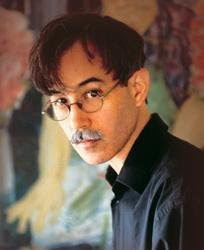
Monica Bhide
Monica Bhide, who is particularly known for her writing about food, is the author of four books: In Conversation With Exceptional Women, Modern Spice, The Everything Indian Cookbook, and The Spice is Right. She has contributed to Cooking Channel and to NPR's Kitchen Window and has written for a variety of publications including Food & Wine, The New York Times, and Parents. She is based in Washington, D.C.
 
Q: What first made you interested in writing about food and its importance in people's lives?

A: Food is such an intimate experience.. it touches us in ways nothing else can. Whether we love it, hate it, or are neutral towards it, it defines who we are in so many ways. 
 
My childhood was filled with stories about food and fairies and how they changed the world. Once those stories took root in my heart, I knew that all I ever wanted to do was tell stories like that.  I guess I never quite grew up!  
 
I remember when my uncle got married, his wife was judged by the family on how much butter floated on top of her lentils, my father instilled in my heart a love of spices, I met my husband thanks to the aroma of cardamom - we are what we eat! 

Q: As an author of three cookbooks about Indian food, how do you think the perceptions of Indian cuisine have changed in the United States over the years?

A: It has changed considerably but still has a long way to go. When I first arrived here, everything Indian was considered "curry." That has changed a lot in major metro areas. People understand the nuances of curries and spices. The availability of spices and terrific Indian cookbooks by authors such as Raghavan Iyer has made it much easier for Americans to cook Indian food at home and that really has helped in breaking down myths and clarifying perceptions. 
 
Q: Your most recent book, In Conversation With Exceptional Women, features interviews you've done with a variety of women. How did you pick your interviewees, and were there common themes that made these women seen particularly "exceptional"?

A: I picked the women whose work I really loved reading. The idea behind the book was to see how the pros are succeeding at writing and what I could learn from them. I focused on the women who, to me, held true to the "bloom where you are planted" thought. 
 
Q: You also have developed an iSpice app. How did you come up with that idea? 

I have to thank my readers for this. I would often get emails from readers saying that they were in a grocery store and were wondering what cumin was or what coriander was and how they could use it. So I worked with sutro media and designed a very simple app that helps people learn about spices using a quick snapshot! 
 
Q: What are you working on now?

A: I am working on some narrative writing projects that combine my two loves - storytelling and food!
 
--Interview with Deborah Kalb 

June 4

Carson McCullers, by Carl Van Vechten
ON THIS DAY IN HISTORY
June 4, 1940: "The Heart is a Lonely Hunter" by Carson McCullers is published.

Monday, June 3, 2013

Q&A with writer Gordon Dahlquist


Gordon Dahlquist
Gordon Dahlquist is a novelist and playwright. His most recent novel is The Different Girl; his other works include The Glass Books of the Dream Eaters, The Dark Volume, and Chemickal Marriage. He lives in New York.

Q: How did you come up with the idea for The Different Girl?

A: I began the story some years ago as the libretto for an opera, the music for which would be written by a composer friend in Oakland. I didn't have the entire story worked out, but certainly the sparse circumstances on the island – the two caretakers, the four girls (and their chorus of voices) – were derived from the (mostly financial) constraints of theatre. 

But I was only a few chapters in when that project got side–tracked pretty early on by another book, which turned out to be The Glass Books of the Dream Eaters, which took over my life for a few years. Eventually I came back to The Different Girl and finished it fairly quickly, in a few months. 

The impulse for the book came less from the story itself than from the narrative voice, and the constraints that come with it. The book hews very much to what Veronika experiences, her particular thought processes, and her conclusions – which is to say she's becomes something of an unreliable narrator, not out of any malice, but simply because her perspective is, at least at the start, fairly limited. 

Interestingly, May, the character that cracks open Veronika's world, carries her own fairly limited perspective – it just happens to not overlap with Veronika's at all, so finding common ground is something of a challenge. 

For me, being true to those constraints – not cheating and having someone find a newspaper that explains everything – was the core of the book, because it makes the book not finally about what happens – the plot – but about the characters, and their emotional evolution.

Q: Do you consider the book to be science fiction, and why or why not?

A: The book is totally science fiction, even if it takes some time to really reveal what that means. That said, I'd say it works in two different ways – which perhaps touches on two strains of science fiction. One is simply exploring ideas of cognition and identity, in very much a classic science fictional manner. The other is more social, and floats around the edges of the story, and speaks to the role of science in society now. 

I'm extremely concerned about the anti–science culture that's risen in the United States, recently, specifically related to topics like climate science and evolution. I personally find this to be an extremely dangerous phenomenon, and there's certainly an element to the book – again, very much around the edges – that touches on the consequences of this kind of mindset.

Q: What age group do you think would enjoy the book?

A: Honestly, I didn't write the book for any particular age – I wrote it for me. The voice of the narrator – her age, her vocabulary, her diction – are established at the beginning, and read as a fairly young person. Likewise, the questions at play are very basic issues of identity and character – who are we, what defines us, what separates us from other people, what responsibilities do we have to have to others. These are classic teenage questions, but they're also simply human questions. My hope is that readers of any age will appreciate the book.

Q: How much of a departure is The Different Girl from your previous books?

A: It's very much a departure. My previous books have been long and complicated adventure stories with a fair amount of adult content. The Different Girl is a much simpler, almost fable–like story, with everything happening on a much smaller, more intimate scale – and something anyone could read. The earlier books dabble in science fiction, but more with a steam–punk/alchemical edge, while The Different Girl speaks more to a classic '70s sort of science fiction.

Q: As someone who writes both plays and novels, do you prefer one to the other?

A: I like them both, and by now both feed each other. Certainly my novels are greatly influenced by writing – much of the stories move forward through dialogue, and the action is very much rooted in a concrete sense of place, almost like what happens is blocked out for the stage. 

More than anything, I think they serve different impulses in my writing. A novel will have a broader social canvas in terms actual plot, but also perhaps a more introspective one, with more time spent within a character’s thoughts. A play is necessarily more social, a world created through conversation, where what isn't said is more interesting than what is. 

In many ways it seems like for novels one gets the whole paint box, while for plays one gets charcoal – neither is better, but different ideas are suited to each.

Q: What are you working on now?

A: I've just finished a draft of a new novel presently called Second Skin, which isn't a sequel to The Different Girl – it doesn't deal with any of those characters – but takes place elsewhere in the same world. The Different Girl raises a lot of questions that aren't answered – because those characters aren't in any place to get all those answers – and so the new book allows me to show a much broader view of that society, from the slagheaps of poverty and environmental contamination, to enclaves of wealth and technology.

--Interview with Deborah Kalb


Q&A with author Michael Goldfarb


Michael Goldfarb
Michael Goldfarb, a former London bureau chief for NPR, is the author of Emancipation: How Liberating Europe's Jews from the Ghetto Led to Revolution and Renaissance. He also wrote Ahmad's War, Ahmad's Peace: Surviving Under Saddam, Dying in the New Iraq, which was based on a documentary he made for the public radio program Inside Out. He works as London correspondent for globalpost.com, and also contributes to the BBC.

Q: You write that there were various factors that inspired you to write about the emancipation of European Jews. What were some of the most important?

A: The first factor was a memory: at Hebrew school when I was probably 10 or 11, a teacher showed an old woodcut or lithograph called "Locking Up Time in the Ghetto" or something like that.  It was an image of a chain being locked and a curving dark street beyond with Jews, bowed over, heading into the darkness. 

That image stayed with me and I have always been curious to know more about ghetto life - and also when and how it ended.  I sort of knew that it ended with Napoleon but wasn't sure how and wanted to find out more.

Second, I take a huge interest in history and I long wanted to answer this question: why for a thousand years could you write the history of Western Civilization without mentioning a single Jewish name, then from the time of Napoleon, Jews are mentioned out of all proportion to their numbers in the population: In a single century, Marx, Freud, Einstein changed the very framework in which humanity viewed politics, the workings of our minds and the physical universe which we inhabit. 

Mahler and Schoenberg, Proust and Kafka, and more artists too numerous to mention shifted the boundaries of literature and music in particular. Without bragging it really was a second renaissance. Answering why this happened was my starting point.

Q: What was the most surprising thing you learned in the course of your research?


A: There were so many surprises. I didn't realize how many extraordinary Jews in Western Europe had been forgotten. I felt like I became a ghost hunter, tracking down these spirits. For example: I didn't know - most people don't - that 30 years before Theodore Herzl, an elderly radical named Moses Hess wrote the first truly Zionist tract, called Rome and Jerusalem. 

Twenty years earlier he had introduced his young colleague, Karl Marx, to the term "communism." Why didn't I know his name already? But one of the things I'm proudest of in the book is that I spend a lot of time telling his story and recovering the stories of other important people: Zalkind Hourwitz and Gabriel Riesser to name two.

Q: What was Napoleon's role in emancipating the Jews of Europe?


A: In the first phase of his career, as the Liberator of Europe's masses, Napoleon was crucial in throwing open the ghetto gates. In the second part of his career - as the vainglorious Emperor - he pulled back.  He felt Jews weren't assimilating fast enough, giving up their identity as Jews to become Frenchmen first. 

He imposed some fairly onerous laws on the community to hasten the process of assimilation. From changing the way Jews were named, e.g. changing Mordechai ben Avraham (my Hebrew name) into the standard first name/last name format; to compelling rabbis to be licensed; to forbidding Jews from practicing one of their traditional occupations: money lending.

The community was consulted on these changes and agreed to them.


That said, in exile on St. Helena, according to his physician, Napoleon wanted to attract all of Europe's Jews to France to make use of their talents.  He had great admiration for the community.

Q: You write of the emancipated Jews, "They were immigrants in their own country." How did their experience compare with that of Jews who emigrated to another country?

A: Well, they were looked on as outsiders and recent arrivals - even though they might have been living in the region for centuries - and were treated by some with great disdain. I made that comparison because over and over the stories of Jewish families allowed out of the ghetto - and the many little hamlets where most of them were forced to live - mirrored the immigrant experience in America.  

The first generation struggling to find an economic foothold, the second generation going into the family business or a profession to consolidate the economic gains, the third generation going into the academy or becoming journalists and artists.  

It was my family story - and many other family stories in America, but it was happening in Europe, where a family might move no more than twenty miles down the road into a mid-size city with a good gymnasium (high school), yet that previously unattainable type of education supercharged the family's assimilation and success in what was genuinely a new world.

Q: What impact did emancipation have on antisemitism?


A: It changed the character of Jew hatred. Emancipation coincided with the urbanization of Western Europe. Anti-Semitism is a kind of industrial-age form of Jew hatred - the term wasn't coined until around 1860.


It was a lucky break of history that the skills Jews had to develop to survive in the 500 years of ghettoization, when they were forbidden to work the land in many parts of Western Europe, when they were the only people allowed to lend money, and had wide circles of contacts because they were forced to travel and peddle over vast distances when others were tied to one place, all were skills the new economy needed.  

 Jewish ability with numbers, their skill in capital formation across political boundaries, and the wide circles of contact meant that very quickly they were able to take advantage of the 19th century's new form of industrial capitalism. 
  
The growth of cities was a positive thing for the Jewish community. For those who were displaced from the land and forced into these new very unpleasant environments it was galling to see the Jews doing so well in this new era.

So anti-Semitism deepened. It is also worth noting that - as in America - some wealthy young Jews like Marx, Hess, and Ferdinand LaSalle became involved in left-wing politics (actually they defined what left-wing politics is). 

Those urban working-class types inclined to hate Jews, resisted socialism. They embraced what we call today right-wing nationalism, which led to the Holocaust. The remnant of this dynamic is still playing out in Hungary where the Jobbik party excoriates "Jew Communists" and still sees Hungary's economy being manipulated by the World Jewish Conspiracy.

Q: What are you working on now?

A: Keeping my head above water.  I've gone back to radio journalism and started my own production company making documentaries for BBC Radio.  Some of these programs occasionally air around the public radio system.  I wrote a five-part series of "talks," 15-minute lectures, on the idea of being a ghost hunter for these lost Jews.  People can listen at my website Michael-Goldfarb.com
.

Q: Anything else we should know?

A: Midway through the research, the journalist in me got incredibly excited: I realized I had a story no one else had, a real scoop.  No one, no academic, no other historian had pulled together the Emancipation era in a single story arc. It was such a great story I couldn't understand why. 

After puzzling it out, I realized that the Holocaust is an iron curtain that comes down across Jewish history. It is as if we went from the destruction of the Second Temple and Diaspora to Hitler with nothing in between - except Maimonides and the expulsion from Spain. Almost all Jewish studies programs are focused on the Holocaust and Yiddish culture. The extraordinary achievements of the 150-year-long era of Emancipation in Europe are not commonly known. 

I fear that part of the reason is that to contemporary Jewry in the U.S. and Israel, Europe is seen as the graveyard of the Jewish people and there is no great desire to know what happened there. The attitude is, They hated us and they killed us, what else do we need to know?

(Interestingly, the book sold better in Australia than the U.S. where non-Jews were very interested to read about this little-known aspect of Jewish history because it explained to outsiders so much about how the modern Jewish community came to be.)

In any case it seems to me to be wrong to ignore the history of the Jews in 19th century Europe. We owe it to those who achieved so much to learn about them and remember their lives. The Nazis wanted to erase Jewish achievement of this era from historical memory; we shouldn't let them succeed by ignoring the story of the people who lived Emancipation.

--Interview with Deborah Kalb

June 3

ON THIS DAY IN HISTORY
June 3, 1936: Novelist Larry McMurtry born.