Showing posts sorted by relevance for query laura lippman. Sort by date Show all posts

Tuesday, February 24, 2015

Q&A with Laura Lippman


Laura Lippman, photo by Jan Cobb
Laura Lippman is the author of the new mystery novel Hush Hush, featuring private detective Tess Monaghan. Her many other novels include After I'm Gone and The Girl in the Green Raincoat. A former reporter for The (Baltimore) Sun, she lives in Baltimore and New Orleans.

Q: How did you come up with the idea for your new Tess Monaghan mystery, Hush Hush? 

A: It started with a column Anna Quindlen wrote about Andrea Yates, the Texas woman who killed five of her children. I don't remember the exact wording, but Quindlen shared a personal story, about her own life as a young mother, and said that she could understand how such things happen. I wasn't a parent at the time, but it stuck with me. And I have a long-standing interest in the insanity plea.  

Q: Tess Monaghan is based in Baltimore. How important is Baltimore to her essence as a character? 

A: Tess is Tess because of Baltimore. The city has formed her. She has a bit of a chip on her shoulder, claims not to care what others think about her, but she obviously does. That's pretty Baltimore, in my opinion.  

Q: When you wrote your first mystery featuring Tess, did you think it would turn into such a successful series? 

A: I just hoped it would turn into A series. Seriously, I didn't think much farther down the road than that. I hoped to do well enough to leave my newspaper job. And I did -- seven years later.  

Q: Which writers have inspired you? 

A: So many writers inspire me, pretty much every writer I read. And now I have a lot of writer friends, who are doubly inspiring. One of them, Ann Hood, is constantly on the go; I was just looking at her Instagram photos from Jerusalem today. I like writers who, unlike me, have incredibly diverse backlists.  

Q: What are you working on now? 

A: Working on the next novel, not a Tess, set in the present-day and Columbia, Maryland, in the '70s and '80s.  

Q: Anything else we should know? 

A: I break out in hives shortly before publication. Seriously. 

--Interview with Deborah Kalb. Laura Lippman will be participating in the Temple Sinai Authors Roundtable on February 28, 2015.

Tuesday, November 2, 2021

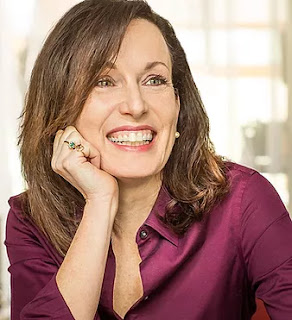
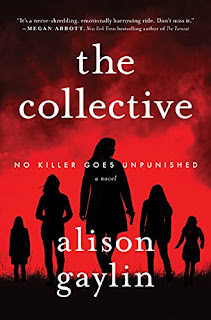
Q&A with Alison Gaylin


Alison Gaylin is the author of the new novel The Collective. Her other books include the novel Never Look Back. She lives in Woodstock, New York.


Q: In our last interview, you said you were working on a book about female rage. What inspired you to write The Collective, and how did you create your character Camille?


A: A lot of the book was written during the pandemic, and I think I was inspired somewhat by the anger, isolation, and fear that many of us felt at the time.


Plus, I often write about the things I dread most, and in reading news stories about children or young adults whose lives were taken, I often imagine how I would feel if I were their mother. The grief and rage would be unfathomable, and Camille is someone completely overwhelmed by both of those emotions.


In creating that character, I was hoping to write someone who identified first and foremost as a mother – and who was robbed of that identity.


Q: The writer Laura Lippman said of the book, “Alison Gaylin's The Collective feels like the book of the moment, the year.” What do you think of that description, and how do you think the book reflects the current moment?


A: I admire Laura Lippman tremendously, and I’m thrilled by that description! I think The Collective reflects the current moment  in that it’s about the powerlessness we often feel as women, and as mothers, and how – like so many other things in this day and age -- it can be turned to rage and weaponized.


Q: Did you know how the novel would end before you started writing it, or did you make many changes along the way?


A: Like most of my books, I knew how I wanted it to end, but I surprised myself a few times with twists on the way there.


Q: What do you hope readers take away from the story?


A: I hope readers are entertained and scared and that they think twice before joining anonymous online groups of like-minded people. Also, the idea that no one is always absolutely in the right.


Q: What are you working on now?


A: A book about a normal person who becomes the target of an online smear campaign  – and has to figure out the source before she loses everything, including her daughter.


--Interview with Deborah Kalb. Here's a previous Q&A with Alison Gaylin.

Thursday, March 31, 2016

Q&A with Sarah Weinman


Sarah Weinman is the editor of the two-volume compilation Women Crime Writers: Eight Suspense Novels of the 1940s & 50s. She also has edited the collection Troubled Daughters, Twisted Wives, and her work has appeared in a variety of publications, including The New York Times and The Wall Street Journal. She is news editor for Publishers Marketplace, and she is based in New York City.

Q: How well known were these novels at the time they were written?

A: It depended, but these writers were generally quite critically acclaimed and successful in their day. Hardcover publications, brisk paperback reprint sales, reviews in The New York Times, The Washington Post, even The New Yorker.

It's also no accident that six of the eight books were made into feature films. Laura, the movie, deviates somewhat from Vera Caspary's novel, but they are both masterpieces. Same with In a Lonely Place, book and film. I sure love both, but I can also see how the novel was not exactly filmable ca. 1950.
 
Q: What impact did war, or the threat of war, have on the themes running through these books?

A: You see it most explicitly with The Blank Wall by Elisabeth Sanxay Holding, featuring a middle-aged heroine whose husband is serving in World War II (they exchange many letters), and In a Lonely Place, [which includes] the specter of veterans coming back, broken and traumatized, to a civilian world unsure what to make of them.

But the whole notion that women were tasked with working to supplant men serving overseas hangs over so many of these books - especially when, once the surviving men came home, the "traditional" roles of husband and wife and family were supposed to come back into favor. 

Q: How do these novels compare to the works of male crime writers of the same period?

A: This may be a surprising observation but I found the male crime writers had a real sentimentality streak running through them that the women did not. Chandler is all romanticism. Mickey Spillane all rough and tumble masculinity assertion that, in hindsight, smacks rather of ostentatious insecurity.

The women of the period, the best writers, seemed to ignore romanticism and sentimentality in favor of a ruthless realism. They didn't have to create a fantasy. They were more concerned with telling things like they were.
 
Q: Which current authors do you see as perhaps the modern equivalents of these writers?

A: One of the reasons I reached out to contemporary authors to write appreciations on the companion website (at womencrime.loa.org) is that I saw real connections, direct or otherwise, between past and present generations.

To wit: Laura Lippman is our modern-day Margaret Millar. Megan Abbott reminded me of Dorothy B. Hughes early on and that connection sticks. Charlotte Armstrong is in the DNA of writers like Lisa Unger and Lisa Scottoline. Patricia Highsmith very clearly influenced Gillian Flynn. Sara Paretsky had not read Vera Caspary before I asked her to write about Laura but even she sees the connections there now. And so on.
 
Q: What are you working on now?

A: I have a number of projects on the go, from historical true crime feature journalism to a short story in an upcoming issue of Alfred Hitchcock's Mystery Magazine to stuff I can't quite talk about yet. But the #1 question I'm asked is whether there will be another volume of Women Crime Writers and the answer is, I hope so, but talks continue!
 
Q: Anything else we should know?

A: Only that in the months since Women Crime Writers was published I've been heartened by the response and how many readers have flocked to the collection. I could not be more proud of it and what it's continuing to accomplish in the larger culture. 

--Interview with Deborah Kalb

Wednesday, July 7, 2021

Q&A with Carol Goodman


Photo by Franco Vogt


Carol Goodman is the author of the new novel The Stranger Behind You. Her many other novels include The Sea of Lost Girls. She teaches at The New School and at SUNY New Paltz, and she lives in the Hudson Valley.


Q: What inspired you to write The Stranger Behind You?


A: There were a number of threads that began this book, but the moment that stands out was hearing Dr. Christine Blasey Ford describe the “sequelae” of being sexually assaulted. 


I recognized the symptoms she described—anxiety, claustrophobia, panic attacks—from my mother, who had been sexually assaulted when she was a teenager. I realized, then, that my mother had suffered from these post-traumatic stress symptoms all her life. 


At the time, the news was full of women coming forward with their own stories of sexual assault and harassment and it made me think of previous generations who had these experiences but had no recourse or anyone they could really talk to about it. 


It made me want to write something about a woman of another generation living with that aftermath and being “stuck” in that awful moment alongside a story of contemporary women dealing with the aftermath of assault.   


The second inspiration came when I read an article about Michelle Jones, the historian who researched the history of women’s prisons and wrote about a Magdalen Laundry in Inwood, a neighborhood in Manhattan where my husband lived for many years and my daughters live in today. 


I was shocked to learn that there had been Magdalen laundries in this country and that all memory of the institution seemed to have vanished from the neighborhood. 


This seemed like the same kind of erasure as my mother’s experience and it created the setting of the book—an apartment building in an old Magdalen Refuge where my modern heroine would go seeking safety.


Q: Much of the novel takes place at The Refuge, an apartment building in Manhattan. How important is setting to you in your writing?


A: Setting is very important to me.  I can’t really begin a book until I know where it’s set. 


As soon as I learned that there had been a Magdalen Laundry in Inwood I was fascinated by the idea that such a place existed in northern Manhattan in a neighborhood I was familiar with. 


The building itself was described as quite grand—like a French Chateau—and I could imagine it being transformed into a luxury apartment building called “The Refuge.” 


I loved the idea of setting the story in Inwood, a vibrant multicultural Manhattan neighborhood with a rich history, on the banks of the Hudson River which, to my mind, connects this novel to the books I’ve written set in the Hudson Valley. 


Q: Did you know how the novel would end before you started writing it, or did you make many changes along the way?


A: There was a lot I didn’t know about what would happen in the novel when I began. 


I don’t make an outline and I usually figure out the story as I write it, beginning with a character telling a story about something that’s happened to them. I follow that voice until I know enough about the story to begin and I’m often surprised by where the writing takes me. 


One of the first surprises of this book, which I began in Joan’s voice, was realizing that I needed Melissa’s voice to tell the story as well. For one thing, Joan was kind of stuck in that apartment and I needed someone who was getting out more! 


As I began to write from Melissa’s point of view I had to tackle the question of complicity for a woman who learns that man she’s loved and lived with for years is a sexual predator. I really wasn’t sure how I’d settle that question with Melissa. I had to write in her voice to find out. 


As for the end, I did have an image of the last two important scenes in the book—I just didn’t know entirely how we would get there!   


Q: What do you hope readers take away from the novel?


A: I always hope my readers are absorbed enough by my story to forget their own troubles for a little while, a quality that I’ve come to especially appreciate during this last year. 


For this book, I hope they also reflect on all the stories they may not know, stories of our grandmothers, our mothers, our sisters, our daughters, our friends. I hope this book encourages them to listen for those stories.  


Q: What are you working on now?


A: I’m just finishing a novel about a group of friends who go to an island off the coast of Maine where they have to reckon with their own shared history as well as the violent and mysterious history of the island itself, which includes a pre-colonial witch execution and the arrival of “fever ships” from famine-stricken Ireland in 1848.  


Q: Anything else we should know?


A: One of the most enjoyable parts of writing this book was researching for the 1940s storyline, which features Lillian Day’s character. 


Lillian's based loosely on my mother (my mom really did know the Kiss of Death Girl and Abe Reles) but her character required some additional background (my mother didn't actually help the D.A.'s investigation) so I read some great books of the ‘40s and about the ‘40s, including Women Crime Writers: Four Suspense Novels of the 1940s (edited by Sarah Weinman), which contains Laura by Vera Caspary, The Blank Wall by Elizabeth Sanxay Holding, and In a Lonely Place by Dorothy B. Hughes; books about organized crime, such as Murder, Inc. by Burton B. Turkus and Sid Feder, Dark Harbor by Nathan Ward, Public Enemies by George Walsh, and The Canary Sang But Couldn't Fly by Edmund Elmaleh; and these great 21st century neo-noirs: Manhattan Beach by Jennifer Egan, Laura Lippman's Sunburn, and Megan Abbot's Die a Little. 


I loved this research so much that I'm thinking of setting my next, next book in the 1940s.  


--Interview with Deborah Kalb

Saturday, October 24, 2015

Q&A with Cynthia Lott


Cynthia Lott is the author of the suspense novels The Feathers and The Irises. She is a member of Sisters in Crime, Inc., and International Thriller Writers, Inc.

Q: How did you come up with the idea for your new novel The Irises, and why did you set the book in 1979?

A: I came up with the idea for The Irises because I wanted to continue my story, The Feathers, nine months after it ends.

With the way The Feathers ended, I wanted to continue the series, reconcile some aspects of the first book, and bring in another paranormal mystery/murder. 

Since the second book takes place nine months after the first, it had to be 1979. I wanted there to be a breather but not too much space between both books.
 
Q: The book's setting, New Orleans, is almost like another character in the story. Do you think this book could be set anywhere else, and how important is setting to you as a writer?

A: I don’t think this story could have taken place anywhere else. I suppose it could have but New Orleans IS its own character and brings a lot to the story.

The city itself is part of the narrative and observer, allowing these characters to develop, explore, discover the mystery within her. She is crucial to the story and the enchantment of the plot.

Q: As you’ve mentioned, The Irises is the second in a series. Did you know it would be a series before you started the first book, or did you decide at a later point?

A: I did know it would be a series…and I knew that the ending of the first book warranted one. I love the paranormal and supernatural…they’re great aspects to play with in a series and I hope to continue on with it for many books to come.

Q: Which authors have inspired you?

A: I am inspired by so many authors, but some of my absolute favorite are Gabriel Garcia Marquez, Milan Kundera, Joyce Carol Oates, Laura Lippman, Margaret Atwood…to name a few. I am always reading and discovering new and old writers. I just recently finished The Haunting of Hill House. I had never read it! A gem.

Q: What are you working on now?

A: I am currently working on the third book in the series. I can’t say too much about it but a few of the characters in the second book will definitely be front and center.

Q: Anything else we should know?

A: I am a big believer in supporting indie authors. My advice is to give these authors a chance…you never know what great book you will find next! 

--Interview with Deborah Kalb

Friday, May 1, 2020

Q&A with Daniel M. Ford


Daniel M. Ford is the author of the new novel Cheap Heat, the second in his Jack Dixon detective series, which began with Body Broker. He also has written The Paladin Trilogy, a fantasy series, and his poetry has appeared in a variety of publications, including Soundings Review. He is a high school English teacher in North East, Maryland. 

Q: This is your second novel featuring your character Jack Dixon. Do you think he's changed at all from his first appearance in Body Broker?

A: I do not think so. The reader will get to see more of him, learn some more about him and his past. His college wrestling history and military service and so on.

But Jack in Cheap Heat is still basically the Jack readers met in Body Broker. He will change throughout this novel and beyond, but at least at the beginning he's the same guy.

Q: How did you come up with the idea for the plot of Cheap Heat?

A: I don't know, exactly. It just sort of popped up. I find the backroom world of wrestling pretty interesting, and decided it'd be a good subculture for Jack Dixon to bounce around in for a little while. It would take him out of his comfort zone and away from the support structure he has in Body Broker.

Q: You said in our previous interview that you don't usually plan your books out in advance--was that true this time as well?

A: It was indeed true. I wrote Cheap Heat out start to finish and then went back and revised it several times. But I have yet to write a book I have actually planned out, in advance. So far, I've always discovered as I go along, figuring out what's going to happen as I write.

That may change in the future; I outlined a fantasy project this winter.

Q: Who are some of your favorite detective novelists?

Robert B. Parker, creator of Spenser, is my absolute favorite. Other favorites include Laura Lippman's Tess Monaghan novels, Craig Johnson's Longmire, and of course, Raymond Chandler's Phillip Marlowe novels.

I also quite enjoy Jonathan Gash's Lovejoy; though it's hard to call an antique specialist a detective, they have the same sort of first-person narration going.

Q: What are you working on now?

A: The Third Jack Dixon novel (I don't think I can say the title yet), drafting a new fantasy project, and revising another fantasy project. I can't reveal the titles of either of the latter two projects yet either.

Q: Anything else we should know?

A: Not really. I just hope people enjoy the book! 

--Interview with Deborah Kalb. Here's a previous Q&A with Daniel M. Ford.

Friday, May 9, 2014

Q&A with author Allison Leotta


Allison Leotta is the author of three novels: Speak of the Devil, Discretion, and Law of Attraction. A former federal sex crimes prosecutor, she lives in the Washington, D.C., area.


Q: Why did you decide to focus your most recent book, Speak of the Devil, on the Mara Salvatrucha, or MS-13?

A: It was one of the scariest things I’ve prosecuted. The gang has gone viral in the last few years. It was just a gang of thugs in L.A., and now there are 50,000 people around the world. The way they treat women is appalling. And it’s difficult to prosecute.

Q: The witnesses are too afraid?

A: That’s where the title comes from. Someone told me, “Speak of the devil, and he will appear.” You will face retaliation. There are challenges in getting witnesses to talk.

Q: How did you come up with your main character, prosecutor Anna Curtis?

A: I started writing when I was still at the U.S. Attorney’s office, and I was seeing interesting things. It made sense to have someone who had the same job I did. She’s different from me—she’s younger, she’s prettier, and she has a more controversial romantic life!

Q: Will you continue writing about her?

A: I didn’t think I would, but Simon & Schuster thinks I should, and as long as [readers] are excited, I will. The [upcoming] fourth novel is also about Anna Curtis.

Q: Your books are set in the Washington, D.C., area. Do you think the plots could work as well in another city?

A: I think there are all sorts of interesting plots in different cities, but D.C. is special. It’s the seat of the federal government, with all the federal buildings and museums, and in the shadows, there’s extreme poverty. The U.S. Attorney’s office is one place where all that intersects. It’s a fascinating place to be, and it makes for good material for a book.

Q: Do you always know the book's ending before you begin?

A: I do. I’m an outliner. I do a really extensive outline, and then I start over. I get into a lot of detail with the outline. [Then with the writing,] it’s like seeing Google maps versus walking on the street. Things come to life.

Q: Which writers have especially inspired you?

A: It’s great, because now I get to actually meet some of them! I started in high school with John Grisham. There’s Scott Turow. In D.C., there’s George Pelecanos. Laura Lippman is a wonderful writer. Linda Fairstein—she was also a sex crimes prosecutor. She was instrumental in a tectonic shift in attitudes about prosecuting sex crimes, and now she writes about it. She is a hero and a role model for me.

Q: What can you tell us about your fourth book, which you just finished writing?

A: This one takes place in Michigan, so that was fun, having a different setting. Anna goes back home to defend her sister on a murder charge.

Q: When will it be out?

A: April 2015.

--Interview with Deborah Kalb

Thursday, March 7, 2013

Q&A with writer Jacqueline Carey


Jacqueline Carey is the author of five works of fiction, including It's a Crime, The Crossley Baby, and The Other Family. She is married to the writer Ian Frazier, and lives in New Jersey.

Q: Why did you decide to focus on corporate crime in your most recent novel, It's a Crime, and do you consider it a mystery novel?

A: It’s a Crime is about a good person benefitting from a bad situation.  This seems to reflect the state of the US today.  Americans are, on the whole, brave, decent, and well-meaning.  Yet the inequality between the rich and everyone else has gotten so large it is simply immoral, and this situation is accepted, even celebrated.

Corporate crime seemed a good, specific stand-in for these social ills.  In January of 2002 Paul Krugman said that the collapse of Enron would change us more than 9/11, and I think that has proved true.  It wasn’t only Enron that turned out to be a fake, it was the whole inflated financial system. 

The heroine of It’s a Crime has flourished because of her husband’s participation in an Enronlike accounting crime.  I wanted everyone to identify with her.  She is a kind and thoughtful person.  She also goes through incredible gyrations to try to make sense of a situation that deep down inside she always knew was wrong.

It’s a Crime is not a mystery.  It is not even a crime novel in the usual sense.  It starts where a crime novel would end: when the culprit is brought to justice. 

What comes next is only fallout.  There are no answers.  If the book is moving toward anything, it is toward acceptance of its own title.

Q: You have written about mysteries for Salon.com. Who are some of your favorite mystery writers, and what do you like about them?

A: I love mystery novels, and I like and admire many different kinds of mystery writers. Some contemporary names that come to mind are Laura Lippman, Walter Mosley, Sara Paretsky, Ian Rankin, and Tana French.  I’m going to add James Crumley and Sarah Caudwell, because I wish they were still alive, and Michael Malone, too, because I wish he were still writing.  Ross MacDonald is probably my favorite of all time.  The books of these writers are intensely flavored and passionate, with satisfying twists.  They deliver whole new worlds as they rearrange your head.

I also have a deep affection for a slew of what I call “martini mysteries” from the forties, fifties, and sixties. These are generally short, urban, sophisticated, and full of dread, without the preciousness of the cozies or the sadism of the hardboiled.  Their satisfactions come more directly from the upending and then the restoring of order. 

Q: Your previous novel, The Crossley Baby, deals with two sisters vying to keep the baby of their late sister. What kind of research did you do to write that novel?

A: The sisters are on the one hand a high-powered corporate headhunter and on the other a stay-at-home mother married to a landlord in East Harlem, so the research was really fun.  The most fascinating person I talked to was an Upper East Side socialite who tried to show in the eighties that responsible ownership was the best way to turn an East Harlem apartment building profitable.  It did not exactly work out for her.

What I have found doing research for all my books is that if you want to eavesdrop, you can pretty much go anywhere as long as you’re dressed somewhat formally and you are openly carrying a yellow legal pad.  People assume you fit in one way or another.

Q: Do you have a favorite character among your creations, and do your characters remain with you once you've finished writing about them?

A: Probably my favorite character is in It’s a Crime: the heroine’s mystery writer friend Virginia Howley.  Although my creations are all in some sense portraits of myself, Virginia was also based on an old and very dear friend who was dying as I worked on the book.  Writing about her was a way to keep her alive.  I like all of my characters, which is probably a weakness.  I am far too easy on them.  I still think about them and refer to stuff they did.

Q: What are you working on now?

A: I enjoyed describing the books by the mystery writer characters in It’s a Crime so much I often wished that that was what I was doing.  So I switched.  Recently I’ve written a number of short mystery stories set in Sarasota, Florida, in the year 2048, when climate change has meant coastal erosion and flooding and severe infrastructure damage.  Police detective Eureka Kilburn started out as a climate refugee herself, having been chased out of St. Thomas by a mudslide.  By the time she gets to Sarasota, a large percentage of its population has already left to move even farther north.

The premise is that Florida has been pretty much left behind by the upcoming technological revolutions, so I can concentrate on creating and solving mysteries with logic and observation rather than with microscopes or the kind of super duper crime fighting equipment that may be available in the future.

Alfred Hitchcock Mystery Magazine published “We Don’t Call It Stolen Property” at the beginning of the year.  Sherlock Holmes Magazine will soon publish “We are Upside Down and Inside Out” and “We Hate the Taste of Jellyfish.”   The Eureka Kilburn titles start with “We” because this is one situation we really are all in together.

Q: Anything else we should know?

A: You can find out more information -- and get in touch with me -- at www.therealjacquelinecarey.com.

--Interview with Deborah Kalb


Tuesday, August 21, 2018

Q&A with A.J. Banner


A.J. Banner is the author of the new psychological suspense novel After Nightfall. She also has written The Good Neighbor and The Twilight Wife. She lives in the Pacific Northwest.

Q: How did you come up with the idea for After Nightfall, and for your character Marissa?

A: Our rescued cats whisper book ideas into my dreams while I sleep. They might as well, as I have no idea where I get my ideas.

I love Stephen King’s quote from his book On Writing: “…good story ideas seem to come quite literally from nowhere, sailing at you right out of the empty sky.” This is absolutely the case.

Perhaps my first thought about After Nightfall was the first sentence: “Lauren is flirting with my fiancé over the dinner I spent hours preparing.” I knew someone would die after a party, and all the guests would become suspects, but I unearthed the rest of the story as I worked through several drafts.

Marissa might have popped into my mind as a speech language pathologist conjured to treat Anna, a child in the story who suffers from speech disfluencies. Where did Anna come from? Who knows? Maybe from a feline whisper in the night.

Q: The novel takes place in a community in Washington state. How important is setting to you in your writing?

A: “I dab at my mouth with a cloth napkin, gaze out at the November dusk, at the ocean glimmering through the trees. A distant freighter winks on the horizon, perhaps en route to Seattle. The darkness etches our reflections in the window.”

In this short excerpt from After Nightfall, I weave in details of setting as part of the scene, inextricable from the character’s actions. 

Setting becomes integral to the story, evoking emotions and enhancing suspense, but I don’t make a conscious decision to treat setting as important.

It’s simply a natural part of my style to include atmospheric details about the wind, the smell of the sea, the changeable clouds and shadows and the wildness of the Pacific Northwest. I’m always aware of the real world around me – nature, the sky, wildlife, the weather.

Setting can also enhance the mood. An emotional crisis might occur in a tempest, while a languid love scene might occur on a hot, sunny day.

Q: Do you usually know how your books will end before you start writing, or do you make many changes along the way?

A: “I work hard, I work very hard. All the books at least 30 revisions.” ― Ha Jin (quote from Goodreads). 

And I thought I was the queen of revision! I rewrite each book at least three times, but I may be heading for five to 10 revisions for my current project. My endings change with each draft.

In After Nightfall, I rewrote the book at least five times, and late in the game, I added a twist to the ending, which actually felt organic to the story, since it explained a clue I’d planted early in the book. If I hadn’t fixed the ending, I would have left a dangling plot thread. No spoilers here, I hope.

Q: Who are some of your favorite writers?

A: Too many to name. If I name a few, I’ll be omitting a thousand others. Okay, I’ll name a few. Susan Wiggs, Elsa Watson, Sheila Roberts, Agatha Christie, Elizabeth Berg, Daphne du Maurier, Polly Horvath, Robert Cormier, Chris Bohjalian, Margaret Atwood, Patricia Highsmith, Jung Yun (I loved her novel, Shelter), Laura Lippman, Peter Swanson (I loved the diabolical novel The Kind Worth Killing), Leigh Hearon, and on and on.

I enjoy reading in many different genres, from general fiction to psychological suspense, thrillers, humorous fiction, memoir, and children’s books.

Q: What are you working on now?

A: I’m working on my next novel of psychological suspense, tentative publication date August 2019, title TBA.

Q: Anything else we should know?

A: In After Nightfall, the morning after a tense dinner party, Marissa finds her estranged friend, Lauren, dead at the bottom of a cliff. I had to do some research on cliff falls, as it’s often difficult to tell if a death due to a fall from a height is accidental, suicide or homicide.

In the tragic case of an Italian countess who fell from her clifftop villa, forensics experts analyzed soil samples on the bottom of her slippers—which were found on the rocks below the cliff—and concluded her death was an accident.

In another case in southern California, a man was convicted of pushing his young daughter off a cliff to her death, even though there were no direct witnesses.

Investigators convicted him based on circumstantial evidence (store surveillance videos, witness statements that he walked his daughter too close to the cliff, his prior complaints about paying child support, and so on). 

--Interview with Deborah Kalb

Tuesday, March 26, 2019

Q&A with Samantha Downing


Samantha Downing, photo by Jacqueline Dallimore
Samantha Downing is the author of the new thriller My Lovely Wife. She lives in New Orleans.

Q: How did you come up with the idea for My Lovely Wife, and for your character Millicent and her husband?

A: It began with a documentary about a couple who kidnapped a woman and held her captive. The idea grew from there, as I tried to imagine what kind of woman would do this, and why? How would they do it and get away with it? How could they have jobs, raise children, all while hiding this dark secret?

As I started to write the book, the suburban life of this family became a real part of the story. There are a lot of elements people will recognize…and others they definitely won’t!

Q: Did you know how the novel would end before you started writing it, or did you change things around as you wrote?

A: I had some ideas of how it might end, but I don’t outline or plot when I write. Everything is open, really. I find that whenever I try to plan in advance, for me it takes away a lot of the creativity.

Q: Why did you tell the story from the husband's perspective?

A: The book Rebecca really inspired me. I loved the idea of writing a book about someone we never heard from, someone who we only saw through other people’s eyes.

That’s how we all are, right? No one can know what’s it like to be you, we can only know our perceptions of people. As a writer, that concept is fascinating. Millicent can be a lot of things and any of them could be right.

Q: Who are some of your favorite writers?

A: The list is so long. I’ll start with Daphne du Maurier, since I’ve already talked about Rebecca. I love so many of the authors writing thrillers today – Gillian Flynn, Mary Kubica, Jessica Knoll, Laura Lippman, C.J. Tudor, Kimberly Belle, Megan Abbott, Amy Gentry.

And there’s a slew of fantastic debut authors right now as well, including Christina McDonald, Andrea Bartz, and Layne Fargo. We are living in a fantastic time of female-driven and written thrillers. I’m glad to be here now and reading them all.

Q: What are you working on now?


A: I am working on another thriller, hopefully a very, very disturbing one…but that’s all I can say.

Q: Anything else we should know?

A: Let’s see…some random things about me: I’m a black belt in karate, I’m afraid of the dark, I really am a dork, and if I see someone mistreating an animal I will stop and say something. Okay, actually I will yell. And fight if I have to.

--Interview with Deborah Kalb